
Does 811 locate water lines? The safest answer is this: 811 helps mark public utility lines, but it may not cover private water pipes past the meter or inside the property.
That gap matters. A buried sprinkler line, pool pipe, or private service line can still sit directly in the dig path. Superior Scanning helps property owners, contractors, and site teams close that gap through private utility locating, line marking, and utility mapping before work begins.
Table of Contents
Don’t Cut, Core, or Drill Blind
Superior Scanning is trusted on complex job sites
Does 811 Mark All Water Lines?
811 does not mark all water lines. The service connects dig requests with utility owners, but markings usually stop at public infrastructure or utility-owned lines.
The key is knowing the difference between water lines covered by 811 and private pipes that need a private utility locator.
Public Mains Leading to the Service Meter
811 is commonly used to notify public utility owners before digging. A water provider may mark public water mains or service lines that fall under utility ownership.
In many cases, that coverage ends at or near the service meter. The exact limit can vary by local utility rules, but the main point stays the same: 811 markings do not guarantee that every pipe on private property has been found.
Unmarked Private Residential Pipes
Private residential pipes can remain unmarked after the public location is complete. These may include water lines added after the original build, lines installed by a prior owner, or pipes not included in the utility provider’s records.
That is where private utility locating services become important. A trained underground utility locator can search areas that public crews do not cover and mark likely pipe paths before excavation starts.
What Pipes Are Considered Private?
Private pipes are water lines owned or maintained by the property owner rather than by the utility company. These lines often run beyond the service meter, across landscaped areas, or between buildings and outdoor features.
Several types of residential water lines fall under private ownership and require a dedicated line marking service:
- Sprinkler and irrigation networks under lawns, planters, and medians
- Swimming pool filtration and supply pipes
- Spa or fountain water lines
- Well water systems and private supply lines
- Water lines running to detached garages, sheds, or accessory buildings
- Outdoor kitchen, hose bib, or barbecue area water lines
- Fire suppression or private hydrant lines on some properties
- Drainage or stormwater pipes tied to private site work
Old plans may not show these lines, and surface clues can be easy to miss. Private utility locating helps confirm what may be underground before a trench, auger, or shovel reaches the pipe.
Why Call Before You Dig?
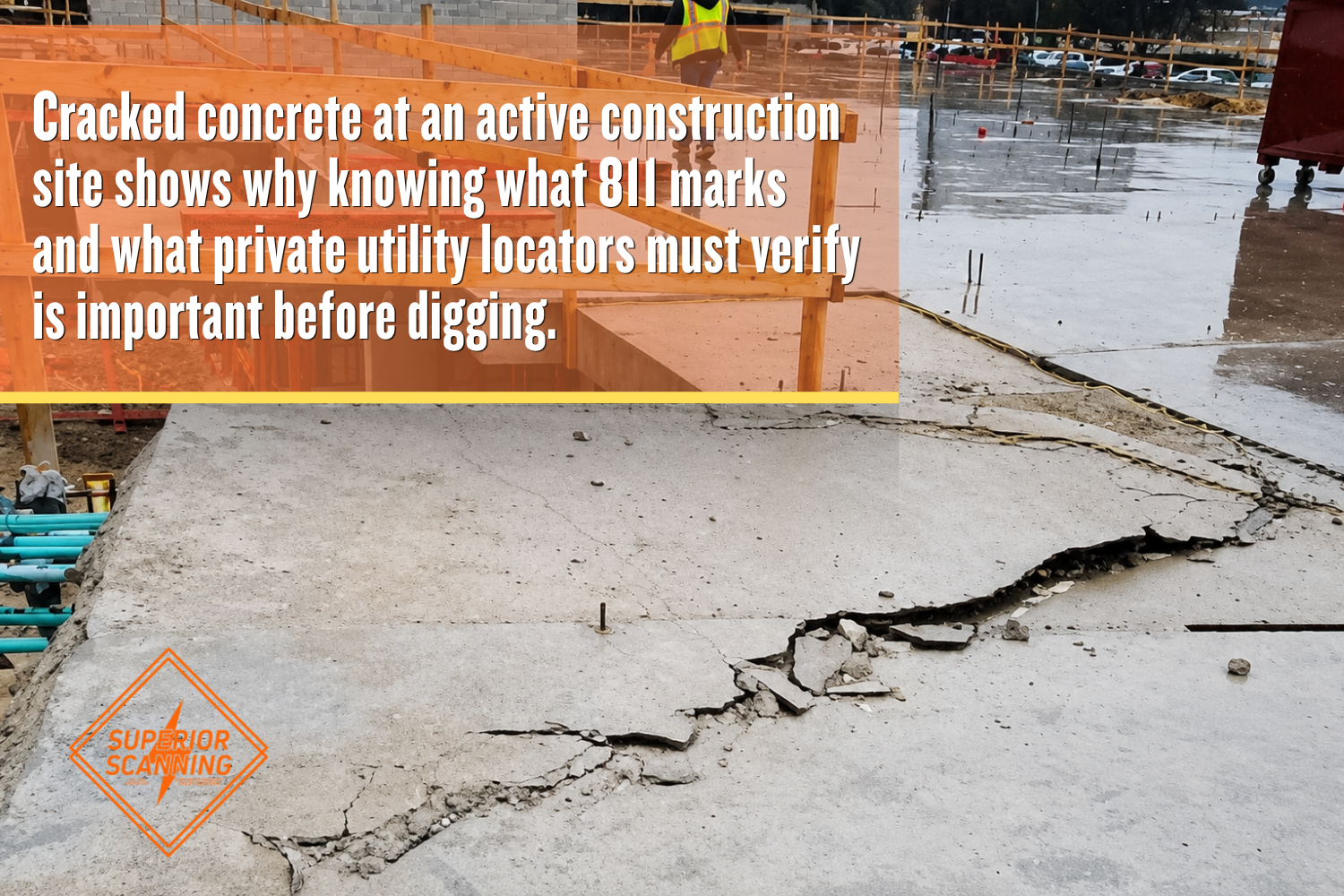
You should call before you dig to start the public safety process before excavation. It also helps identify underground utilities that could create injury, service outages, or repair costs if struck.
811 is still the first step, even when private lines may be present. Once public markings are complete, a private underground utility locator can inspect the remaining areas that may not be covered.
Protection for Underground Utilities
Calling 811 helps protect public underground utilities, including water, gas, electric, sewer, and communication lines. These markings help crews avoid known utility-owned lines before the work area is disturbed.
That protection has limits on private property. For a safer dig, many projects require both the public ticket and private utility-locating services for owner-maintained lines.
Compliance With State Excavation Laws
Most states require a dig notification before excavation. The exact timeline and rules depend on the state, city, and utility district, so project teams should check local requirements before work begins.
A call before you dig request helps document that the public notification process was started” with “call-before-you-dig request helps document that the public notification process has begun. It also gives the contractor a clearer path for adding private utility locating if the site includes
Don’t Cut, Core, or Drill Blind
Superior Scanning is trusted on complex job sites
Who Locates Pipes That 811 Misses?
Private utility locating companies locate pipes that 811 may miss or may not be allowed to mark. These specialists focus on private property lines, unknown routes, and buried systems not owned by public utility providers.
A utility locator can use field tools, site clues, and records review to narrow down pipe paths. The goal is to give crews better information before digging, not after water starts pooling in the work area.
Advanced Utility Mapping Technology
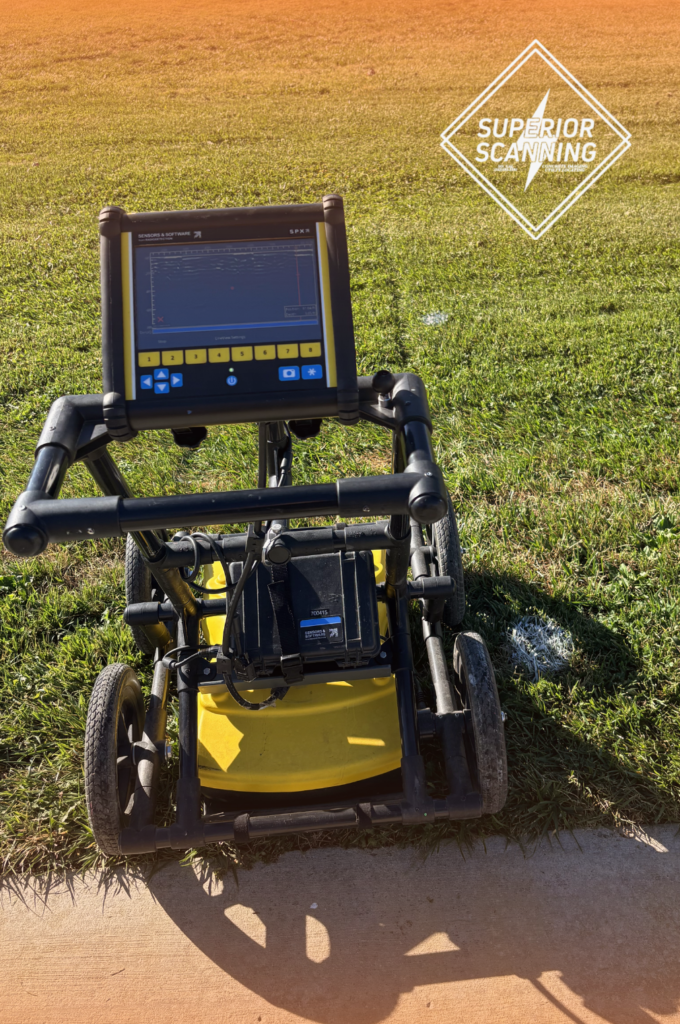
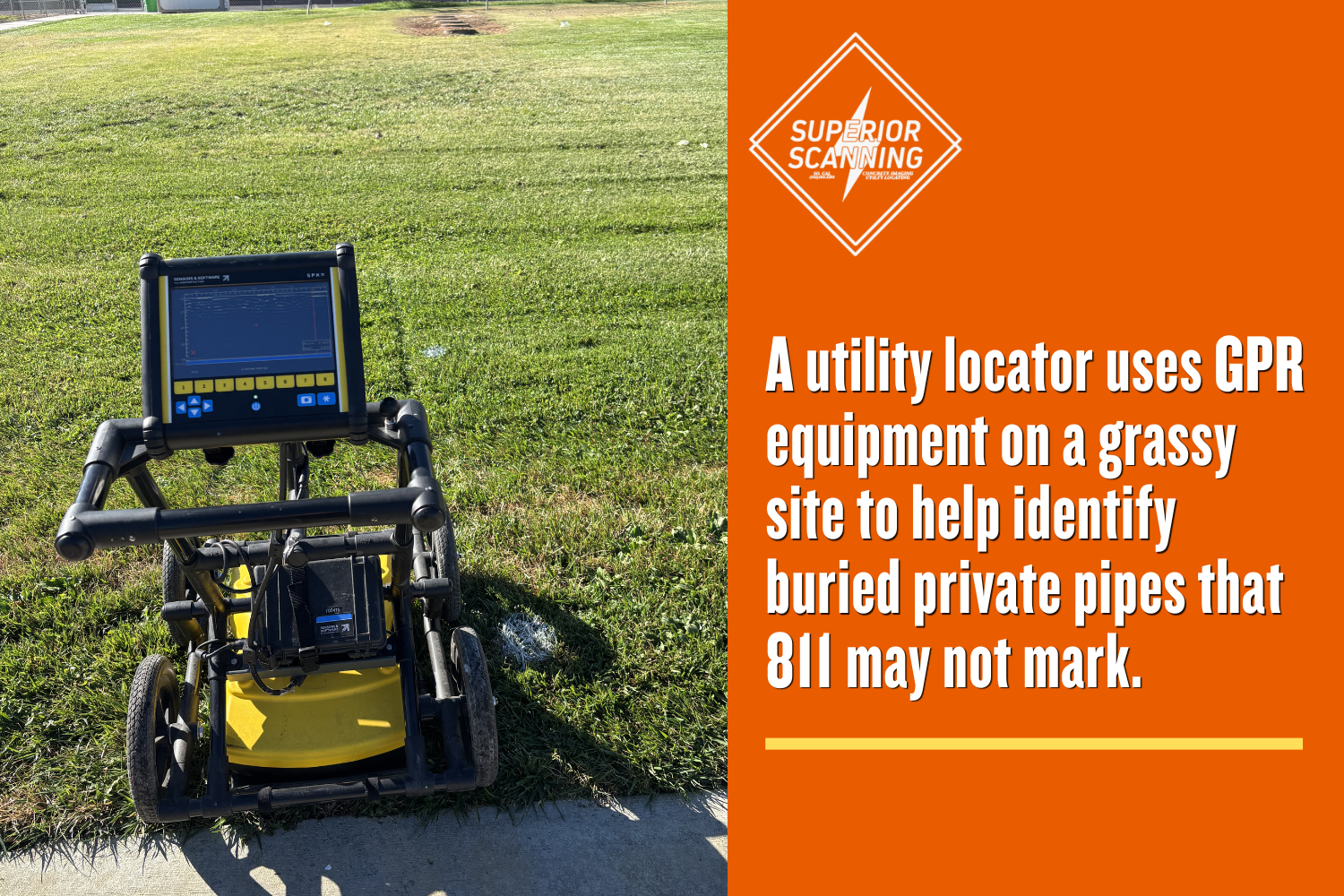
Advanced utility mapping can combine Ground Penetrating Radar (GPR), electromagnetic locating, and visible site features. Ground Penetrating Radar (GPR) can detect certain buried objects and subsurface changes, while electromagnetic tools can trace conductive lines when conditions allow.
No method is perfect on every site. Soil type, pipe material, depth, moisture, and surface access can affect results, so a careful underground utility locator uses more than one clue before marking the ground.
Comprehensive Utility Locating Services
Comprehensive utility locating services look beyond a single pipe or painted line. A good locate may include records review, field scanning, surface markings, and clear notes for the excavation crew.
This is especially useful for commercial properties, apartment sites, older homes, campuses, and lots with past renovations. When public markings and private utility locating are used together, the dig plan becomes much safer.
How Do You Find a Private Locator?
A private locator should be chosen based on the team’s tools, field experience, and ability to explain findings clearly. The right provider should understand site conditions, use appropriate locating methods, and give crews practical information they can use before excavation begins.
To secure highly accurate underground utility locating services, prioritize these key qualifications:
- Use of Ground Penetrating Radar (GPR) for certain non-metallic lines and buried objects
- Electromagnetic locating tools for conductive pipes and cables
- Experience with water, sewer, irrigation, gas, electric, and communication lines
- Clear line marking service methods using paint, flags, or field notes
- Positive reviews for private utility locating services near me
- Familiarity with local soil, hardscape, and site access conditions
- Ability to explain limits when a pipe cannot be fully confirmed
- Utility mapping options for projects that need records beyond surface marks
A reliable private locator should be clear about what was found, what was not confirmed, and what areas need extra care. That honesty helps crews dig with better judgment.
Don’t Cut, Core, or Drill Blind
Superior Scanning is trusted on complex job sites
Frequently Asked Questions
What exactly is a private utility locator?
A private utility locator finds underground utilities on private property that 811 may not mark, such as irrigation, pool, water, sewer, and site lighting lines.
How deep are typical residential water lines buried?
Residential water line depth varies by climate, soil, local code, and installation age, so utility locating is safer than guessing before digging.
Does 811 locate underground utilities on private property?
811 may notify utility owners to mark public or utility-owned lines, but private underground utilities often require private utility locating services.
How much does private utility locating cost?
Private utility locating costs depend on site size, utility type, surface conditions, records, and whether utility mapping or additional verification is needed.
What happens if an unmarked water line is hit?
An unmarked water line strike can cause flooding, repair bills, project delays, property damage, and possible service shutdowns.
How Will You Prevent a Pipe Strike?
Preventing a pipe strike starts with using 811 for public markings, then hiring a private utility locator when the property may contain private water lines or other hidden systems. Public markings help identify utility-owned infrastructure, while private utility locating services and utility mapping help cover pipes that may be missed.
Superior Scanning helps property owners, contractors, and project teams locate hidden utilities before digging, so the work can move forward with fewer surprises and safer decisions. Before the first shovel, trench, or auger touches the ground, confirm what is public, what is private, and what still needs to be marked.
