
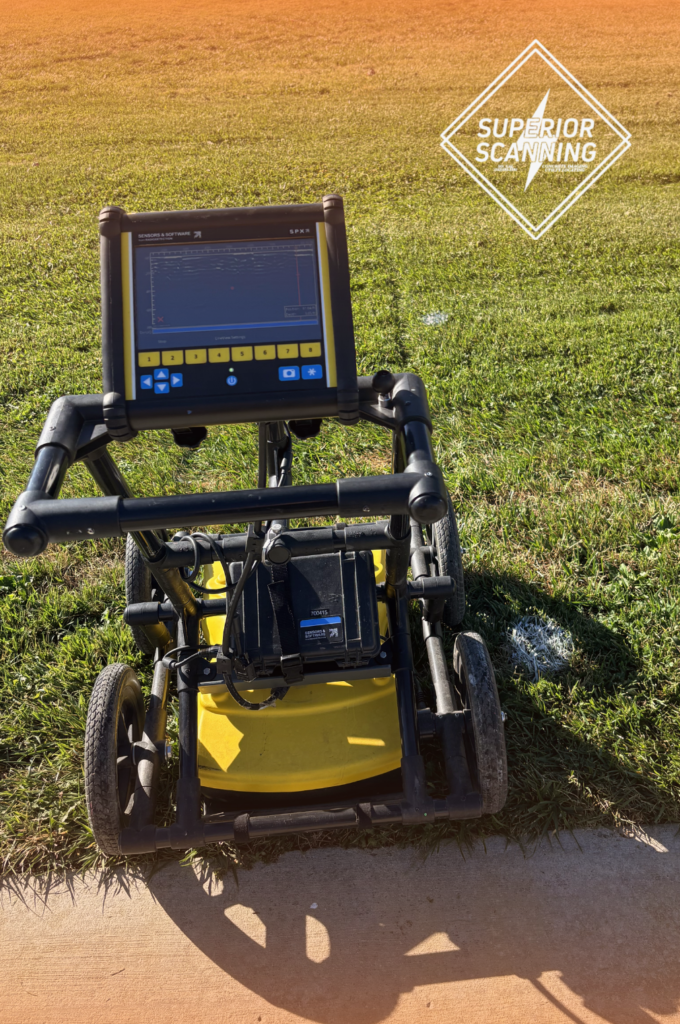
One hidden line can turn a profitable excavation job into a budget problem fast. A private utility locator helps commercial teams find buried pipes, cables, and conduits that may not appear on public marks, old drawings, or site records.
That matters because one utility strike can stop crews, damage equipment, trigger repairs, and put workers at risk. Superior Scanning supports commercial projects with private utility locating, underground utility locating services, and field data that helps teams make safer decisions before excavation begins.
Table of Contents
Don’t Cut, Core, or Drill Blind
Superior Scanning is trusted on complex job sites
What Are the Financial Risks of Skipping Utility Locating?
Skipping utility locating can lead to downtime, emergency repairs, change orders, and safety problems. Public 811 markings are important, but private lines on commercial sites may still need a separate underground utility locator.
A missed line can cost far more than a scheduled locate. Commercial sites often have older utility routes, added service lines, abandoned lines, or private systems that never made it onto the final plan.
Severe Project Downtime
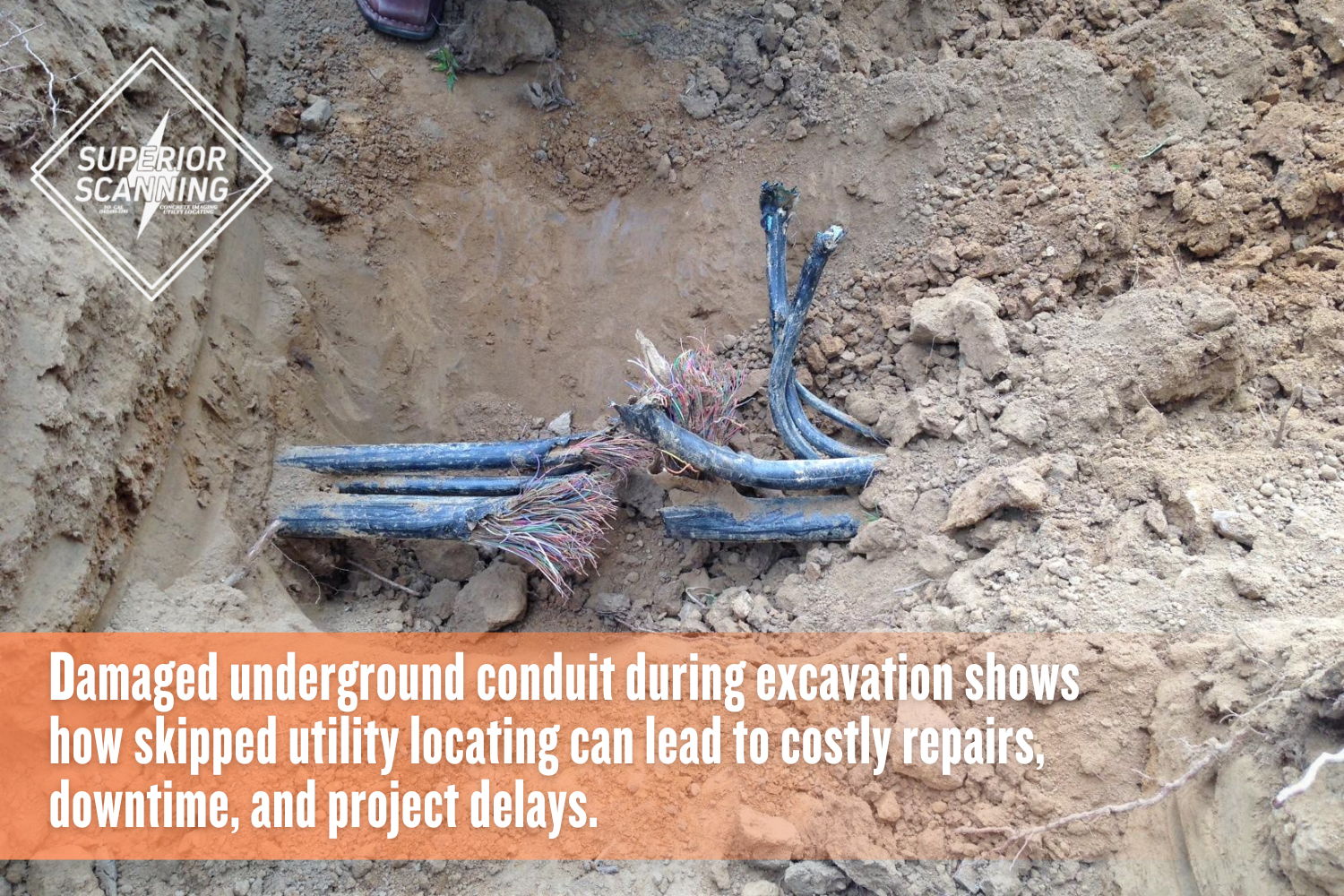
Severe project downtime begins when a crew must stop work after striking a buried line. The job may sit idle while supervisors call the utility owner, document the damage, clear the area, and wait for repair crews.
That delay can affect more than one trade. Excavation, concrete work, paving, plumbing, electrical work, and inspections may all be delayed because an underground utility was not located before work began.
Expensive Emergency Repairs
Emergency repairs are usually more expensive than planned locating. A broken water line, gas line, sewer lateral, or electrical conduit may require urgent labor, specialty parts, traffic control, cleanup, and added safety steps.
Private utility locating services help reduce that risk before the job reaches the digging stage. The cost of a locate is often small compared with the cost of restoring damaged underground utilities during an active commercial project.
Which Buried Hazards Cause the Most Damage?
The most damaging buried hazards are utilities that can stop service, create unsafe site conditions, or force immediate repairs. Commercial properties can have a dense mix of public and private systems under paved areas, loading zones, drive lanes, and building pads.
Striking specific underground utilities can drain commercial project budgets quickly:
- Undocumented gas lines that can require evacuation, emergency response, and work stoppage
- High-voltage electrical cables that create serious shock and fire hazards
- Private sewer laterals that can cause sanitation issues and expensive cleanup
- Water mains or private water service lines that can flood trenches and damage nearby work
- Fire suppression lines that may affect building safety systems
- Communication and fiber lines that can disrupt business operations
- Storm drain and site drainage pipes that can affect grading, paving, and water flow
- Old or abandoned conduits that still block trench paths or confuse field crews
A careful underground utility locating plan helps the crew understand which areas need extra caution. It also gives project managers a clearer view of possible conflicts before equipment reaches the soil.
Don’t Cut, Core, or Drill Blind
Superior Scanning is trusted on complex job sites
How Does Private Utility Locating Reduce Rework Costs?
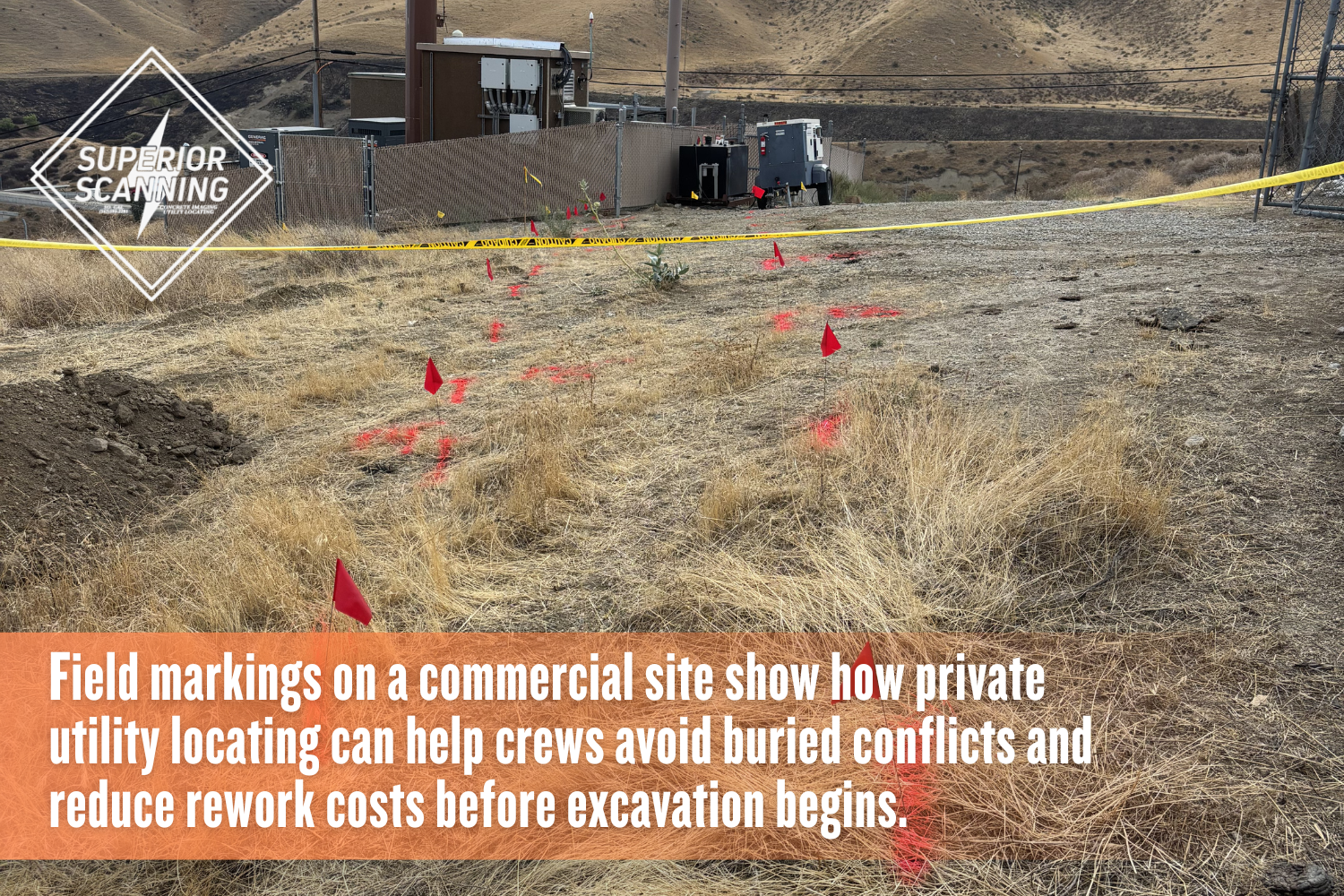
Private utility locating reduces rework costs by helping the design and field teams plan around buried conflicts before construction is underway. When underground utility locating is done early, project managers can adjust the work plan rather than react to problems in the trench.
Rework is expensive because it rarely affects one task. A small route change can impact grading, drainage, electrical layouts, concrete cuts, equipment access, and inspection timing.
Accurate Subsurface Mapping
Accurate subsurface mapping gives the team a clearer view of what may be below the surface. An underground utility locator can use field tools, records, and visible site clues to identify likely utility paths across the work area.
This process helps the project team compare planned excavation zones with real site conditions. When information is gathered before trenching, private utility locating becomes a planning tool rather than a last-minute safety check.
Precise Design Adjustments
Precise design adjustments are easier before crews mobilize. If underground utility locating services reveal a conflict, the team can shift a trench, move a footing, change a route, or plan a safer excavation method.
Those changes may feel minor on paper, but they can prevent costly field confusion. Clear locate data helps the project team avoid tearing out fresh work, moving equipment twice, or redesigning under pressure.
Where Do Underground Utility Locating Services Provide the Best Value?
Underground utility locating services provide the best value on sites where buried systems are complex, records are incomplete, or downtime would be expensive. The more moving parts a project has, the more valuable early private utility locating becomes.
Certain commercial environments see the highest return on investment from private utility locating services:
- Large multi-acre developments with long trench routes and several utility corridors
- Hospital campus expansions where service interruptions can affect critical operations
- Industrial facility upgrades with process piping, electrical feeds, and older underground systems
- School and university projects with utilities added across several construction phases
- Shopping centers and retail pads with shared service lines and busy parking areas
- Warehouses and logistics sites with drainage, power, lighting, and communication lines under pavement
- Apartment and mixed-use properties with private water, sewer, gas, and telecom runs
- Municipal facilities where utility strikes can affect public service and project schedules
These projects often involve tight timelines and several crews working in the same space. Reliable private utility locating services help keep work organized before a conflict turns into a delay.
How Can an Underground Utility Locator Protect a Company’s Reputation?
An underground utility locator can protect a company’s reputation by reducing avoidable strikes, safety issues, and missed deadlines. Clients notice when a contractor controls the site effectively and addresses hidden risks before work starts.
A clean utility-locating process also demonstrates discipline. It tells owners, inspectors, and project partners that the crew is not guessing around buried infrastructure.
Improved Safety Records
Improved safety records start with fewer surprises on the ground. Striking a buried utility can expose workers to water pressure, gas, electricity, unstable trenches, or unsafe cleanup conditions.
Consistent underground utility locating helps crews work with better awareness. It supports safer excavation planning and gives supervisors more confidence when assigning equipment and labor near marked areas.
Consistent Deadline Management
Consistent deadline management depends on avoiding preventable stoppages. A private utility locator helps project teams spot conflicts early enough to make practical adjustments.
That control can protect future bidding power. Owners want contractors who reduce risk, communicate clearly, and keep the job moving without avoidable disruptions.
Don’t Cut, Core, or Drill Blind
Superior Scanning is trusted on complex job sites
Frequently Asked Questions
What is a private utility locator?
A private utility locator finds and marks buried utilities on private property that may not be covered by the public 811 process.
How much do private utility locating services cost?
Private utility locating services cost depends on site size, utility type, surface conditions, access, and the level of mapping or reporting needed.
Why is private utility locating necessary for commercial properties?
Private utility locating is necessary because commercial sites often have private lines, old records, and complex underground systems that public marks may not cover.
Which technologies do underground utility locating services use?
Underground utility locating services may use Ground Penetrating Radar (GPR), electromagnetic locating, records review, and surface markings to identify buried utilities.
Does 811 mark all underground utilities?
No, 811 does not mark all underground utilities because privately owned lines may require a separate private utility locator.
How Will You Protect the Next Commercial Budget?
Protecting the next commercial budget starts with finding buried risks before excavation begins. A private utility locator helps reduce repair costs, schedule delays, rework, and safety issues by providing the project team with better information about underground utilities.
Superior Scanning helps commercial teams use private and underground utility locating services to plan safer digs, protect site momentum, and avoid costly surprises. Secure the site data early, then let the crew work from facts instead of guesses.
