
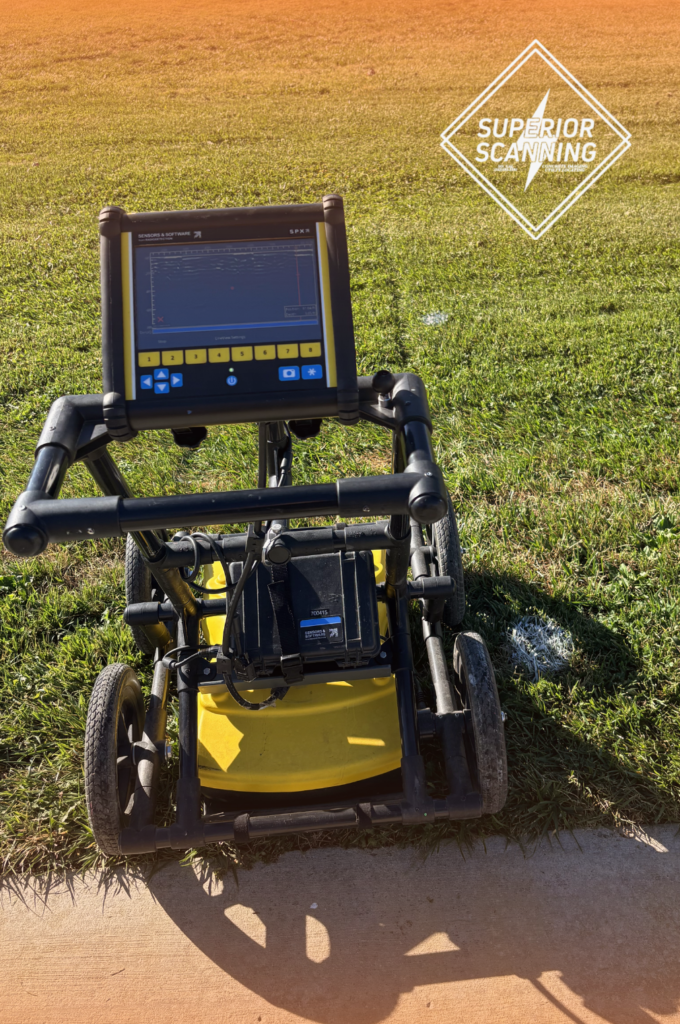

Drilling or coring into concrete without first checking for embedded materials below the surface can increase the risk of striking rebar, conduits, or post-tension cables. Rebar scanning helps map subsurface conditions before cutting begins, giving crews better information for planning, layout, and safer execution. Superior Scanning provides rebar scanning services to identify hidden rebar in concrete slabs, walls, and decks before work proceeds.
Table of Contents
Don’t Cut, Core, or Drill Blind
SuperiorGPR is trusted on complex job sites
Quick Review on Rebar Scanning Before Cutting or Coring
- Helps locate hidden rebar, conduits, and post-tension cables before work begins
- Reduces the risk of damaging structural or embedded elements
- Supports safer planning for cut, core, and drill locations
- Can help prevent injuries, repair costs, and project delays
- Gives crews better visibility when slab conditions are unknown
Quick Review on Rebar Scanning Before Cutting or Coring
- Helps locate hidden rebar, conduits, and post-tension cables before work begins
- Reduces the risk of damaging structural or embedded elements
- Supports safer planning for cut, core, and drill locations
- Can help prevent injuries, repair costs, and project delays
- Gives crews better visibility when slab conditions are unknown
What Is Rebar Scanning?
Rebar scanning is a nondestructive method used to identify and map embedded reinforcement and other features inside concrete before cutting, coring, or drilling. Depending on the equipment and scan method used, the results may show the reinforcement layout, the estimated cover depth, and the location of other embedded items, such as conduits or cables.
On-site, field crews may use a rebar detector, cover meter, or ground-penetrating radar (GPR) system to investigate the slab and mark detected features on the surface. That information helps crews plan penetrations more carefully and reduce the chance of damaging structural or embedded elements during concrete work.
Concrete Scanning vs. Concrete X-Ray: Which Is Better?
Concrete scanning and concrete X-ray are both used to investigate embedded features in concrete, but the better choice depends on project conditions, access, and the level of detail required. In many everyday field applications, GPR concrete scanning is preferred because it is fast, nondestructive, and does not involve ionizing radiation.
Concrete X-ray, or radiography, can still be useful in certain situations, but it involves additional safety controls and site restrictions because radiation protection measures may be required. For many active job sites, radar-based concrete imaging offers a practical way to gather useful subsurface information with less disruption to nearby work.
How GPR Concrete Scanning Works
GPR concrete scanning works through a series of steps that help technicians interpret what may be embedded below the surface:
- Sending high-frequency electromagnetic waves into the concrete slab
- Measuring the reflected signals that return from embedded features
- Recording and processing those reflections into images that help show the subsurface layout
- Moving the antenna across the concrete surface in a planned scanning pattern
- Reviewing the resulting data to identify likely embedded features such as rebar, conduits, cables, or other material changes
- Estimating depth where conditions allow by analyzing signal response, travel time, and scan position
Don’t Cut, Core, or Drill Blind
SuperiorGPR is trusted on complex job sites
The Hidden Dangers of Skipping Concrete Scanning Services
Skipping concrete scanning services can create several avoidable risks before cutting or coring begins:
- Increasing the chance of hitting embedded rebar, electrical conduit, plumbing, or post-tension cables
- Leading to injuries, repair costs, work stoppages, and added engineering review if embedded elements are damaged
- Making layout decisions more difficult when slab design, embedded utilities, or reinforcement patterns are unknown
- Reducing visibility into subsurface conditions before destructive work starts
- Raising the risk of avoidable damage within the concrete
- Limiting the information crews need to plan cuts, cores, and penetrations more carefully
Choosing the Right Concrete Scanning Companies for the Job
Anyone can operate equipment, but reliable interpretation depends on training, experience, and a methodical scan process. When comparing concrete scanning companies, look for a team with proven experience in concrete scanning, clear reporting practices, and a solid understanding of interpreting GPR data in real job-site conditions.
A dependable provider should explain the scope of the scan, clearly mark detected features, and communicate any limitations in the findings. That kind of process provides the project team with better information before cutting or coring begins, helping reduce confusion during fieldwork.
Don’t Cut, Core, or Drill Blind
SuperiorGPR is trusted on complex job sites
Frequently Asked Questions
Can a GPR scan determine rebar depth?
A professional ground penetrating radar scan can help locate embedded rebar and estimate cover depth. Depth calculations are based on signal travel time and wave velocity, and results are more reliable when the scan is calibrated with field verification, such as cores or drill holes.
Is concrete imaging safe for active job sites?
Modern GPR-based concrete imaging does not use ionizing radiation, which makes it suitable for many active job sites. Even so, work-area controls, access management, and standard construction safety practices must still align with site conditions and the scope of the scan.
How long does rebar scanning take?
Rebar scanning time varies based on slab size, scan density, access conditions, and the amount of marking or documentation required. Small areas may be completed quickly, while larger or more complex scan zones can take longer.
What materials can a rebar detector find?
Depending on the equipment used, scanning can help identify rebar, post-tension cables, metal conduits, and, in some cases, nonmetallic items such as plastic conduit or piping. Detection depends on depth, concrete condition, signal quality, and the type of scanning method used.
Do I need concrete scanning for a residential floor?
Concrete scanning can be worth considering for a residential floor before coring or drilling, especially when the slab may contain rebar, post-tension cables, plumbing, or radiant heating components. The decision should match the scope of work and the risk of striking embedded elements.
Protect Your Job Site With Expert Concrete Scanning
A safer concrete cutting or coring plan starts with better visibility into what may be embedded below the surface. Concrete scanning helps project teams locate reinforcement, conduits, and other hidden features before destructive work begins, thereby improving planning and reducing avoidable damage.
Working with an experienced scanning provider can help a crew make better field decisions before the first cut or core is made. Contact Superior Scanning to review the work area, discuss scan needs, and determine the level of concrete imaging that fits the project.
