
Hitting a buried pipe is a nightmare that will instantly derail your project. You need to know exactly what hides beneath the dirt or concrete before you ever break ground. If you are asking what utility locating is, you have already taken the first step toward keeping your job site safe.
This specialized service gives you a clear picture of hidden underground utilities so your build can move forward without nasty surprises. Everyone from weekend DIY homeowners to commercial contractors relies on professional locators to cut risks and stop delays before work even starts. Superior Scanning helps you make smarter decisions and build with total confidence.
Table of Contents
Don’t Cut, Core, or Drill Blind
Superior Scanning is trusted on complex job sites
What Is Utility Locating?
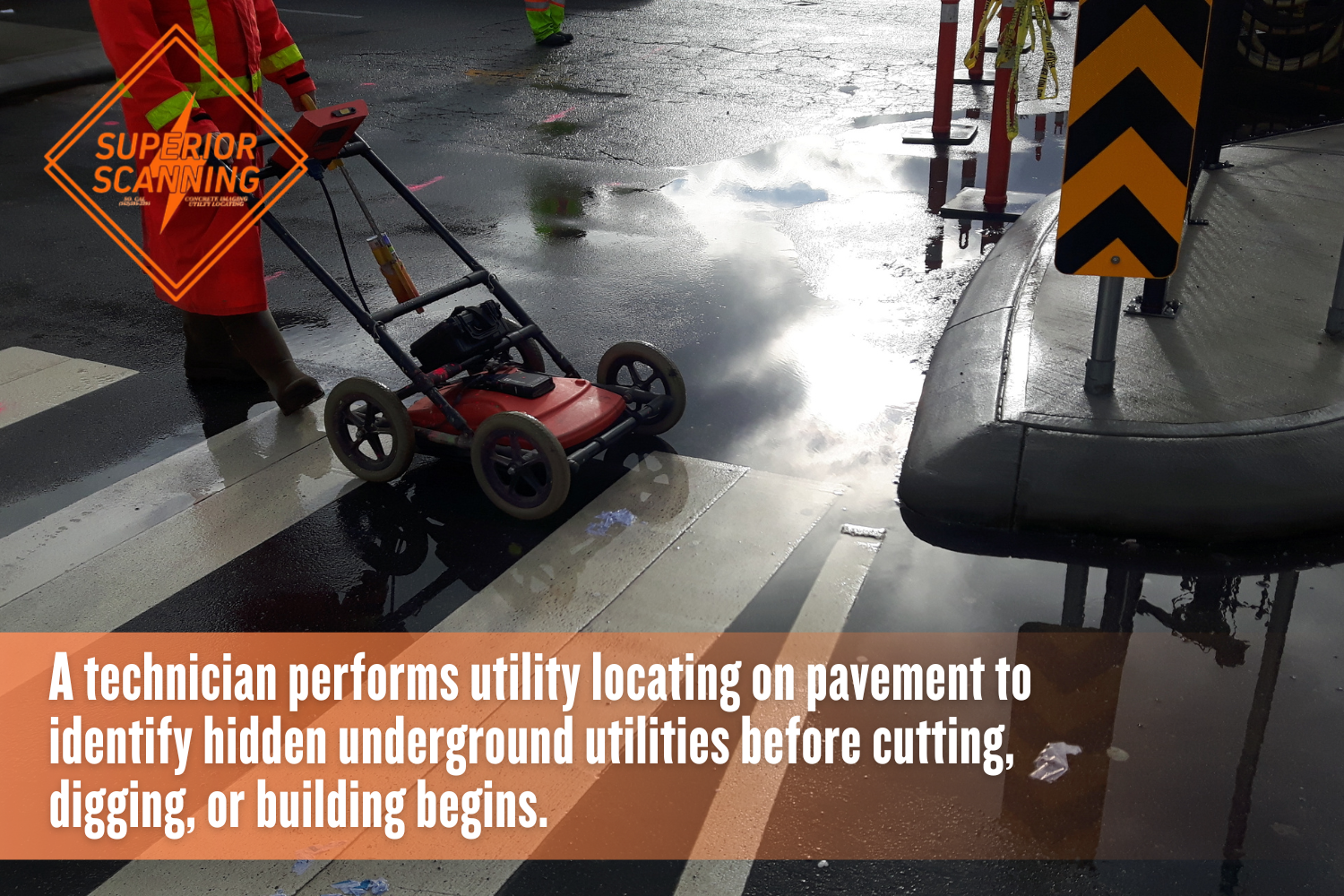
You might wonder what utility locating is when you first hear the term on a job site. Utility locating is the hands-on process of locating and marking hidden underground utilities before any digging or cutting occurs. This important step helps construction crews avoid striking buried lines, thereby drastically reducing project delays and keeping workers safe.
The job involves tracing essential systems such as live electrical lines, pressurized gas pipes, water mains, and fragile fiber-optic cables prior to excavation. Knowing the exact path of these buried hazards allows you to plan your trenching or coring effectively.
Getting a proper utility locate helps you avoid accidentally triggering a site-wide blackout or a massive water leak.
What Are Utility Locating Services?
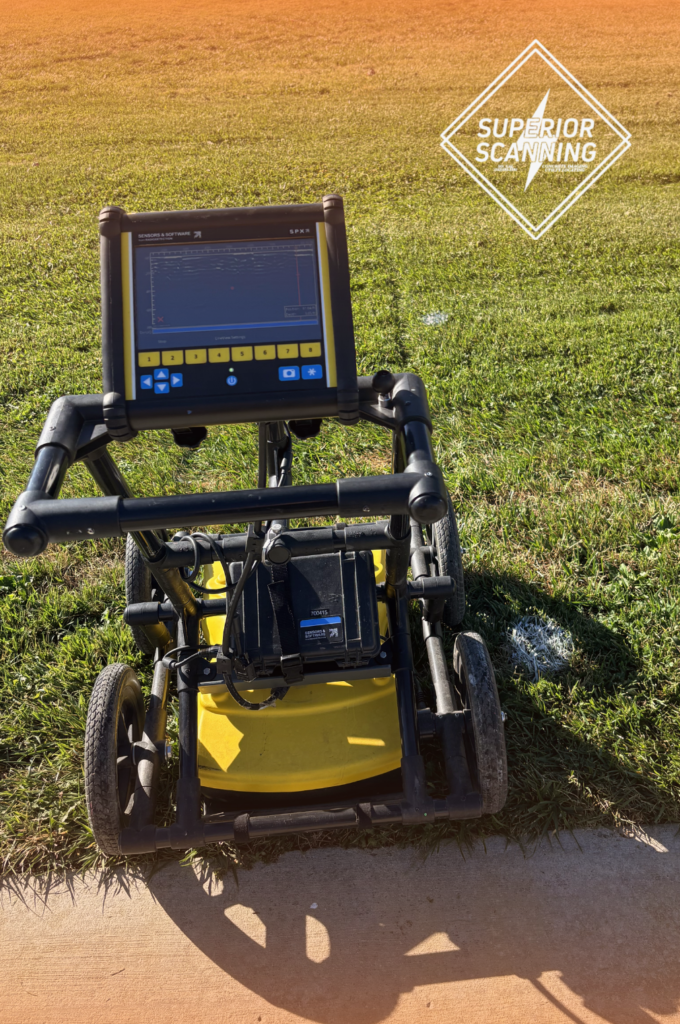
Utility locating services provide trained experts to detect and map hidden underground lines. Professionals combine ground-penetrating radar, electromagnetic sensors, and field experience to spot utility hazards that basic blueprints completely miss. Homeowners and commercial builders rely on these services for backyard renovations, deep trenching, concrete cutting, parking lot repairs, and major facility upgrades.
Why Is Utility Locating Important?
Hitting an underground utility causes expensive and dangerous problems. A simple mistake can flood a neighborhood, trigger a gas explosion, or knock out internet for a hospital. Beyond the immediate physical danger, striking a pipe will delay your timeline and rack up massive repair bills. Different groups rely on these ground scans to keep specific tasks moving forward without disaster.
How Does Utility Locating Help Homeowners?
Homeowners typically need a ground scan before they dig out a new pool, build a backyard guest house, or sink deep fence posts. It is also an incredibly smart move before completely changing your landscaping or adding new drainage pipes to a soggy lawn.
How Does Utility Locating Help Contractors?
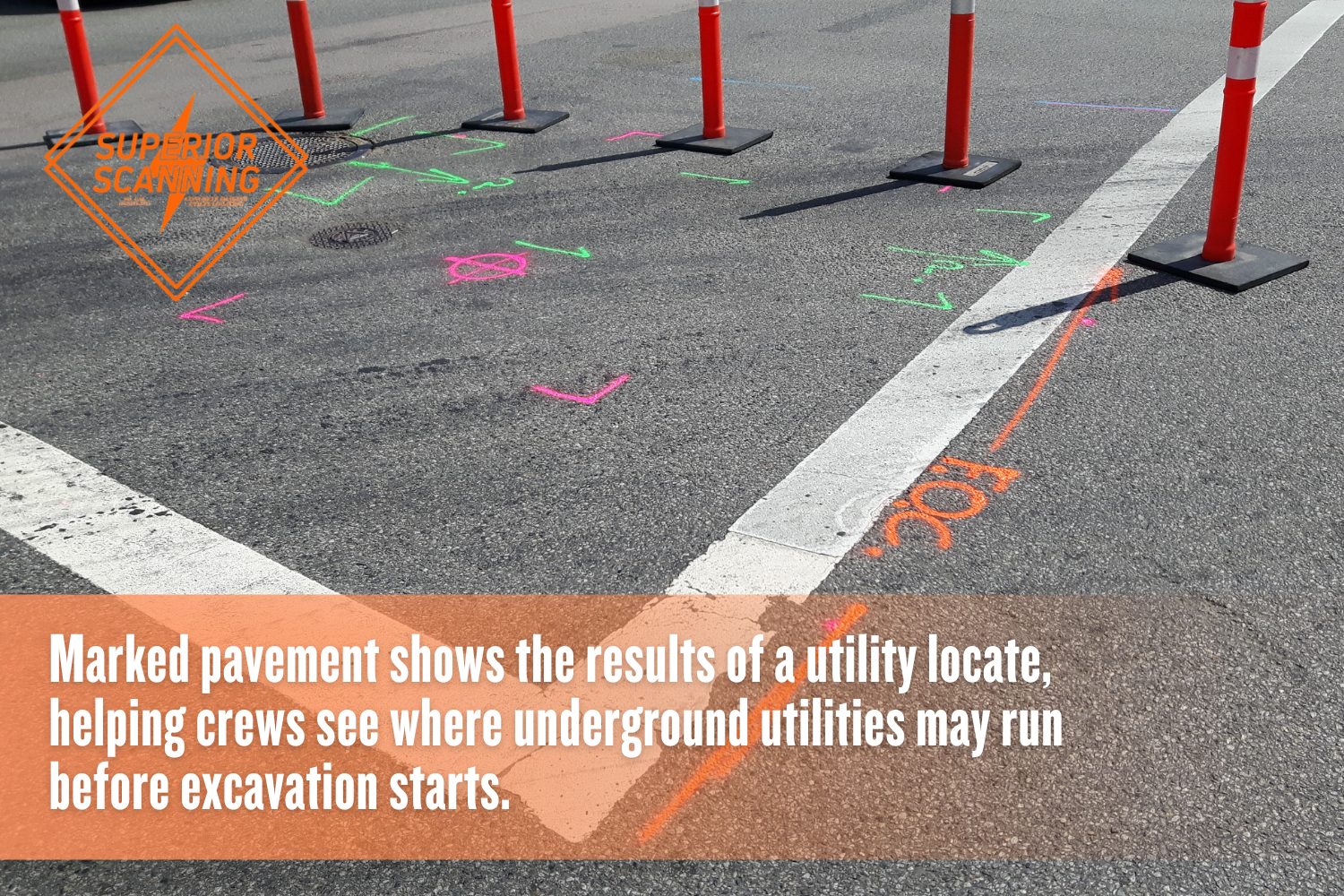
For the professionals doing the heavy lifting, contractors use utility locates to map out safer digging, trenching, and saw cutting zones. Having bright paint marks on the ground helps field crews avoid costly accidental strikes and make much better decisions on the fly.
How Does Utility Locating Help Engineers and Companies?
Before drafting a single final blueprint, engineers look at locating data to plan massive projects and fix outdated site records. This early verification helps them design around existing pipes and understand exactly what sits under a work area before construction kicks off.
What Underground Utilities Can Be Found?
Modern locating tools can detect a wide range of buried systems on both large commercial lots and standard residential properties. Utility locating may help find:
- Live electrical runs and communication wires.
- High-pressure gas lines and fire-suppression lines.
- Municipal water pipes, sewer mains, and storm drains.
- Delicate irrigation lines and fiber-optic cables.
- Private utility lines and completely abandoned pipes.
Just remember that not every single buried item is easy to detect. Extreme depth, heavy clay soil, plastic pipe materials, and generally messy site conditions can all mess with the equipment signals.
Don’t Cut, Core, or Drill Blind
Superior Scanning is trusted on complex job sites
What Is the Difference Between Public and Private Utility Locating?
Public utility locating involves city or county companies marking the specific lines they own and maintain. Private utility locating steps in to find hidden hazards that public services often overlook, such as backyard irrigation, parking lot lighting, and sewer laterals strictly owned by the property owner.
What Does 811 Usually Mark?
Calling 811 is a legal requirement before digging, but public locators only cover lines that run straight to your main service meter. The city workers will absolutely not mark anything past that meter or inside your private property boundaries.
What Private Utilities May Not Be Marked?
Once you cross the property line, you are entirely responsible for finding private utilities like parking lot lights, irrigation zones, and private gas lines feeding backyard grills. You might also stumble upon unmarked fire lines, secondary water mains, and communication cables hidden deep inside your own lot.
How Does Utility Locating Work?
The best locators follow a very strict process to ensure results are accurate and safe for your crew. A professional utility locate kicks off by reviewing any old site plans or historical utility records you might have lying around. The technician then walks the entire site, looking for visual clues such as water meters, gas valves, sewer cleanouts, and random access panels.
Next, the expert fires up advanced locating equipment to scan the intended work area from multiple angles. They mark all suspected utility paths with bright paint, chalk dust, or small colored flags. Finally, they walk the site with your crew or project manager to explain findings and point out the danger zones.
What Tools Are Used for Utility Locates?
Experts rely on a sophisticated mix of technologies to map the hidden world beneath the surface. Using the right combination of high-tech tools gives you the clearest possible picture of underground utilities. The exact gear a technician unloads depends entirely on your soil conditions and any materials buried below.
- Electromagnetic locating: This is the primary method for tracing conductive utilities like solid metal pipes, copper cables, and electrical conduits. Technicians clip directly onto a pipe to send a signal or pick up an active frequency naturally bleeding off a live power line.
- Ground-penetrating radar (GPR): This equipment sends rapid radar pulses deep into the earth to reflect off hidden objects. It is incredibly effective at detecting non-metallic utilities, such as PVC pipes and concrete vaults, that standard electromagnetic tools completely miss.
- Combined methods: No single tool works perfectly in every single soil type or site condition. A true professional will run both ground-penetrating radar and electromagnetic sensors across your site to get the most accurate, overlapping view of what sits underground
What Deliverables Can Come With Utility Locating Services?
A standard ground scan leaves you with physical marks, but larger projects usually require permanent paperwork detailing the findings. Professional locators provide several different types of documentation to help your engineers and architects plan the build. The amount of detail you walk away with depends on what exactly you ask for before the crew arrives.
Professional utility locating services may include:
- Physical site markings: Standard field paint, chalk outlines, and physical flags left directly on the job site.
- Site sketches: Simple, hand-drawn maps for a quick visual reference of the area.
- PDF maps: Digital portable document format maps that are easy to share with your whole team.
- KMZ files: Keyhole Markup Language zipped files that integrate smoothly with Google Earth and other mapping software.
- Computer-aided design (CAD) drawings: Detailed computer-aided design blueprints for precise engineering and long-term facility planning.
When Do You Need Utility Mapping?
Utility mapping is the right choice when your work site is huge, incredibly complex, or part of a construction plan spanning several years. It helps property owners and facility management teams keep a perfect, permanent record for any future digging projects.
When Should You Call a Professional Utility Locator?
You should call a professional utility locator right before you break ground, cut into a concrete slab, or tear up pavement. Hidden utilities snake through almost every modern environment, making a pre-job scan your best defense against disaster. Schedule a scan with Superior Scanning for these common projects:
- Heavy excavation and trenching: Get a formal locate before you start deep trenching, land grading, or potholing work.
- Concrete cutting and coring: Find hidden rebar, tension cables, and embedded electrical conduits before you saw cut or core drill into an existing slab.
- Residential renovations: Scan the ground before putting in backyard pools, deep fences, heavy hardscapes, or new outdoor utility lines.
When Should Contractors, Engineers, and Companies Call Superior Scanning?
Call Superior Scanning when you need private utility locating, concrete scanning, or accurate mapping before you dig or build in Southern California. This service becomes a necessity when your old site plans are missing, heavily outdated, or just plain wrong.
How Long Does Utility Locating Take?
The time it takes to finish a scan depends almost entirely on the size of your work area and the extent of underground utility crowding. Tricky site access, messy surface conditions, and whether you asked for a digital CAD map will also stretch out the schedule. A basic residential property scan might take just an hour or two. Meanwhile, tracing lines across a massive commercial hospital campus could easily take a full week to map correctly.
How Much Do Utility Locating Services Cost?
The final bill for utility locating services shifts based on your project size, the physical location, and the actual square footage of the scan area. The specific types of buried utilities, the required equipment, and your requested digital deliverables also play a significant role in the price. A quick backyard mark-out will naturally cost far less than a massive commercial mapping project that requires permanent CAD files. You can usually secure a simple flat rate or a standard hourly rate once you provide your specific project details.
What Are the Limits of Utility Locating?
Utility locating is a powerful risk-reduction service, but it is not a magic guarantee that every single underground utility will appear on a screen. Getting the best possible results requires clear site access, accurate project details, any available old records, and the right mix of locating tools.
This technology slashes your job-site risk, but it simply cannot eliminate every unknown variable buried in the dirt. Soaking wet clay soil, extreme depth, plastic pipe materials, and thick reinforced concrete slabs will naturally weaken equipment signals. Tight physical access, missed deadlines, and tightly packed utility trenches also make it much harder to get a crystal-clear read.
Don’t Cut, Core, or Drill Blind
Superior Scanning is trusted on complex job sites
Frequently Asked Questions
What is utility locating?
Utility locating is the hands-on process of detecting and marking hidden underground utilities before any heavy digging or construction begins.
What are utility locating services used for?
People use what is utility locating services to prevent devastating accidental damage to buried pipes and electrical cables during excavation.
What is the difference between 811 and private utility locating?
The free 811 service only marks public utility lines up to the main meter, while private locators find the utilities hidden deeper inside your actual property lines.
Can utility locating find all underground utilities?
A professional utility locate significantly reduces your risk of digging but cannot guarantee that every single line is found due to wet soil, extreme depth, and plastic materials.
When should I call a professional utility locator?
You absolutely need to call a professional locator before you dig, trench, cut concrete, or disturb the ground for any serious building project.
Get Clearer Field Decisions With Superior Scanning
Superior Scanning provides GPR concrete scanning, private utility locating, and accurate utility mapping across Southern California. We serve active construction sites and large facilities daily throughout Los Angeles, Orange, Riverside, and San Diego counties.
Knowing what utility locating is protects your crew, budget, and timeline from hidden buried hazards. A professional utility locate finds electrical, gas, and water lines so homeowners and commercial builders can plan safely. Our fully insured team handles next-day or same-week requests to keep your job moving.
Contact Superior Scanning today for a fast quote and start your next project with confidence.
Lorem ipsum dolor sit amet, consectetur adipiscing elit. Ut elit tellus, luctus nec ullamcorper mattis, pulvinar dapibus leo.
