
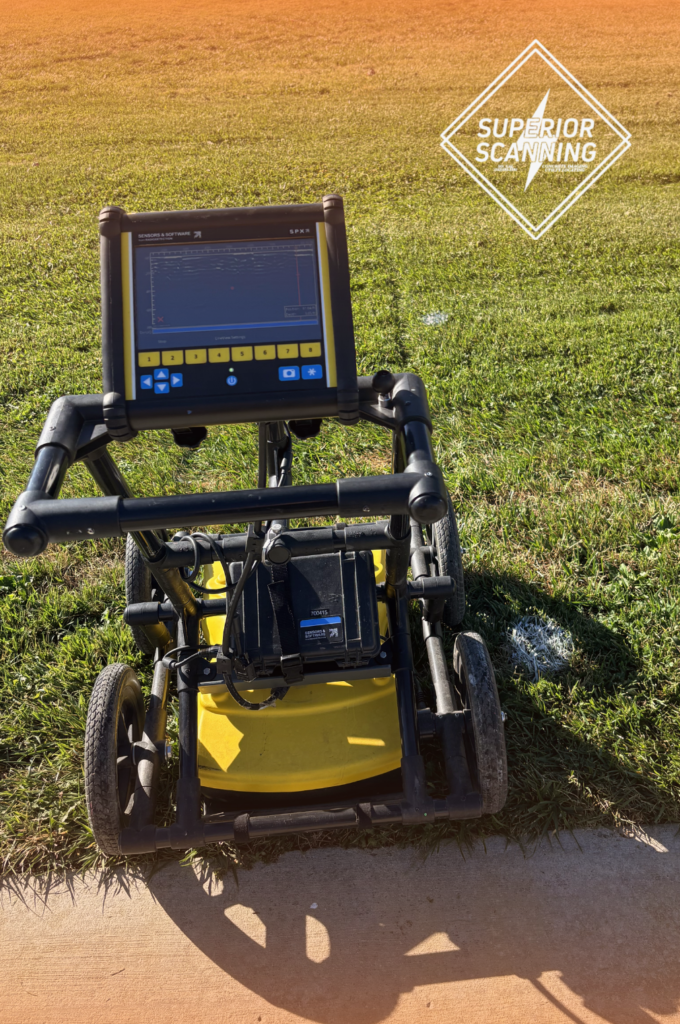
Digging into a new site blindly is a fast track to broken pipes and blown budgets. An idle backhoe costs money every single minute it sits waiting for directions. One quick physical outline solves this problem by preventing site confusion and ensuring that a professional line-marking service can map out the actual hazards rather than guessing.
Securing the job site with professional precision before breaking ground keeps projects on track. Partnering with an experienced safety expert like Superior Scanning gives contractors confidence before the digging begins. Proper preparation protects the field crew and keeps the entire excavation schedule moving smoothly.
Table of Contents
Don’t Cut, Core, or Drill Blind
Superior Scanning is trusted on complex job sites
What Exactly Is White-Lining?
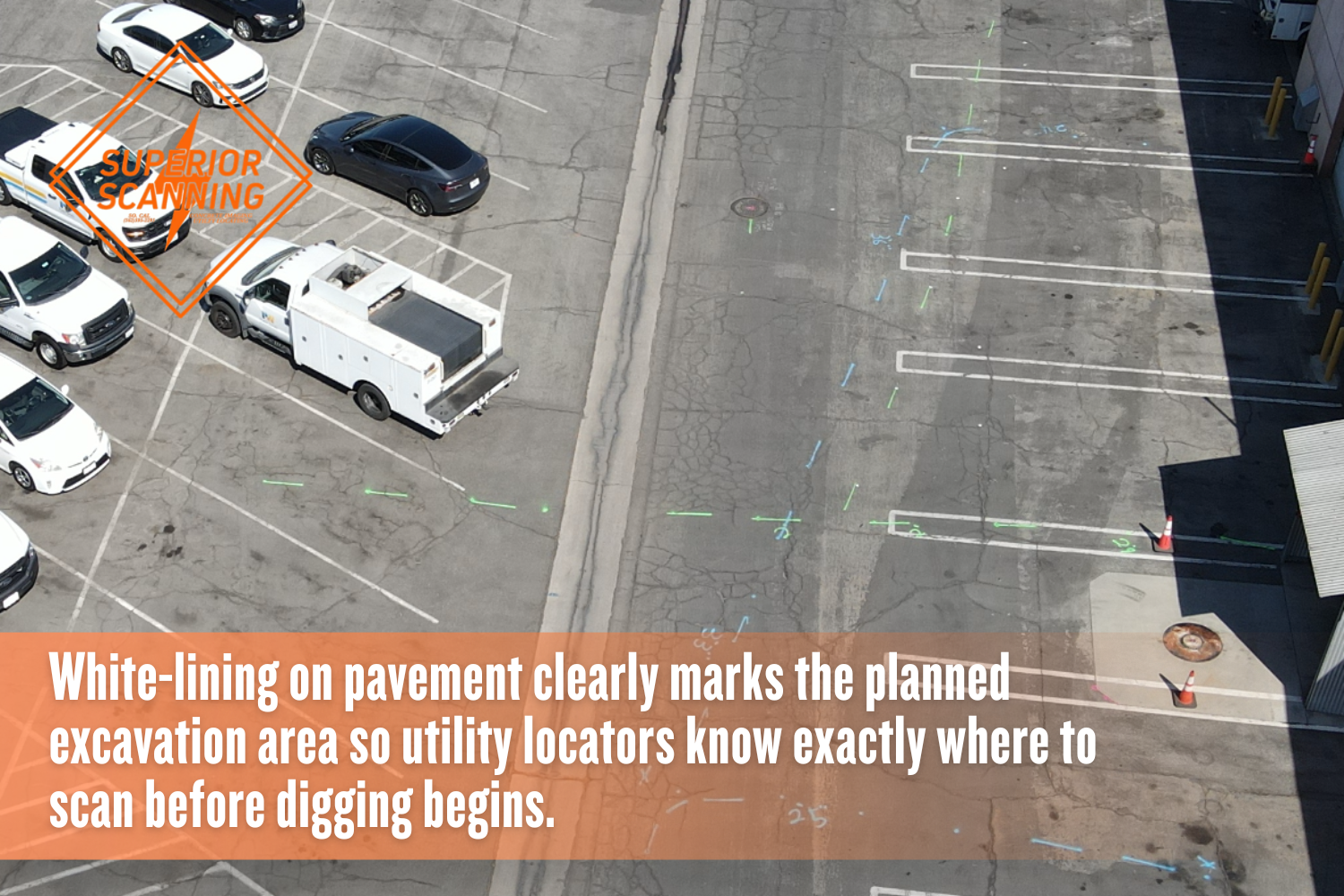
White-lining is the simple act of marking proposed excavation boundaries with white paint or flags before an underground utility locator arrives. Think of it as drawing a target directly on the ground. This physical guide shows incoming technicians exactly where the dirt work will take place. Setting these markers eliminates confusion long before the scanning equipment ever leaves the truck.
Pre-Excavation Boundary Identification
Those physical marks show the exact footprint of a future trench or drilling zone. Painting these borders on concrete or staking flags in the mud gives the scanning crew a highly specific boundary to follow. Setting visible limits takes all the guesswork out of the equation and keeps everyone focused on the correct spot.
Visual Communication for Locators
Bright white marks act as a universal language for visiting technicians checking the property. They instantly show the utility line locator where to concentrate the ground-penetrating radar. Clear visual cues build a direct bridge of communication between the guys moving the dirt and the professionals scanning it.
Why Do Contractors Need White-Lining?
Skipping this step creates a massive headache for any utility locator trying to figure out the job site. Without clear borders, technicians often end up wandering the property to figure out what needs scanning. Defining the workspace keeps budgets tight and protects everyone on site from hidden underground dangers.
Precise Scope Definition
Clear boundaries stop technicians from trying to interpret vague project limits. Drawing the actual work area means the scanning team only maps the soil that will face disruption. Setting this specific scope prevents misaligned digs and keeps contractors from running into unexpected hurdles.
Reduction in Wasted Scanning Time
Pointing out the exact digging zone keeps the scanning crew locked onto the immediate hazard area. A targeted search means utility locating services spend far less time sweeping empty parking lots or unused fields. Focusing the scan directly saves cash and lets the excavation team start moving dirt much faster.
Enhanced Excavation Safety Protocols
Physical boundaries strictly confine the excavation crew to a cleared and safe zone. Staying strictly inside the verified markings stops heavy machinery operators from digging into unknown soil. Following that marked perimeter drastically reduces the risk of an accidental pipe strike.
Don’t Cut, Core, or Drill Blind
Superior Scanning is trusted on complex job sites
How Does White-Lining Improve Locating Accuracy?
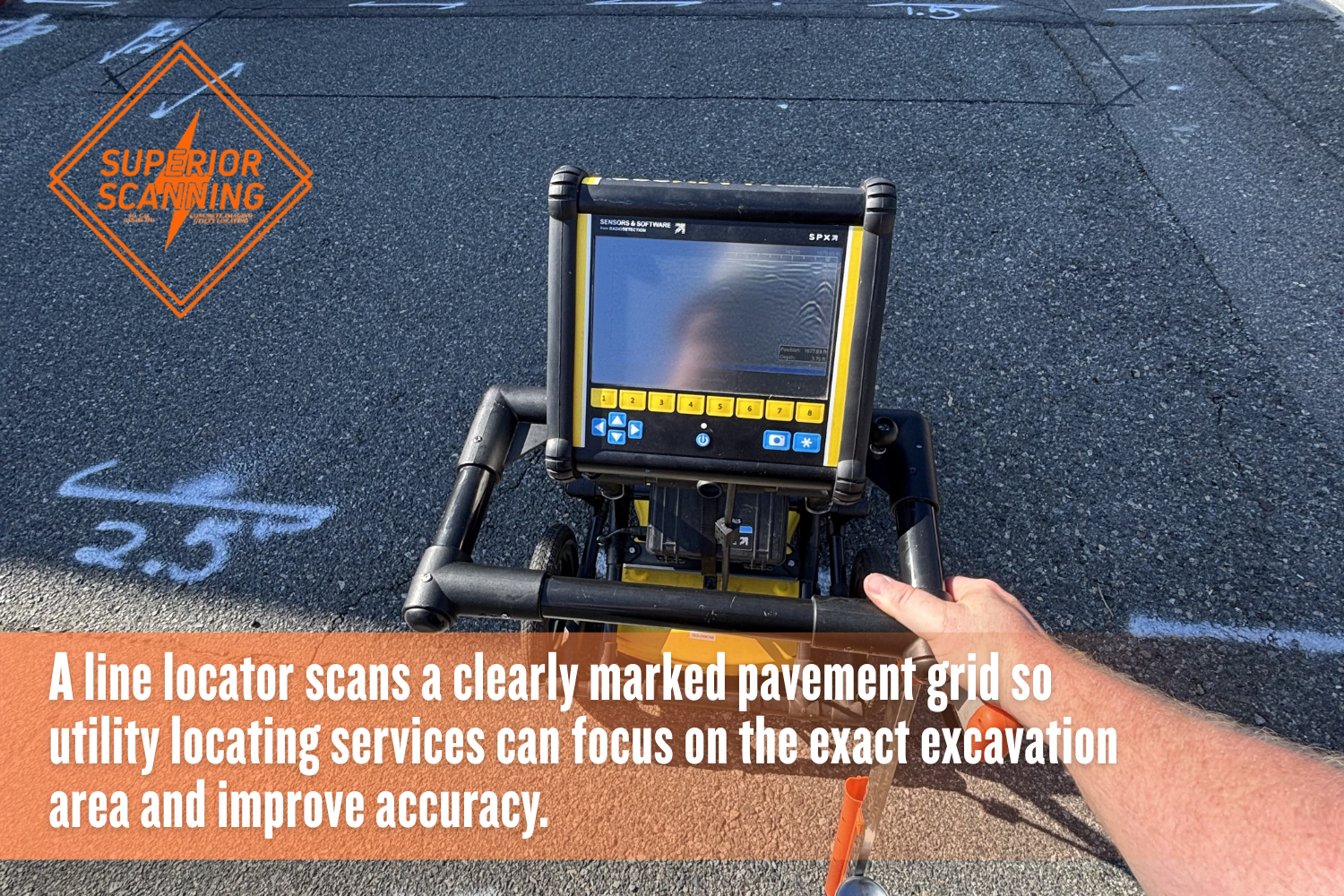
Clearly defined boundaries allow a professional line locator to focus the scanning equipment strictly on the specific areas facing immediate disruption:
- Providing a concentrated grid for utility locating services to map accurately.
- Preventing accidental utility strikes just outside the planned trench zone.
- Ensuring the utility locator scans the correct parcel on massive commercial plots.
What Happens If Crews Skip White-Lining?
Failing to mark the excavation zone leads to dangerous assumptions and expensive consequences for site managers:
- Receiving rejected ticket requests from public municipal utility agencies.
- Paying extra hourly fees for underground utility locating services to scan unnecessary square footage.
- Experiencing massive project delays due to miscommunication of digging locations between contractors and technicians.
Frequently Asked Questions
What Color Paint Is Used for Proposed Excavation?
White is the universal American Public Works Association (APWA) color used to mark proposed excavation limits.
Is White-Lining Legally Required Before Digging?
Many states and public 811 agencies mandate white-lining the property before requesting a formal dig ticket.
Can a Contractor Use White Flags Instead of Paint?
White flags or stakes work perfectly for outlining work zones on unpaved surfaces, tall grass, or loose dirt.
How Long Does White-Lining Paint Last?
Water-based marking paint serves as a temporary indicator that fades rapidly depending on local weather conditions and foot traffic.
When Should Site Managers Schedule a Line Marking Service?
Site managers should schedule the service right after white-lining the site but before any heavy machinery arrives.
Want to Ensure a Safe Excavation?
Proper white-lining delivers serious logistical and safety advantages that keep construction sites running efficiently. Taking a few minutes to define the work zone protects the ground crew, preserves the budget, and guards the project timeline.
Lock in complete subsurface scanning to catch costly mistakes before a single shovel hits the dirt. Contact Superior Scanning today to map out hidden hazards and confidently keep the project moving forward safely.
