
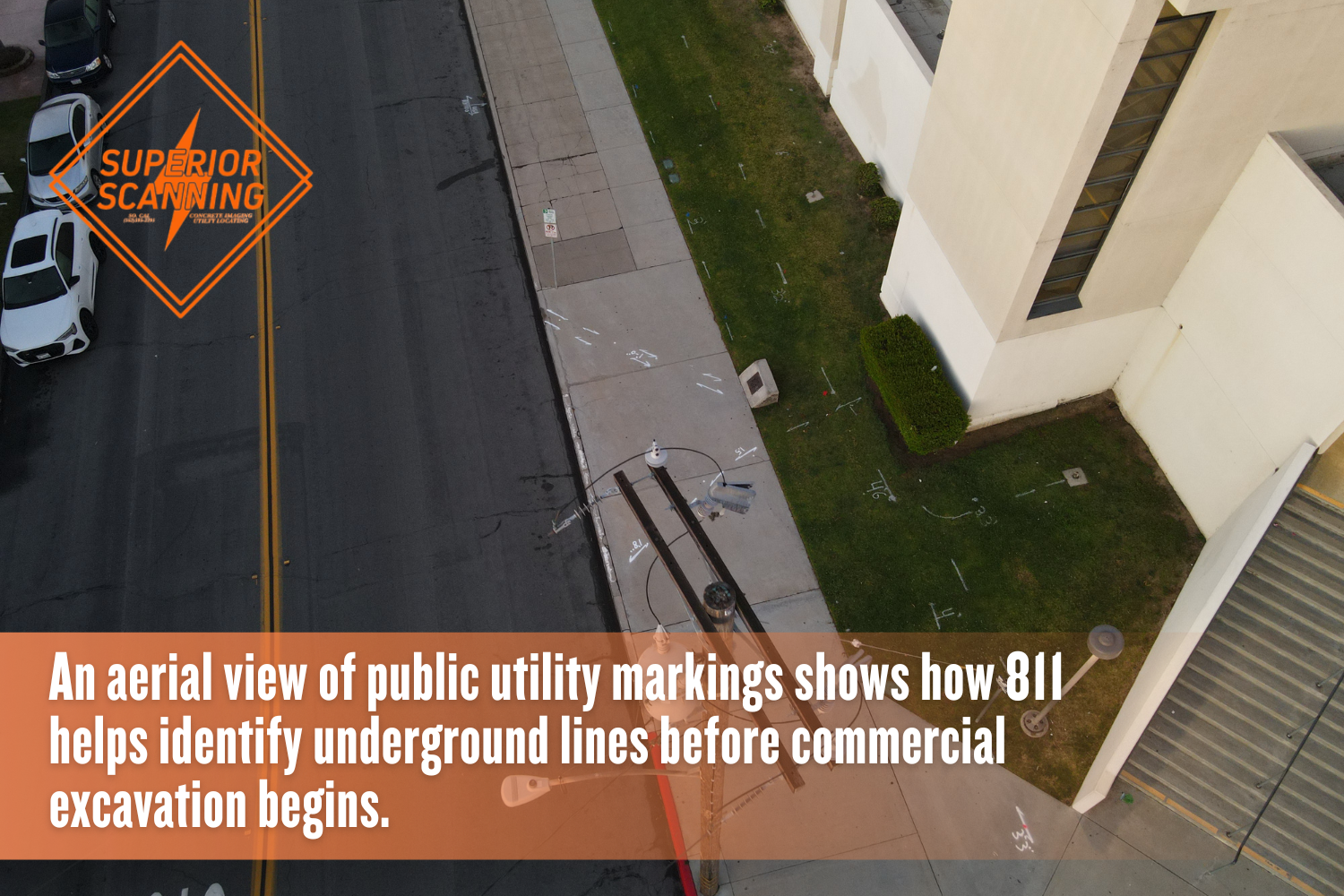
Fresh paint on the pavement often creates a false sense of security. Relying only on a public utility notice leaves a massive, dangerous blind spot directly beneath the commercial job site. Public marks are a legal requirement, but tracking stops at the property line.
You must always remember to call before you dig to alert local authorities about the upcoming project. To fully protect the site, Superior Scanning acts as a proactive safety partner, securing the entire excavation zone from day one.
Table of Contents
Don’t Cut, Core, or Drill Blind
Superior Scanning is trusted on complex job sites
What Is 811 Used For?
People often wonder exactly what 811 is used for when planning a new commercial construction project. The national public utility notification system exists strictly to trigger a municipal response that protects the community from catastrophic outages. An 811 dig request alerts local utility companies to locate and paint the underground lines before the crew breaks ground.
Preventing Major Utility Strikes
Avoiding high-voltage electrical grids and highly pressurized gas mains is the main reason to request an 811 dig map. Striking a live power line or gas main puts the excavation crew in immediate physical danger. Hitting these lines also causes massive neighborhood blackouts and shuts down the project instantly, costing thousands of dollars in delays.
Protecting Public Infrastructure Health
Keeping municipal water and sewer systems operational during private construction keeps the whole neighborhood running. A ruptured public water main can flood a job site in minutes and cut off essential services to surrounding medical offices or homes. The city relies on the initial call to protect these vital community pipelines from heavy machinery.
Maintaining State Legal Compliance
Notifying the proper authorities keeps the general contractor legally protected from severe municipal fines. State laws require every excavation project to alert local authorities to avoid damaging public infrastructure. Skipping this step puts the entire construction company at risk of expensive legal penalties and potential license suspension.
How Deep Can I Dig Before Calling 811?
Project managers ask exactly how deep they can dig before calling 811 to stay legally compliant and completely safe:
- Operating mechanized excavation equipment at any depth
- Trenching or hand-digging past standard 12-inch depths
- Performing surface-level grading for commercial landscaping
Don’t Cut, Core, or Drill Blind
Superior Scanning is trusted on complex job sites
Where Do Standard 811 Locates Actually Stop?
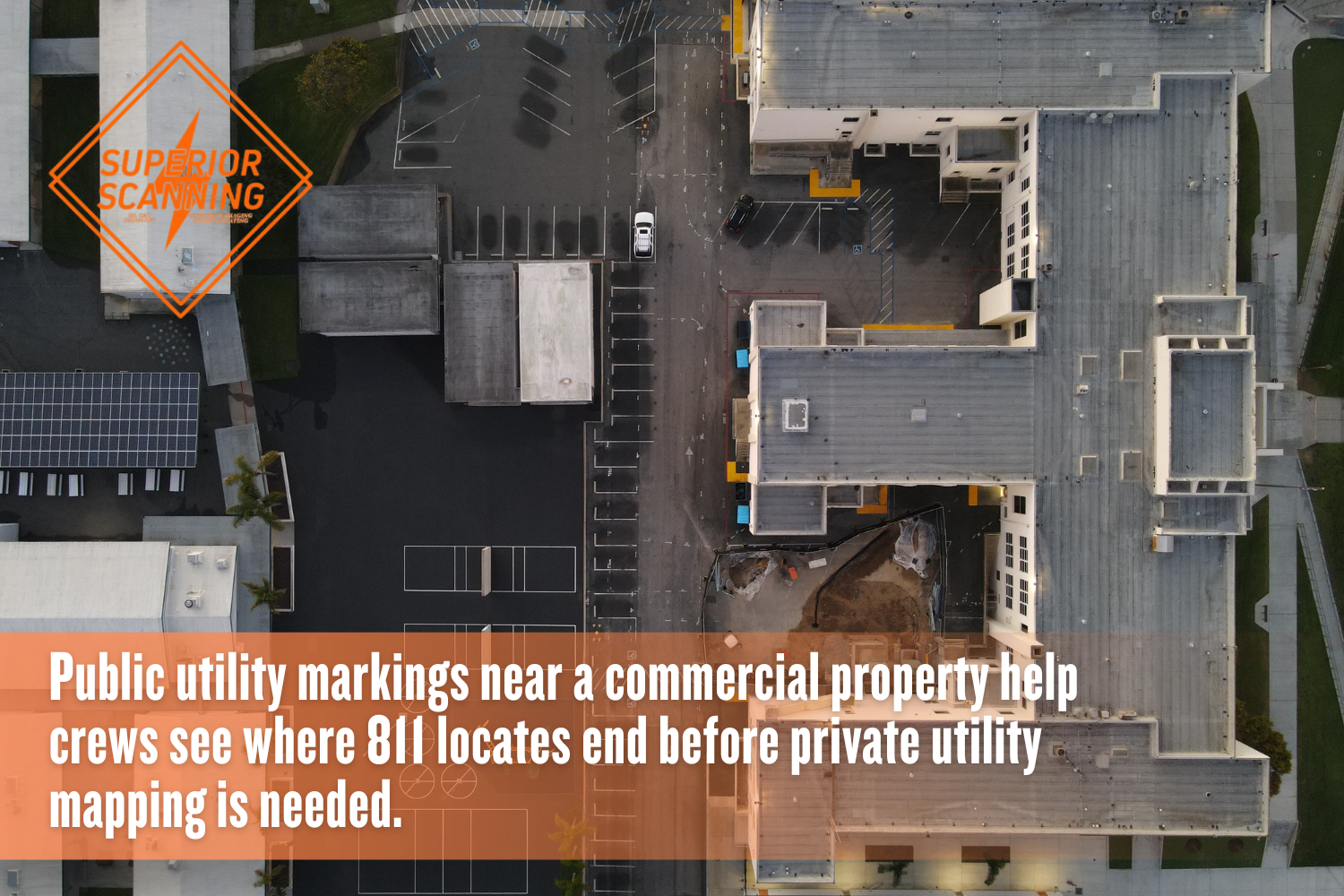
Standard 811 locates stops exactly at the strict jurisdictional boundaries of municipal utility workers. These public utility markings leave a significant portion of commercial properties completely unmapped. Project managers must understand exactly where public locators end work to avoid striking unrecorded utilities.
The Public Utility Meter
City technicians strictly stop tracing lines the moment the utility reaches the main property meter. The municipal government only owns and maintains the infrastructure leading up to that exact connection point. Any pipes or wires running past the meter belong entirely to the private property owner.
Municipal Street Boundaries
Public markings generally cover the immediate public right of way, such as sidewalks and street-facing perimeters. City workers focus their efforts purely on the areas where the main public utility grids exist. Once the property line begins, the municipal responsibility to map those underground lines completely ends.
Who Provides the Required Line Marking Service Next?
After the city marks the street, project managers must partner with Superior Scanning for a comprehensive line marking service to fill the safety gap and map the private property:
- Hiring a private line marking service to trace infrastructure past the meter
- Utilizing ground penetrating radar (GPR) to detect unrecorded abandoned pipes
- Securing complex internal networks, like parking lot lighting and private sewer laterals
Don’t Cut, Core, or Drill Blind
Superior Scanning is trusted on complex job sites
Frequently Asked Questions
What Is 811?
This is the national toll-free number used to request public utility mark-outs before any excavation begins.
Is Dig Alert the Same as Calling 811?
Yes, Dig Alert is the specific regional center operating in Southern California to handle these public utility requests.
Does 811 Mark Utilities on Private Property?
Public locators only mark utilities up to the public meter, leaving the rest of the commercial site completely unmarked.
Who Is Responsible for Private Utility Locating?
The property owner or the general contractor must hire a private locator to map the remainder of the site.
How Long Does It Take for 811 to Mark Lines?
The standard legal wait time is typically two to three full business days, depending on specific state regulations.
Securing the Rest of the Job Site
Thinking that public utility marks cover the entire property carries massive physical and financial risks. Proactive commercial scanning protects the crew from injury and prevents disastrous project delays caused by striking hidden lines.
At Superior Scanning, we serve active construction and facility sites across Southern California, including Los Angeles County, Orange County, Riverside County, and San Diego County. Contact us today to request a quote and lock in complete subsurface scanning before heavy machinery arrives on the site.
