
Unmarked sewer lines can cause costly damage, safety hazards, and major construction delays when excavation begins without accurate utility information. A sewer line locator helps contractors identify the approximate route and depth of buried pipes before digging.
Superior Scanning provides private sewer line locating services across Southern California. Accurate sewer mapping reduces utility strike risks, supports safer excavation, and gives project teams the verified information needed to protect budgets, crews, and schedules.
Table of Contents
Don’t Cut, Core, or Drill Blind
Superior Scanning is trusted on complex job sites
What Risks Are Prevented by Using an Underground Utility Locator?
Using an underground utility locator reduces the risk of damaged pipes, wastewater releases, work stoppages, and unexpected repair expenses. Professional sewer line locating also helps general contractors make better decisions when planning trenches, foundations, landscaping, utility installations, and other ground-disturbing work.
Avoidance of Wastewater Releases and Delays
Striking an active sewer lateral can release wastewater into the excavation area, forcing crews to stop work. The site may need to be cleaned, repaired, and inspected before construction can continue.
A reliable sewer line locator service identifies likely pipe routes before heavy equipment enters the area. This allows operators to adjust excavation plans, use safer digging methods, or carefully expose the line.
Protection Against Financial Liability
Damage to buried infrastructure may result in repair costs, cleanup expenses, equipment downtime, scheduling conflicts, and possible penalties. Responsibility can become complicated when private utilities are not included in municipal records or standard public markings.
Private utility locating gives the project team additional site information before excavation. Although no detection method removes every risk, locating can significantly reduce unnecessary exposure.
Prevention of Adjacent Utility Strikes
Sewer lines may share a corridor with other buried systems. A broader utility investigation can help identify:
- Water and irrigation lines
- Electrical conduits
- Natural gas lines
- Telecommunications cables
- Storm drainage systems
- Fire protection lines
Finding nearby utilities helps contractors establish safer excavation boundaries and avoid damage that could affect multiple building systems simultaneously.

When Should Contractors Hire a Sewer Line Locator?
Contractors should schedule sewer line locating before any activity that may disturb the ground or cut through an existing surface. Common projects include trenching, grading, landscaping, foundation work, fence installation, utility upgrades, and parking lot improvements.
Locating may also be needed before cutting or coring a concrete slab when sewer lines could run beneath the work area. Older commercial properties are especially important because renovations and undocumented repairs may have altered the original piping layout.
Other situations that may require locating include:
- Installing new plumbing connections
- Investigating recurring drainage problems
- Planning building additions
- Excavating near cleanouts or maintenance holes
- Confirming utilities before purchasing a property
- Preparing for demolition or redevelopment
Scheduling the service early gives engineers and contractors time to adjust plans before crews and equipment arrive.
How Does a GPR Pipe Locator Map Subsurface Infrastructure?
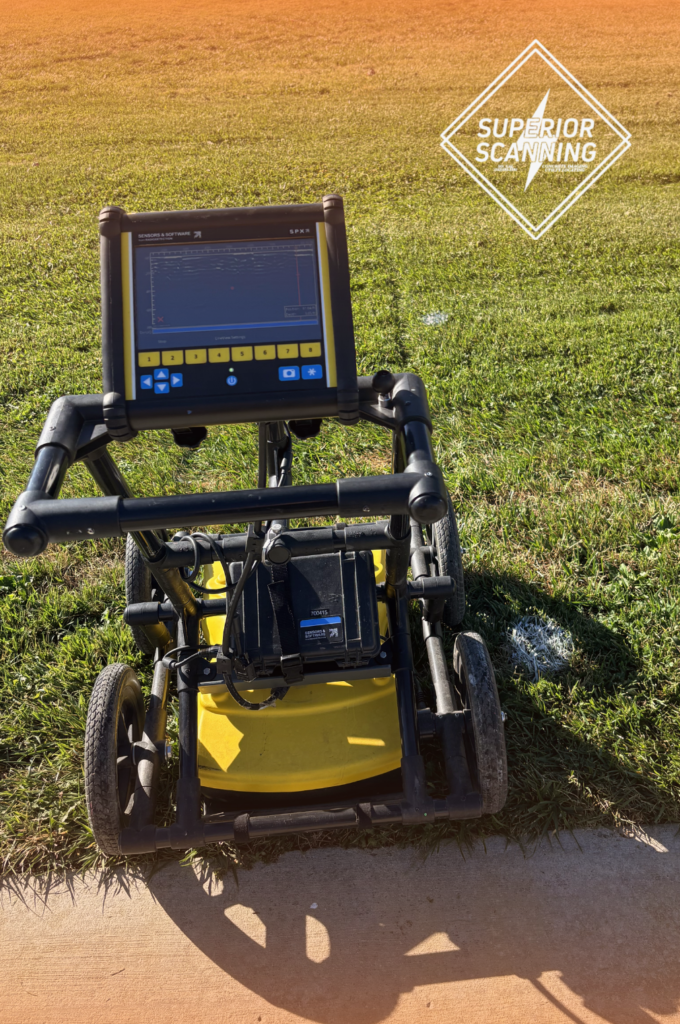
A ground-penetrating radar (GPR) pipe locator sends radar energy into the ground and records reflections from subsurface changes. A trained technician interprets those reflections to identify features that may represent pipes, disturbed soil, voids, or other buried objects.
The process is non-destructive and does not require exploratory trenches. However, ground-penetrating radar results depend on soil conditions, pipe material, depth, moisture, surface access, and surrounding congestion.
Non-Destructive Radar Scanning
The technician moves the radar equipment across the survey area in an organized pattern. Reflections appear on the system display as the equipment passes over subsurface features.
Multiple scan directions may be used to confirm the alignment of a suspected pipe. The technician can then mark the likely path on the surface for further investigation or cautious excavation.
Electromagnetic Locating
Electromagnetic equipment may be used when a utility is conductive or when a tracer wire is present. A signal is applied to the line and followed from the surface with a receiver.
This method is useful for metallic pipes and utilities with accessible conductive components. It may not locate plastic, clay, or concrete pipes unless a tracer wire or another detectable element is present.
Camera and Sonde Locating
When a cleanout or another access point is available, a sewer camera equipped with a sonde can be inserted into the pipe. The sonde sends a detectable signal, allowing the technician to track the camera head from the surface.
This method can confirm the pipe route and identify problem areas found during the camera inspection. Accessibility, blockages, bends, and pipe condition may limit how far the camera can travel.
Don’t Cut, Core, or Drill Blind
Superior Scanning is trusted on complex job sites
Can a Sewer Line Locator Detect Non-Metallic Pipes?
Plastic, clay, and concrete sewer lines can be difficult to locate using electromagnetic equipment alone because they do not conduct an applied signal. Ground-penetrating radar may detect these pipes when site conditions provide enough contrast between the pipe, surrounding soil, and trench material.
A camera and sonde may provide another option when the pipe is accessible. Technicians often combine methods rather than relying on one device. Using available records, visible cleanouts, radar data, electromagnetic signals, and camera tracing can produce a more complete understanding of the site.
Why May 811 Markings Not Include Private Sewer Lines?
The 811 service is an essential first step before excavation, but its scope generally focuses on utilities owned by participating public or utility companies. Privately owned lines beyond the service connection may not be included.
Coverage and responsibilities vary by location and utility provider. Contractors should still submit an 811 request and allow participating operators to mark their facilities before hiring a private locator to address any remaining gaps.
Exclusion of Private Laterals
Sewer laterals running from a building to a public main are commonly owned or maintained by the property owner. Other private utilities may include lighting circuits, irrigation pipes, fire lines, and communication cables between buildings.
A private sewer line locator can investigate these areas when they fall outside the scope of standard utility markings.
Limited Depth Information
Public utility markings generally indicate the approximate horizontal location of a line rather than guaranteeing an exact depth. Burial depth can change because of grading, erosion, paving, repairs, or other site modifications.
Contractors should not assume a utility is safe to cross based only on expected depth. Careful exposure methods may still be required near marked lines.
Missing or Outdated Records
Plans and utility maps may not reflect undocumented repairs, abandoned pipes, rerouted connections, or later construction. On-site locating compares available records with current physical conditions.

How Should a Site Be Prepared for Sewer Line Locating?
Project teams should provide utility plans, as-built drawings, cleanout locations, and information about previous repairs when available. Vehicles, equipment, stored materials, and debris should be moved away from the survey area.
The locator should also know the proposed excavation route, depth, and project limits. This helps focus the investigation on the areas that matter most.
Surface conditions can affect access. Standing water, heavy vegetation, reinforced pavement, dense utility congestion, and nearby electrical interference may reduce detection quality.
What Should Contractors Expect After the Survey?
The technician typically marks detected utility routes on the surface using paint, flags, or other agreed-upon methods. Findings may also be documented through photographs, field sketches, or utility maps, depending on the project scope.
Markings should be treated as investigative information rather than a guarantee that every buried object has been found. Contractors must continue to use appropriate safe-digging practices, especially when excavating near a marked utility.
Don’t Cut, Core, or Drill Blind
Superior Scanning is trusted on complex job sites
Frequently Asked Questions
How Does a Private Sewer Line Locator Work?
A private sewer line locator may use ground-penetrating radar, electromagnetic equipment, a camera and sonde, or a combination of methods to trace a buried pipe.
Why Can’t I Rely Only on 811?
Public utility operators may not mark privately owned sewer laterals or other utilities located within the property. A private locator helps investigate those remaining areas.
Will a Locator Find Plastic or Clay Sewer Lines?
Ground-penetrating radar or a camera with a sonde may locate non-metallic pipes, but the results depend on access, depth, soil conditions, surface conditions, and pipe configuration.
How Deep Are Sewer Lines Buried?
Depth varies significantly by property, pipe slope, local conditions, construction history, and connection point. Contractors should never rely on a standard assumed depth.
Is Sewer Line Locating Completely Accurate?
No locating method can guarantee every utility will be detected. Combining technologies, reviewing records, and carefully exposing lines can improve confidence and reduce risk.
Will Blind Excavation Threaten Project Budgets and Timelines?
Blind excavation can lead to utility damage, wastewater releases, emergency repairs, and avoidable work stoppages. Using a sewer line locator gives contractors better information before they dig and helps them establish a safer excavation plan.
Superior Scanning supports commercial, industrial, and construction projects throughout Southern California with private utility locating and subsurface investigation services.
Contact Superior Scanning to confirm the location of buried sewer lines before excavation and reduce preventable risks on the job site.
