
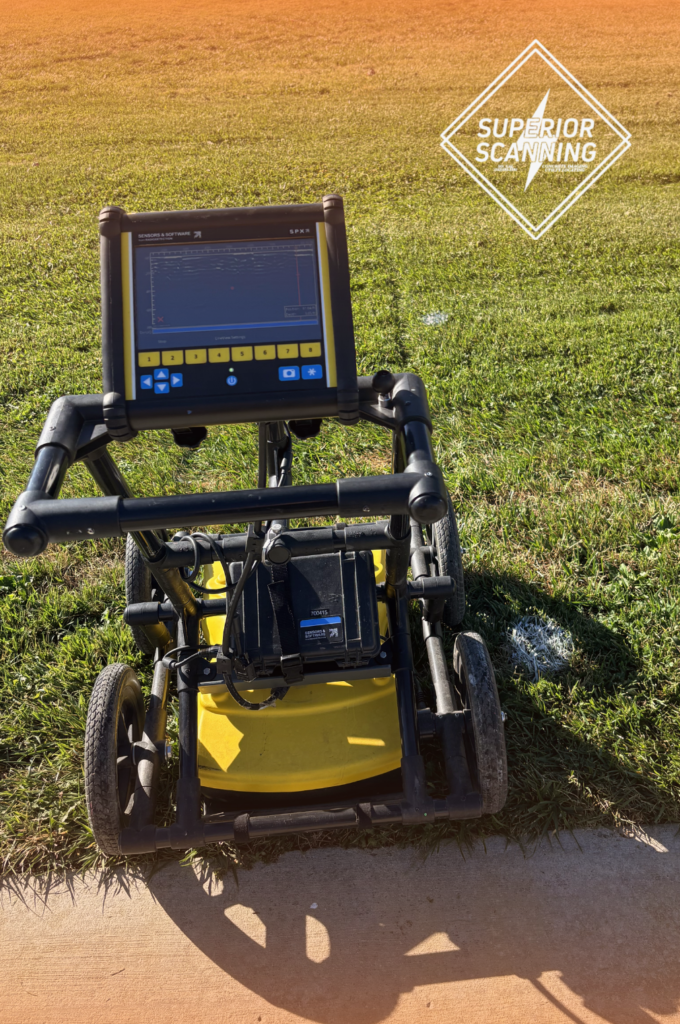
Drilling blindly into a solid slab is a massive risk. Core drilling happens constantly on modern job sites to route plumbing pipes, run electrical wires, and upgrade HVAC systems. Treating that surface like basic poured rock often leads to broken utilities or snapped tension cables.
Ground-penetrating radar (GPR) scanning from Superior Scanning gives contractors, engineers, and property owners a clear view of hidden subsurface hazards before any real work starts.
Table of Contents
Don’t Cut, Core, or Drill Blind
Superior Scanning is trusted on complex job sites
What Is Core Drilling?
This process involves removing a perfectly round cylinder of material from a tough surface. Professionals in the construction industry often call this specific technique concrete coring. Crews rely on this method to create clean, precise openings without damaging the surrounding structure.
Why do crews core drill concrete?
Workers use core drilling to pass building systems from one side of a wall or floor to the other. Common applications include accommodating plumbing lines, electrical conduits, and large HVAC ducts. Teams also use this technique to install heavy-duty structural anchors or to extract samples for testing material strength.
Why Should You Scan Concrete Before Core Drilling?
A poured slab is rarely empty. It usually hides a dense maze of rebar, post-tension cables, and utility lines. Scanning the area first removes the guesswork and danger from the job.
- Avoid hitting rebar: Rebar gives the structure essential strength. If the drill bit catches and cuts right through that steel, you compromise the integrity of the whole area and face expensive repairs.
- Protect post-tension cables: High-tension steel cables can withstand massive forces. Snapping one is incredibly dangerous for the equipment operator and can cause an instant structural failure.
- Prevent damage to conduits and utilities: A surface scan maps active electrical lines and buried plumbing pipes. Hitting a live wire or a pressurized water main creates a nightmare scenario for the project.
- Keep the project moving: Finding obstacles ahead of time keeps the crew working safely. Shutting down a site because someone hit an unmarked pipe throws the entire weekly schedule off track.
How Do Concrete Scanning Services Work?
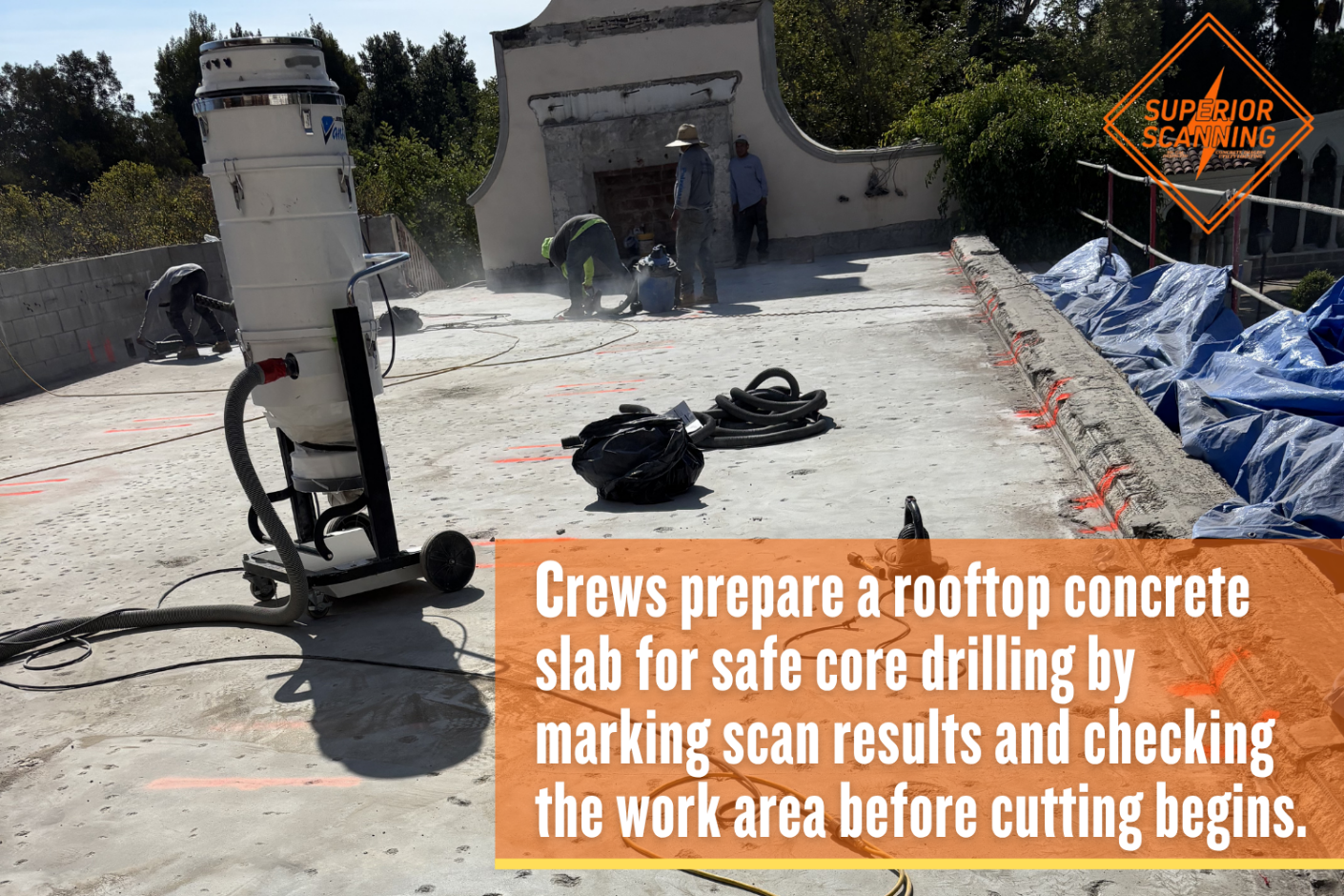
Professional concrete scanning services rely on ground penetrating radar to see through the slab. This technology sends harmless radio waves into the surface and reads the signals that reflect back to the receiver. Technicians use this data to create a highly accurate map of the interior layout.
What can GPR scanning find?
A skilled technician reading a radar screen spots almost anything hidden in the mix. The equipment easily finds thick rebar grids, PVC pipes, metal conduits, tensioned cables, and unexpected air voids.
Is GPR scanning safe?
Yes. Ground penetrating radar is entirely non-destructive. It emits no harmful radiation and requires zero test drilling.
Do You Need a GPR Scan for New Concrete?
Scheduling a GPR scan for new concrete service is highly recommended, even on fresh builds. Wet concrete moves, and internal components settle after the pour. A quick scan confirms the actual resting location of sleeves and embeds before the cutting equipment arrives.
Why are plans not always enough?
Blueprints show what the architect originally intended, but field adjustments happen every day. Printed as-built drawings might leave out crucial, last-minute changes.
Don’t Cut, Core, or Drill Blind
Superior Scanning is trusted on complex job sites
Who Should Scan Before Core Drilling Concrete?
Anyone about to cut into a slab needs to know what is inside. Taking a few extra minutes to check the subsurface protects both the project budget and the people holding the heavy tools.
- Homeowners planning renovations: Ripping up a basement floor for a new bathroom or trenching a garage means dealing with the slab. Scanning prevents a simple weekend remodel from turning into an expensive plumbing disaster.
- Contractors and construction crews: Plumbers, electricians, and general contractors need a safe, clear path marked out before they fire up the rig.
- Engineers and project managers: The people running the job need hard data from the field. Scan results provide the exact documentation required to confidently approve drill locations.
- Companies and facility teams: Facility managers overseeing active hospitals, busy schools, or crowded warehouses use these services to protect the buildings during upgrades.
What Happens If You Skip Concrete Scanning?
Skipping a surface scan is a massive gamble. Drilling blind virtually guarantees that you will eventually hit something important.
- You could cause costly damage: Hitting a hidden pipe means paying out of pocket for emergency utility repairs and compensating workers for downtime.
- You could create safety hazards: A spinning drill bit hitting a live electrical conduit puts the operator in immediate danger. Damaged post-tension cables can violently burst right through the floor.
- You could delay the whole project: A single preventable accident triggers a chain reaction of unexpected shutdowns, new state safety inspections, and frustrating schedule delays.
When Should You Call a Professional for Concrete Scanning?
Bring in a specialist whenever there is any doubt about what sits beneath the surface. Guessing is simply not worth the liability.
- Call before drilling into existing concrete: Older buildings are notorious for hiding undocumented utilities and strange rebar layouts from past remodels.
- Call before drilling near marked utilities: If the work zone gets close to private utility lines, a professional locator will drastically lower the risk of a dangerous strike.
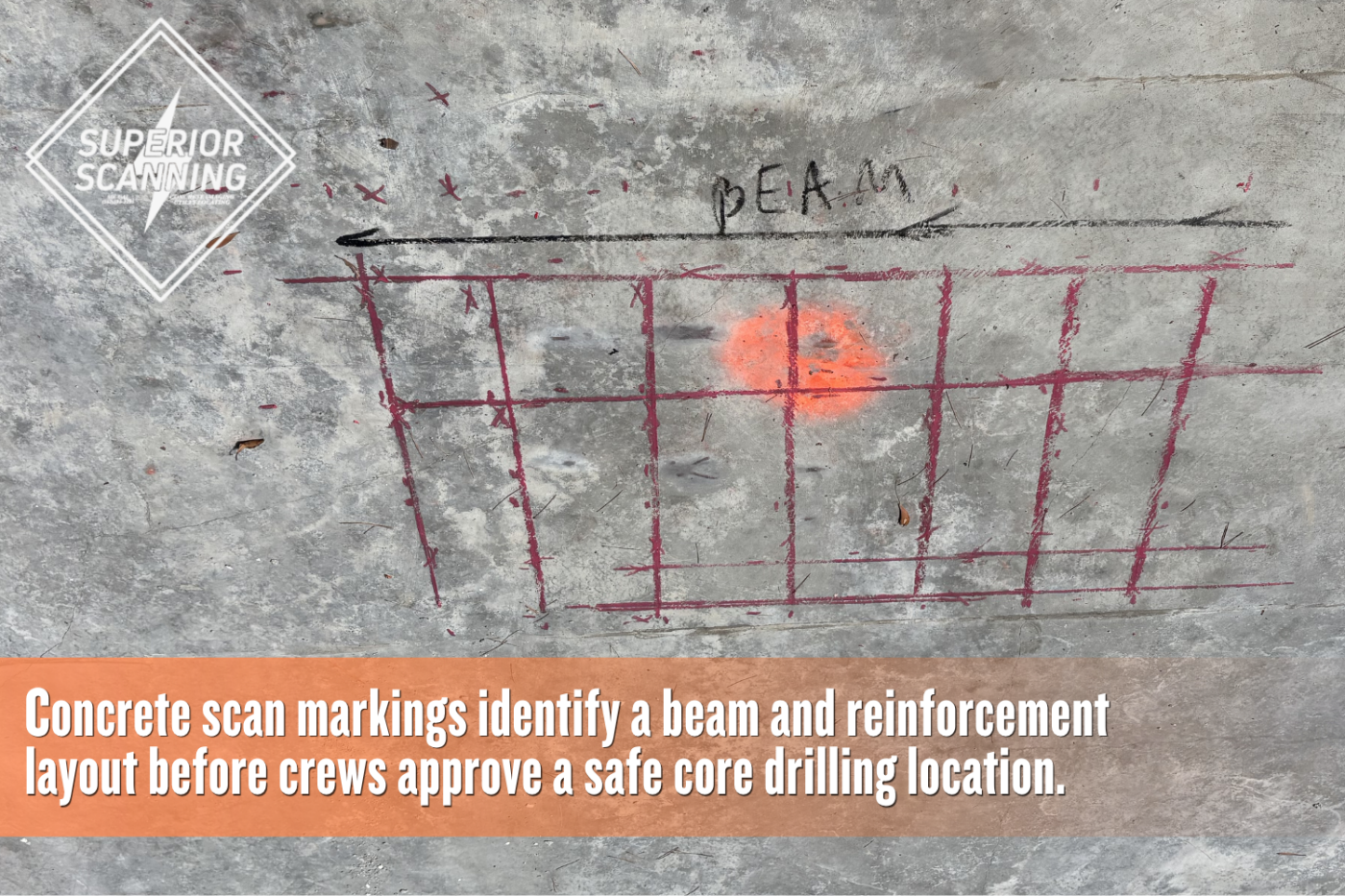
- Call when the project needs clean documentation: Property owners and city inspectors often ask for official scan reports and physical markings before approving a cut.
- Call Superior Scanning before your crew cuts, cores, or drills: Superior Scanning handles concrete scanning services, private utility locating, and advanced utility mapping across Southern California. They cover job sites in Los Angeles, Orange County, Riverside, and San Diego.
Don’t Cut, Core, or Drill Blind
Superior Scanning is trusted on complex job sites
Frequently Asked Questions
Should you scan concrete before core drilling?
Yes. Scanning helps locate hidden rebar, electrical conduits, post-tension cables, and unexpected voids before any drilling begins.
What is the difference between core drilling and concrete coring?
These terms usually mean the exact same thing in the industry, referring to cutting a round hole completely through a solid surface.
Can GPR find rebar before core drilling?
Yes. Radar technology maps internal rebar grids, allowing the crew to mark safe drilling locations.
Can you GPR scan new concrete?
Yes, and it is often necessary. A GPR scan for new concrete finds shifted reinforcement and buried conduits before the drilling team arrives.
Who should I call before core drilling concrete?
You should contact a professional concrete-scanning company, such as Superior Scanning, to map hidden utilities and structural elements.
Scan Before Core Drilling With Superior Scanning
You need a clear picture of what is down there before you ever turn on the equipment. Core drilling concrete carries massive physical risks and can ruin the project budget in seconds if you accidentally strike active utilities or tensioned cables.
Superior Scanning helps homeowners, contractors, engineers, and facility managers locate hidden hazards before any cutting, coring, drilling, or excavating starts. Reach out to our professional team today to keep the job site safe, on track, and free of costly surprises.
