
...

Concrete X-Ray Explained: How It Compares to GPR and When to Call a Pr

Concrete imaging decisions are a critical part of jobsite planning. Project managers often face the choice between concrete X-ray and GPR scanning when evaluating a thick, unknown slab. The term “concrete X-ray” is commonly used as a catch‑all whenever crews need to see inside a floor before drilling or cutting, but the reality is that each method has distinct applications.

Partnering with a trusted provider like Superior Scanning ensures that the right technology is applied to each situation. Understanding the differences between these methods is essential for maintaining safety, avoiding utility conflicts, and keeping projects on schedule. 

This guide breaks down which scanning approach best fits your job’s specific requirements, helping you make confident decisions every time.

Table of Contents

Don’t Cut, Core, or Drill Blind

Superior Scanning is trusted on complex job sites

What Is Concrete X-Ray?

Concrete X-ray is a specialized imaging technique that reveals what lies inside solid walls and floors before heavy cutting or drilling begins. The process produces clear images of rebar, conduit, post-tension cables, and plumbing pipes, helping crews avoid structural damage and dangerous mistakes. Project managers request this service to secure jobsite safety, eliminate hidden risks, and ensure a reliable plan that keeps the work moving without costly surprises.

How Does Concrete X-Ray Work?

Concrete X-ray works by directing high-energy radiation through a slab to a film or digital sensor placed on the opposite side, producing a sharp image of dense materials hidden within. Unlike surface scanning methods that require access to only one side, X-ray imaging requires placement of equipment on both sides of the structure and strict safety measures, including evacuating nearby workers and establishing a secure perimeter, because the process involves hazardous radiation.
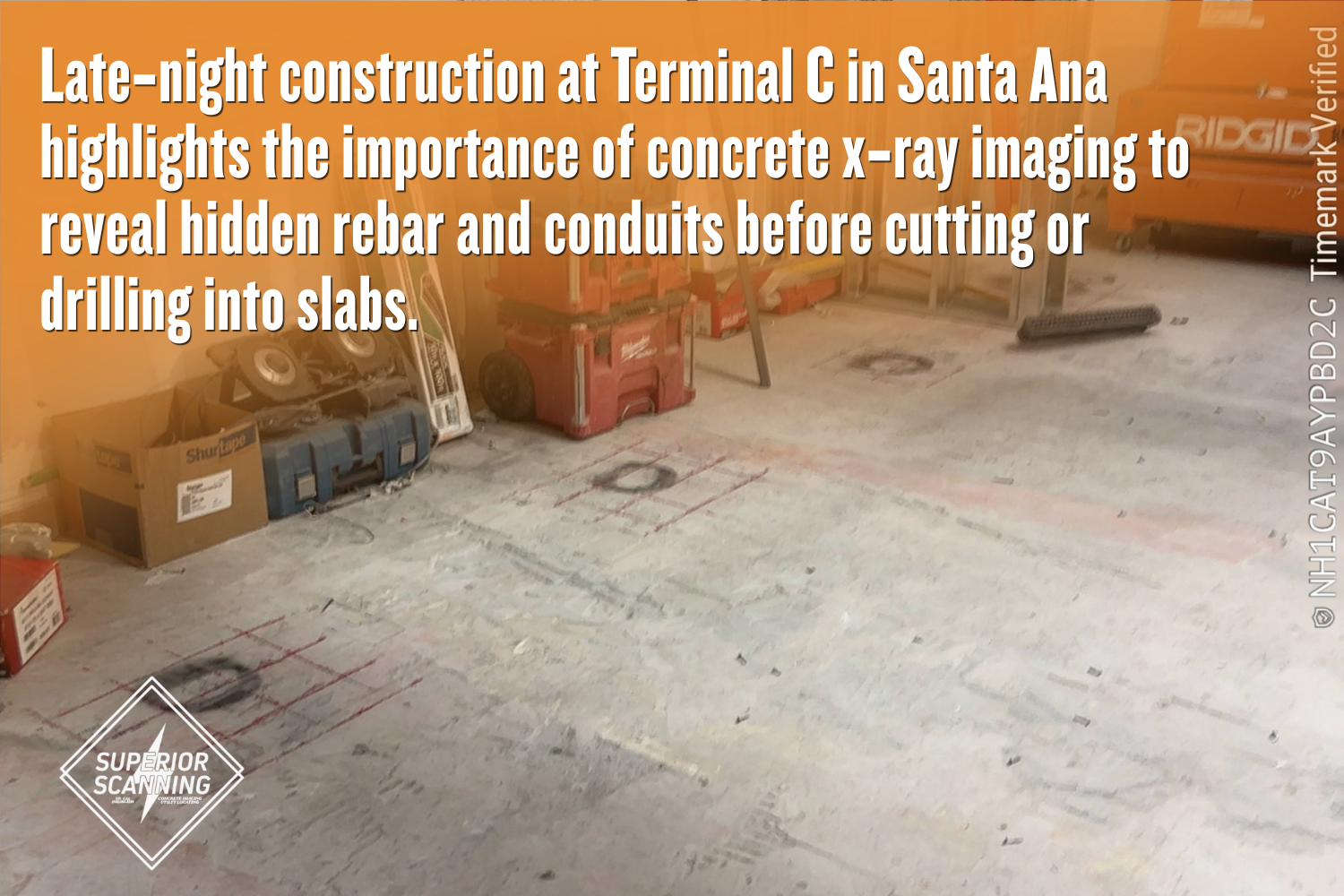
Construction site at Terminal C in Santa Ana with unfinished drywall, metal studs, toolboxes, and marked concrete floor, emphasizing the role of concrete x‑ray in detecting hidden rebar and conduits before drilling.

What Is GPR Concrete Scanning?

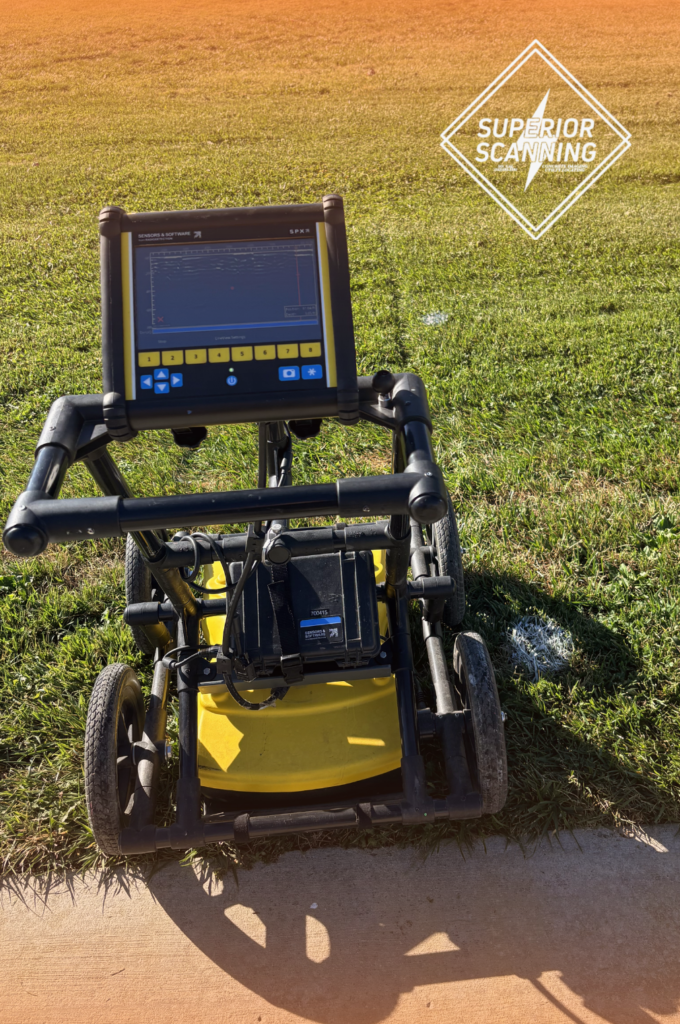
Ground Penetrating Radar (GPR) concrete scanning uses safe, high-frequency radio waves to map what lies inside a slab without disrupting ongoing work. The scanner sends rapid pulses into the concrete, and when those signals bounce back from rebar, post-tension cables, conduits, or voids, the data instantly appears on a digital display.  This makes GPR a fast, effective tool for locating both metallic and non-metallic objects and for detecting changes in slab thickness. Because it emits no radiation and requires no evacuation, crews can continue working nearby while technicians scan, making GPR the preferred choice on active jobsites.

What Is The Difference Between Concrete X-Ray And GPR?

The main differences boil down to job-site speed, safety rules, and how the equipment physically accesses the slab. Project managers have to assess the specific site conditions to choose the right approach. The table below highlights how each technique actually performs in the field.
Feature Concrete X-Ray GPR Concrete Scanning
Speed on the Jobsite Requires long setup and exposure times. Fast setup with real-time scanning.
Use in Occupied Buildings Requires strict safety perimeters and evacuations. Completely safe with no evacuations needed.
Access Requirements Needs access to both sides of the concrete. Only needs access to one side of the slab.
Field Decisions Takes time to process the image. Delivers instant results on a digital screen.
Everyday Practicality Best for highly specific, complex imaging needs. Highly practical for most daily construction tasks.

Is Concrete X-Ray The Same As Concrete Scanning?

Concrete X-ray and concrete scanning are often confused, but they are not the same. While many in construction casually use “concrete X-ray” as a catch-all term, the method actually involves radiation-based imaging that requires strict safety protocols. In contrast, GPR has become the modern standard, offering fast, non-invasive scans without evacuations. Misusing the terminology can lead to costly delays if the wrong equipment is dispatched, so understanding the distinction ensures the right technology is applied, keeping crews safe, schedules intact, and budgets under control.

When Should You Use Concrete X-Ray Instead Of GPR?

Concrete X-ray is the preferred choice over Ground Penetrating Radar (GPR) in specific scenarios requiring absolute clarity and strict documentation. You should opt for traditional radiation imaging in the following situations:
  • For highly detailed structural inspections: It provides a picture-perfect, physical photograph of the interior, which is crucial for complex slabs where standard radar might return confusing data.
  • To distinguish tightly packed elements: X-ray film captures tiny physical separations, making it vital for evaluating tightly bundled rebar or overlapping post-tension cables that radar waves might blur together.
  • When two-sided access is available: The process requires crews to have completely clear access to both the top and bottom of the concrete floor.
  • When the site can be fully evacuated: Site managers must have the authority and ability to clear the entire area of all personnel during the active radiation exposure period.
  • To meet strict regulatory mandates: City inspectors and structural engineers frequently require physical film records as the highest level of visual proof before approving major commercial renovations or high-stakes structural changes.

Don’t Cut, Core, or Drill Blind

Superior Scanning is trusted on complex job sites

When Is GPR The Better Choice Than Concrete X-Ray?

GPR is the go-to method for most daily construction tasks, offering an ideal balance of speed and pinpoint accuracy. You should opt for radar in the following situations:
  • When time is critical: It provides immediate, on-the-spot safe zone markings, preventing costly delays when core drillers are standing by.
  • When access is limited to one side: It only requires access to the top of the slab, making it the only viable option for slab-on-grade foundations sitting directly on dirt.
  • When minimizing site disruption is necessary: It emits no dangerous radiation, eliminating the need for forced evacuations and allowing other trades to stay productive.
  • When high-volume, real-time results are needed: The live screen readout allows operators to move swiftly across massive areas and scan dozens of locations without waiting for film to develop.

Why Does Scanning Concrete Matter Before Cutting, Coring, Or Drilling?

Scanning concrete before cutting, coring, or drilling is essential to transform a high-risk gamble into a controlled, safe operation. Identifying buried hazards like rebar and post-tension cables prevents violent equipment kickback, structural failure, and catastrophic injuries caused by snapped steel. Furthermore, detecting conduits and pipes allows crews to adjust drill locations to avoid electrical fires or floods. By providing accurate depth measurements, scanning protects expensive diamond blades and ensures the integrity of the property and the safety of the people on site.

What Are The Limits Of Concrete X-Ray And GPR?

Both technologies have boundaries shaped by slab conditions, embedded materials, and operator skill. Understanding these limits helps project managers set realistic expectations and avoid missteps:
  • Dense steel grids complicate results: Overlapping mesh can scatter signals, hiding pipes or conduits beneath.
  • Slab thickness and moisture reduce accuracy: Radar loses strength in wet or newly poured concrete, while very thick structures may require radiation imaging.
  • Technician expertise is critical: Interpreting complex data takes years of practice; inexperienced operators can miss subtle signs of hazards.
Recognizing these constraints ensures safer planning, better tool selection, and more reliable outcomes on the jobsite.

What Should You Know Before Booking Concrete X-Ray Services?

Before scheduling concrete X-ray services, it’s important to gather and share key site details to avoid delays and ensure accurate results. Confirm whether the provider offers both radar and radiation imaging, ask about response times and marking procedures, and disclose any access challenges such as locked gates, limited parking, or tenant occupancy. Clear communication about safety zones and project deadlines helps the dispatcher recommend the right method, often GPR unless structural photographs are required, so the crew arrives prepared with the proper equipment and the job runs smoothly.

How to Choose Between Concrete X-Ray and GPR Scanning Services?

Concrete X-ray services and GPR scanning companies offer different strengths, so comparing them side by side makes it easier to choose the right provider for your project:
Evaluation Point Concrete X-Ray Services GPR Scanning Companies
Clarity of Options Must explain radiation-based imaging and when it’s necessary, without upselling. Should outline radar scanning benefits and confirm if it’s sufficient for the job.
Hazard Detection Effective for locating dense materials, but requires specialized training. Proven track record in finding rebar, conduits, and post-tension cables quickly.
Jobsite Compatibility Requires safety evacuations and strict boundaries, which can disrupt active sites. Safe for busy construction zones; crews can continue working during scans.
Field Markings Must leave precise markings after imaging, though setup is more complex. Provides clear, visible paint or tape markings directly tied to radar results.
Response & Experience Look for providers with strong communication and industry expertise. Seek companies with fast response times and extensive commercial site experience.

When Should You Call A Professional Like Superior Scanning?

Hiring a professional ensures accuracy, safety, and efficiency on the jobsite. Here are the key situations where expert support is essential:
  • Cutting, coring, or drilling with confidence: Professionals provide precise mapping so crews avoid hidden utilities.
  • Locating rebar, conduit, or post-tension cables: Trained technicians identify hazards that outdated blueprints may miss.
  • Making fast field decisions on active sites: Experts deliver real-time data to keep trades moving without delays.
  • Managing multiple services within a single team: Superior Scanning offers GPR scanning, utility locating, and mapping in a single streamlined service.

Don’t Cut, Core, or Drill Blind

Superior Scanning is trusted on complex job sites

Frequently Asked Questions

What is a concrete X-ray?

Concrete x-ray is a detailed imaging technique that uses radiation to pass through a floor and create a visual negative of the hidden materials inside.

Is a concrete X-ray the same as GPR?

These two methods are completely different: GPR uses safe radio waves, while the older method relies on radiation and requires access to both sides of the floor.

What does a concrete X-ray machine do?

A concrete X-ray machine shoots high-energy radiation through a solid wall to capture an exact picture of the metal and plastic buried within.

When should I choose concrete X-ray services?

You should request concrete X-ray services when a structural engineer demands high-resolution film proof of complex, overlapping rebar grids.

How do I know if I need a scanning company before cutting concrete?

You need to hire a scanning company anytime you plan to drill or core into a slab where you cannot visually verify the location of buried pipes.

Need Concrete Scanning Before You Cut, Core, Or Drill In Southern California?

Knowing exactly what sits inside a slab is the only real way to protect a project from massive repair bills and dangerous accidents. You can completely eliminate the daily guesswork and keep the crew safe by mapping out the hazards before a saw ever touches the floor.

Superior Scanning helps crews make clearer field decisions, with far fewer surprises on complex job sites. Our team delivers highly accurate concrete scanning and utility mapping across Los Angeles, Orange County, Riverside, and San Diego. Reach out to the experts before the work begins to ensure every single cut happens exactly where it belongs.

Leave a Comment

Your email address will not be published. Required fields are marked *

Seraphinite AcceleratorOptimized by Seraphinite Accelerator
Turns on site high speed to be attractive for people and search engines.