


A pipe belly can trap wastewater after a clog clears, but repeat backups alone do not confirm sagging. A camera for plumbing pipes helps document where water collects and what else may be blocking flow.
If the same drainage problem keeps returning, ask Superior Scanning about closed-circuit television (CCTV) pipe inspection to help document visible conditions before planning repairs. The next step depends on the pooling pattern, the camera's view, and whether another cause explains the water.
Key Takeaways
- Waterproof construction protects the camera head; it does not guarantee a clear underwater image.
- Never force a camera for plumbing through a clog or use it to clear debris.
- A stopped sewer camera does not prove pipe collapse; document every section that remains unseen.
- Have a qualified plumber assess clearing, then reinspect when passage and visibility improve.
- Locating tracks the camera’s transmitter; depth readings are estimates and should not set digging depth.
What Is a Pipe Belly?
A pipe belly is a sag or low spot in a gravity sewer or drain line where wastewater can collect instead of draining fully. The problem involves the pipe's slope and support.
How Does a Low Spot Form in a Gravity Line?
Gravity drainage depends on a suitable downward slope that carries wastewater toward the outlet. Soil settlement, poor installation, or weak bedding can leave part of the pipe lower than the section ahead.
Bedding is the material beneath the pipe that supports it. Uneven support can allow the pipe or its joints to settle.
Why Do Water and Solids Collect in a Pipe Belly?
A belly can hold water and slow the flow enough for solids to settle. According to a 2009 U.S. Environmental Protection Agency (EPA) research report, pipe sags can produce low flow speeds that encourage deposits.
A belly concerns pipe alignment. A clog is material that blocks the pipe, although both problems can occur together.

How Does a Sewer Camera Reveal Sagging?
A sewer camera can reveal a suspected belly when footage shows a localized section of pooled water. The technician must check the full pattern before deciding that the pipe has sagged.
Visible Changes in Water Level
Water may cover more of the lens as the camera enters a low section, then recede as it moves past. Recording the start, highest apparent water level, and return to normal helps show the extent of pooling.
Checks for Blockages and Flow Changes
A technician checks for downstream obstructions and flow changes before identifying a sag. Camera position also matters.
In a published review, sewer-inspection trainer Michael P. Kerr questioned a reported 80% water level because the camera lens stayed dry. He attributed the apparent sag to submerged debris beneath a raised camera.
Appropriate cleaning or repeat footage can help clarify uncertain findings. A single image of standing water does not establish a pipe belly.
What Can a Drain Camera Miss?
Basic video from a drain camera does not measure exact pipe slope or reveal every hidden defect. Use “suspected belly” when the evidence remains unclear. Camera findings should account for these limits:
- Exact slope: Separate measurements may be needed. Basic video cannot confirm grade.
- Hidden surfaces: Murky water can conceal cracks. Deposits can cover joints.
- External support: Interior footage cannot assess surrounding soil. Bedding needs other checks.
- Uncertain causes: Blockages can raise water levels. Flow can also change.
The EPA research report documents these limits of basic CCTV. Ask which findings rely on video and which use separate measurements.
When Is a Plumbing Camera Inspection Needed?
A plumbing camera inspection is worth considering when drainage problems return or earlier footage leaves the cause unclear. Similar symptoms can come from roots, grease, or damaged joints. An inspection may be useful in these situations:
- Clogs return after cleaning: The restriction may need a closer look.
- Slow drainage or backups persist: Record which fixtures are affected.
- Earlier footage shows unexplained water: Ask what remained unclear.
- A repair, renovation, or purchase is planned: Review pipe condition before deciding on work.
The aim is to gather evidence before choosing a response. A camera for plumbing pipes can document accessible conditions without proving the cause of every symptom.
What Should a Sewer Inspection Camera Report Show?
A sewer inspection camera report should show where the suspected low section lies and what limits the findings. It should separate visible observations from confirmed measurements.
Recorded Distances and Water Levels
The report should name the access point and show distance readings across the pooled section. Include visible defects, and label cable distances and apparent water levels as estimates unless separately verified.
Location Details and Inspection Limits
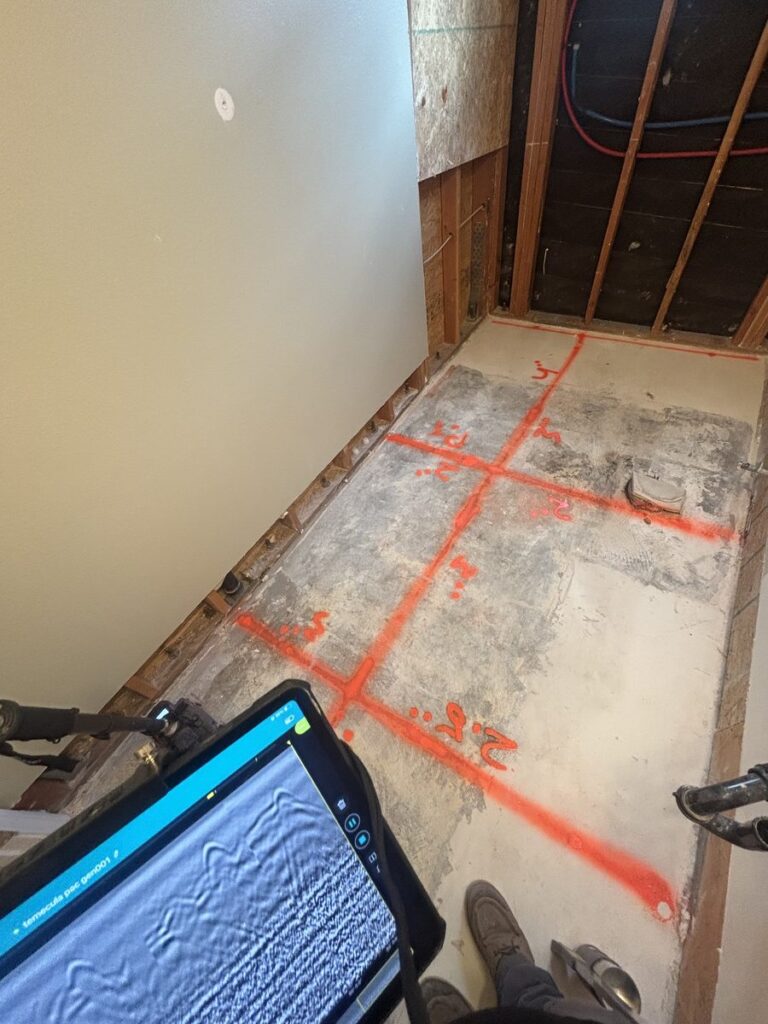
A compatible sonde or small transmitter, plus a surface receiver, helps locate the camera and estimate depth where signals allow. The sonde's depth differs from the water depth inside the pipe.
List obscured or unreachable sections. For larger projects, utility mapping can preserve location findings for planning.

Can a Plumbing Camera Guide Repairs?
A plumbing camera can support repair planning once a contractor has enough evidence to identify the drainage problem. A low spot alone does not make immediate replacement the only option.
Cleaning for Accumulated Debris
Drain clearing can remove buildup and improve flow. It cannot lift or realign a sagging pipe.
Grade Correction for Confirmed Sagging
A qualified plumbing contractor may recommend exposing, rebedding, or replacing a confirmed sagging section when warranted. Rebedding restores support beneath the pipe.
Standard pipe lining follows the existing path and generally leaves the slope unchanged. Spokane's sewer handbook warns that lining does not remove existing bellies.
Frequently Asked Questions
Visible cracks or water entry may suggest leakage, but a sewer camera cannot confirm every leak.
Cable length, bends, access, and obstructions determine how far a sewer camera can travel.
Inspection cost depends on pipe length, access, locating, and report scope; request an itemized quote for the property.
An initial inspection can guide cleaning, while debris that blocks passage or visibility may require clearing first.
Standing water can result from a low spot (a belly) or a downstream blockage.
What's Causing That Standing Water?
Standing water in sewer camera footage needs explanation before you decide on a repair. Request the footage, ask whether a belly is confirmed or suspected, and clarify what remained unseen. For projects in Los Angeles, Orange, Riverside, or San Diego County, discuss CCTV inspection or sewer locating with Superior Scanning before choosing the next step.


