
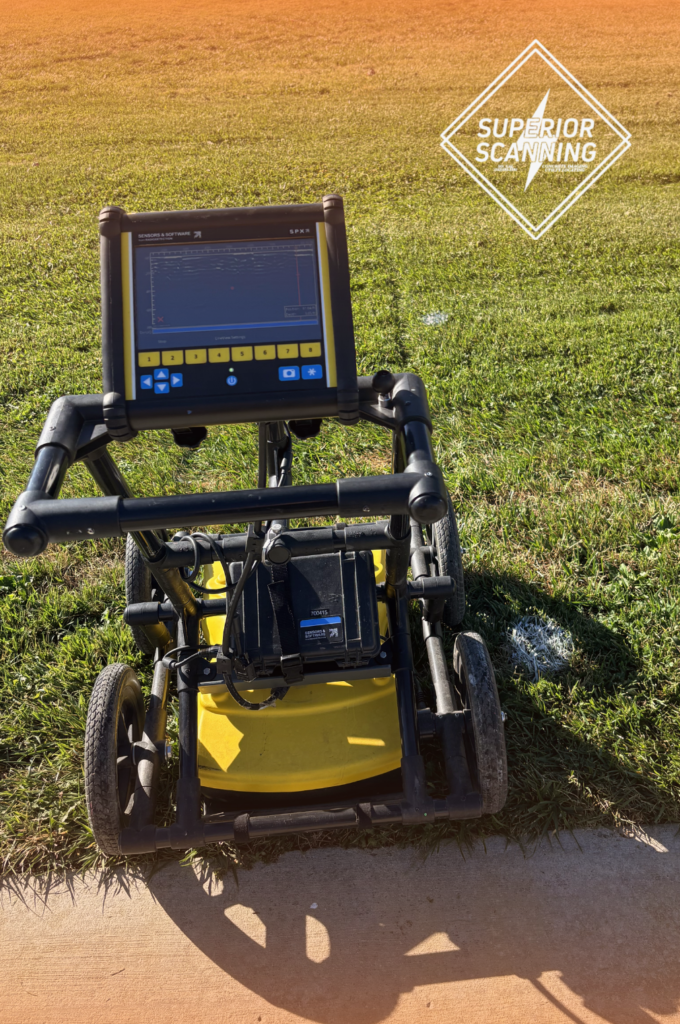
Nobody digs up a working floor on a hunch, which is exactly why a hidden crack or root can sit for years until the day it doesn’t. A pipe problem stays invisible until it backs up a drain, floods a room, or fails an inspection at the worst moment. Video pipe inspection changes that by turning a sealed pipe into something a technician can watch on a screen. Superior Scanning sends a camera through first, so any subsequent repair targets the actual fault rather than a guess.
Table of Contents
Don’t Cut, Core, or Drill Blind
Superior Scanning is trusted on complex job sites
What Is Video Pipe Inspection?
Video pipe inspection runs a small waterproof camera through a pipe to record its inside condition on a live screen. A technician feeds the camera in and watches the live feed, spotting cracks, roots, and clogs without digging up the line. Because the camera travels the full length of the pipe, the read covers the whole run, not just the ends. This same pipe video inspection camera works for everything from a quick drain camera inspection to a full sewer line inspection.
How Does a Video Pipe Inspection Work?
The whole job runs on one idea: put an eye inside the pipe and follow it from end to end. The gear is simple, and the read happens live, so problems show up as the camera moves.
A Camera on a Flexible Cable
A waterproof camera head rides in on a flexible push rod or a motorized crawler. The rod bends through elbows and turns, while a crawler handles the larger mains that a push camera can’t reach. Either way, the head travels the pipe and sends back a clear view of the inside wall.
A Live Feed to a Screen
The camera streams real-time video to a screen above ground. A technician watches every foot as the head moves, then records the footage so the run can be reviewed later or handed to a plumber. Nothing is left to memory, since the whole pass is saved.
A Locator to Mark the Spot
Many cameras carry a small transmitter that a locator can pick up from the surface. That signal pinpoints where a problem lies and roughly how deep it is. Marking the exact spot means that any digging targets a single point rather than a long trench.

What Does a Video Pipe Inspection Show You?
A camera run can surface the problems that stay hidden from the surface:
- Cracks, breaks, and collapsed sections of pipe
- Tree root intrusion pushing through the joints
- Grease, scale, and debris narrowing the flow
- Blockages and the exact point where they start
- Sagging or bellied pipe that traps standing water
- Corrosion and general wear in older lines
Don’t Cut, Core, or Drill Blind
Superior Scanning is trusted on complex job sites
When Should You Get a Video Pipe Inspection?
The best times to run a camera are before you spend or before you buy. Catching a fault early keeps a small fix from turning into a torn-up floor.
Before Buying a Property
A pipe inspection before closing shows the true state of a sewer or drain line. Buried repairs are among the costliest surprises a new owner can inherit, so a camera pass through the main line is cheap insurance. If the footage finds a break, that becomes a number to negotiate before signing.
Before Digging or Repairs
A camera confirms the exact problem and its spot before anyone breaks ground. That way, a crew digs at the fault instead of chasing it across a yard. A quick first look often shrinks a guessed repair down to a single targeted fix.
When Drains Keep Backing Up
Recurring clogs, slow drains, or a lingering odor usually point to something a plunger won’t fix. A sewer camera inspection finds whether the cause is roots, grease, or a collapsed section. Knowing the real cause stops the cycle of clearing the same drain over and over.

Why Choose a Professional for the Job?
Footage is only useful if someone can read it. Telling a harmless stain from a real fracture, or a shadow from a root ball, takes trained eyes and time behind the screen. A pro also traces and marks the exact spot, so the next step lands where it should. Superior Scanning runs the camera and explains what the screen is showing, turning raw video into a clear call on what the pipe needs.
Don’t Cut, Core, or Drill Blind
Superior Scanning is trusted on complex job sites
Frequently Asked Questions
How much does a video pipe inspection cost?
Price depends on pipe length, access, and site conditions, so a quote is the most accurate answer. A camera pass runs far cheaper than blind excavation; contact Superior Scanning for a sewer line camera inspection cost based on the actual job.
How small a pipe can a video inspection camera fit through?
It depends on the camera, since small push cameras handle lines a couple of inches wide while larger crawlers run through bigger mains and sewer lines.
Can a video pipe inspection find the exact location of a problem?
Yes, a locator traces the camera’s signal from the surface, marking the spot and rough depth so any digging is precise.
How long does a video pipe inspection take?
A typical residential line often takes under an hour, though length, access, and heavy blockages can stretch that, so treat the time as site-dependent.
Do I need to clean the pipe before a video inspection?
A heavily clogged line may need to be cleared first so the camera can pass and see clearly, and the technician can advise once the feed shows how much buildup is in the way.
Why Guess What’s in the Pipe?
A camera trades guesswork for a clear look at what the pipe is actually doing. Finding a fault early costs far less than chasing it after a backup floods a floor or a sale falls through. Book a video pipe inspection with Superior Scanning before digging or buying, and let the footage make the call.
