
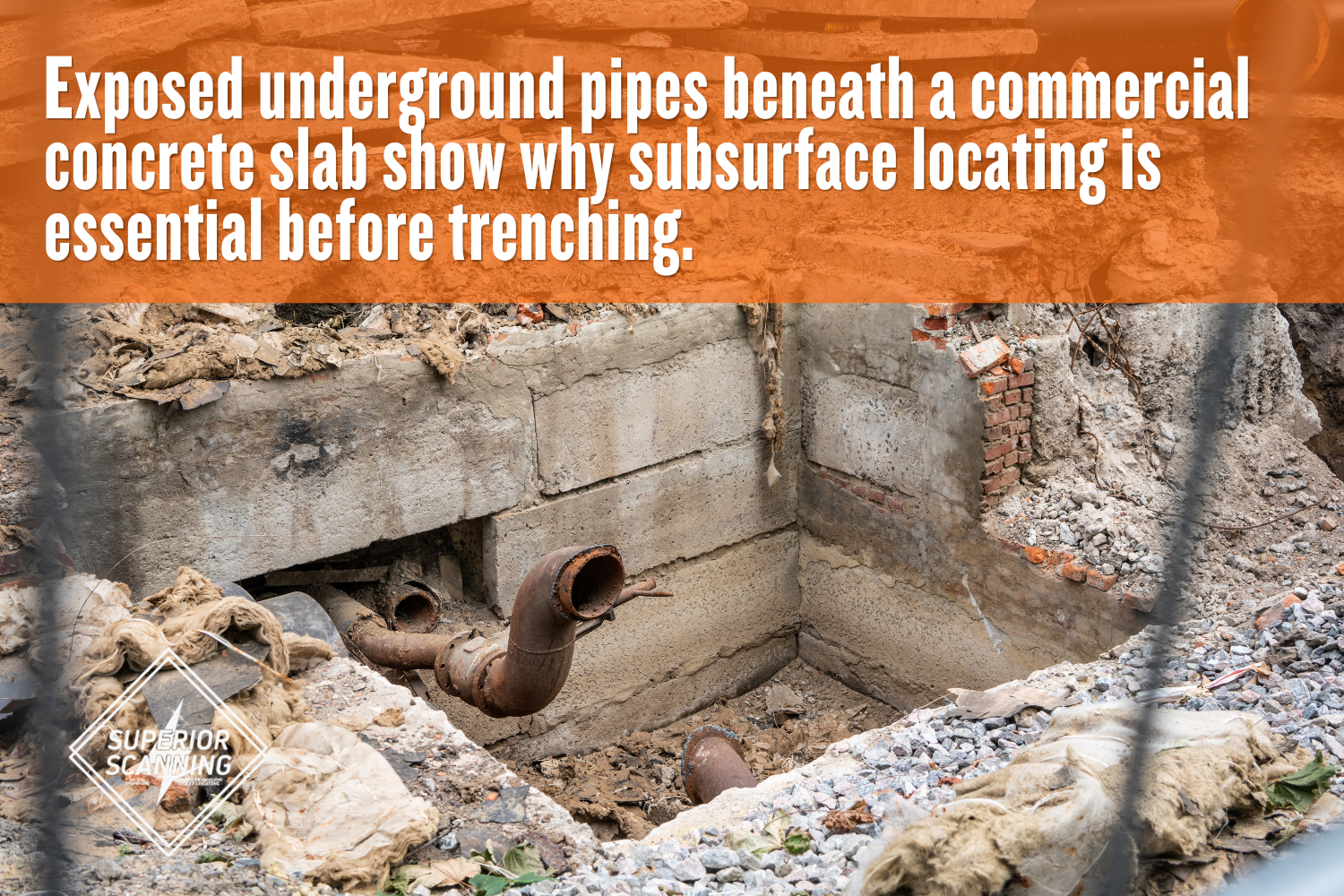
Breaking through a commercial concrete slab without knowing what lies beneath turns a routine plumbing repair into a high-stakes gamble. A single misplaced cut easily severs critical infrastructure, triggering massive floods, electrical fires, or severe structural damage.
Relying on advanced subsurface data from a trusted partner like Superior Scanning equips commercial plumbers to navigate these hidden concrete hazards with absolute certainty. Utilizing a specialized pipe locator eliminates the guesswork, keeping excavation crews safe and commercial renovation projects strictly on schedule.
Table of Contents
Don’t Cut, Core, or Drill Blind
Superior Scanning is trusted on complex job sites
What Hidden Hazards Lie Beneath Commercial Slabs?
Navigating the dense environment beneath a commercial facility requires precision, as the concrete conceals a tangled web of active and abandoned lines. Plumbers face significant risks when blindly trenching into an unmapped floor. Consider the following concealed threats that require an underground pipe locator to safely avoid:
- Live electrical conduits: Accidental severing of a power line poses fatal arc-flash hazards to the excavation crew, making an underground wire locator mandatory.
- Pressurized water mains: Striking an unmarked pressurized pipe causes instant, catastrophic flooding and structural washouts.
- Telecommunication networks: Destroying buried fiber-optic cables halts facility operations and imposes massive financial liability.
- Post-tension cables: Snapping a high-tension structural cable compromises the entire foundation of the commercial building.
How Do Professional Scanning Tools Prevent Disasters?
Guessing utility pathways based on surface markers simply does not work in modern commercial construction. Advanced detection technology provides exact mapping to keep excavation crews completely out of harm’s way. Deploying a reliable pipe and cable locator ensures a safe dig from start to finish.
Detecting High-Voltage Electrical Lines
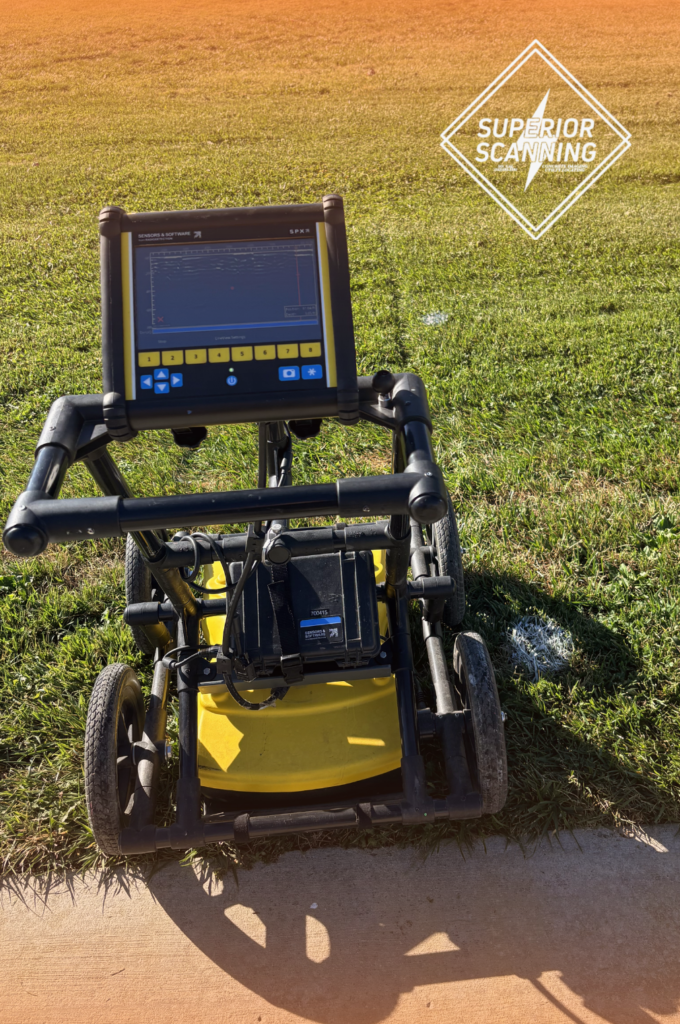
Using a highly sensitive electrical wire tracer, technicians can map the electromagnetic fields of active power grids buried deep in the soil. Plumbers can safely avoid live electricity once the exact path is clearly marked on the surface.
Mapping Complex Subsurface Networks
Deploying a commercial underground utility locator creates a comprehensive visual map of intersecting pipes, ensuring a clear trenching path. This exact mapping prevents accidental strikes on overlapping plumbing systems.
Identifying Broken or Damaged Infrastructure
Pinpointing the exact location of a damaged line with a cable fault locator prevents plumbers from trenching the entire slab just to find one leak. Precision scanning targets the exact repair spot to minimize concrete removal.
Don’t Cut, Core, or Drill Blind
Superior Scanning is trusted on complex job sites
Why Avoid Relying on Outdated Facility Blueprints?
As-built drawings rarely reflect the current reality of a commercial site, especially after decades of unrecorded tenant improvements. Outdated plans create a false sense of security that often leads to disastrous utility strikes. The limitations of relying solely on paper records include the following critical issues:
- Undocumented renovations: Previous contractors frequently reroute pipes and wires without updating the master facility plans.
- Shifting soil conditions: Natural ground movement gradually displaces utilities from the original coordinates listed on old blueprints.
- Abandoned infrastructure: Blueprints rarely differentiate between dead lines and active utilities, requiring a service specializing in locating underground utilities to verify live hazards.
- Inaccurate depth measurements: Paper drawings never provide the precise depth calibration that a modern utility line locator delivers on-site.
When Should Project Managers Hire Scanning Technicians?
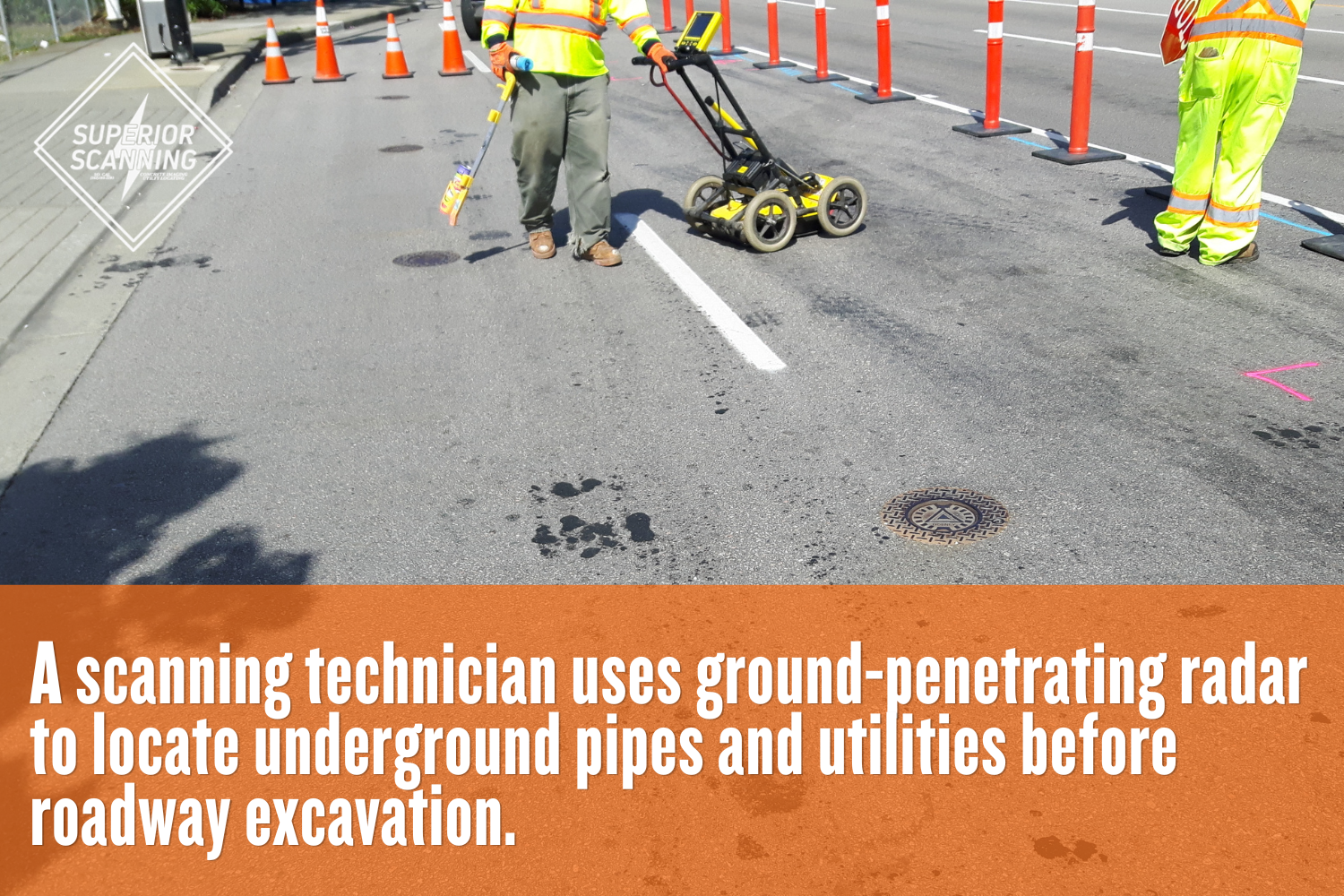
Securing professional water line locating services at the correct stage of the renovation prevents emergency work stoppages. Bringing in expert scanners at critical project milestones ensures seamless plumbing installations. Early intervention remains the most effective way to keep the job site safe.
Prior to Cutting or Trenching Concrete
Scanning the precise cut zone immediately before bringing heavy machinery inside guarantees no subtle shifts disrupt the excavation phase. An accurate ground-penetrating radar (GPR) pipe locator identifies exactly where to saw without hitting embedded objects.
During the Early Site Planning Phase
Mapping the subsurface layout before finalizing new plumbing routes allows engineers to naturally bypass dense utility clusters. A detailed underground water pipe locator survey helps teams design safer pipe pathways from day one.
After Discovering Unmapped Conduits
Deploying advanced underground utility locator equipment becomes strictly necessary the moment a crew uncovers a pipe not listed on the original blueprints. Stopping to map the unknown object prevents severe damage to the surrounding infrastructure.
Frequently Asked Questions
What is the difference between an underground utility locator and a stud finder?
A stud finder only penetrates a few inches of drywall, while a commercial utility locator uses powerful radar and electromagnetic frequencies to scan through feet of dense concrete and soil.
How deep can a professional pipe locator detect underground lines?
Depending on the soil composition and the pipe material, commercial locators accurately trace utilities up to 15 feet below the surface.
Can an underground PVC pipe locator find plastic lines under a concrete slab?
Standard magnetic locators cannot detect plastic, so professionals use ground-Penetrating Radar (GPR) to detect density differences between Polyvinyl Chloride (PVC) and non-metallic conduits.
Does 811 locate private plumbing lines under commercial buildings?
No, 811 only marks public utilities leading up to the main service meter, meaning property owners must hire a private water line locator to map the lines under the actual building slab.
How long does it take to scan a concrete slab before trenching?
A professional sewer line locator technician typically completes a standard commercial trench path evaluation within a few hours, depending on the complexity of the embedded utility grid.
How Will You Protect the Next Excavation Job?
Trenching blind through a commercial slab is a massive financial and safety risk no contractor can afford to take. Superior Scanning provides rapid, highly accurate utility mapping to keep Southern California job sites compliant, safe, and on schedule.
Request a competitive, flat-rate, or hourly quote today to ensure a completely safe excavation phase.
