
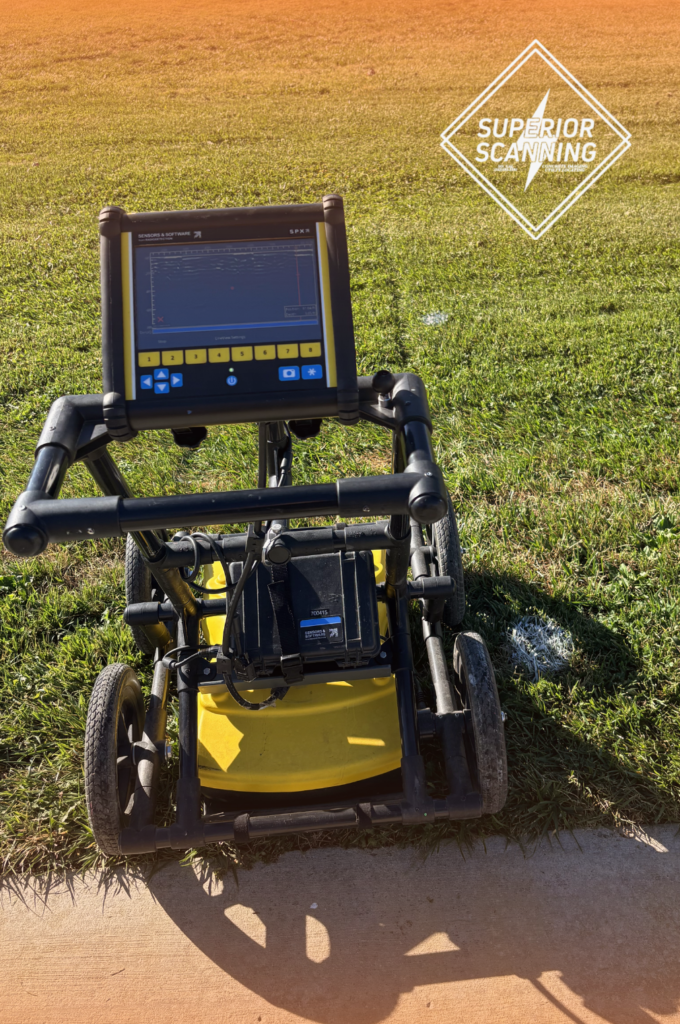

Upgrading commercial parking lot lighting to energy-efficient fixtures poses significant financial and safety risks if crews blindly trench through the asphalt. Striking an unmarked high-voltage conduit or severing a fiber-optic grid can cause catastrophic power outages, severe injuries, and project-halting liability.
Relying on advanced subsurface data from a trusted partner like Superior Scanning equips commercial electricians to navigate these hidden hazards with absolute certainty. Utilizing a specialized underground cable locator eliminates the guesswork, keeping excavation crews safe and commercial renovation projects strictly on schedule.
Table of Contents
Don’t Cut, Core, or Drill Blind
Superior Scanning is trusted on complex job sites
Why Is Trenching in Commercial Parking Lots So Dangerous?
Navigating the subsurface environment of older commercial properties involves dodging a dense web of forgotten infrastructure. Electricians face several critical hidden hazards beneath the pavement that require professional detection before breaking ground:
- Undocumented utility expansions: Decades of renovations often leave behind unmapped power lines that require a precise underground wire locator to pinpoint safely.
- High-voltage hazards: Accidentally striking live commercial conduits during a lighting upgrade poses a fatal arc flash risk to the excavation crew.
- Intertwined telecommunications: Trenching equipment can easily shred delicate fiber-optic networks, making locating underground utilities a mandatory step before breaking ground.
- Costly water main proximity: Electrical trenches often cross paths with unmarked PVC or cast-iron water pipes, risking massive floods and sinkholes.
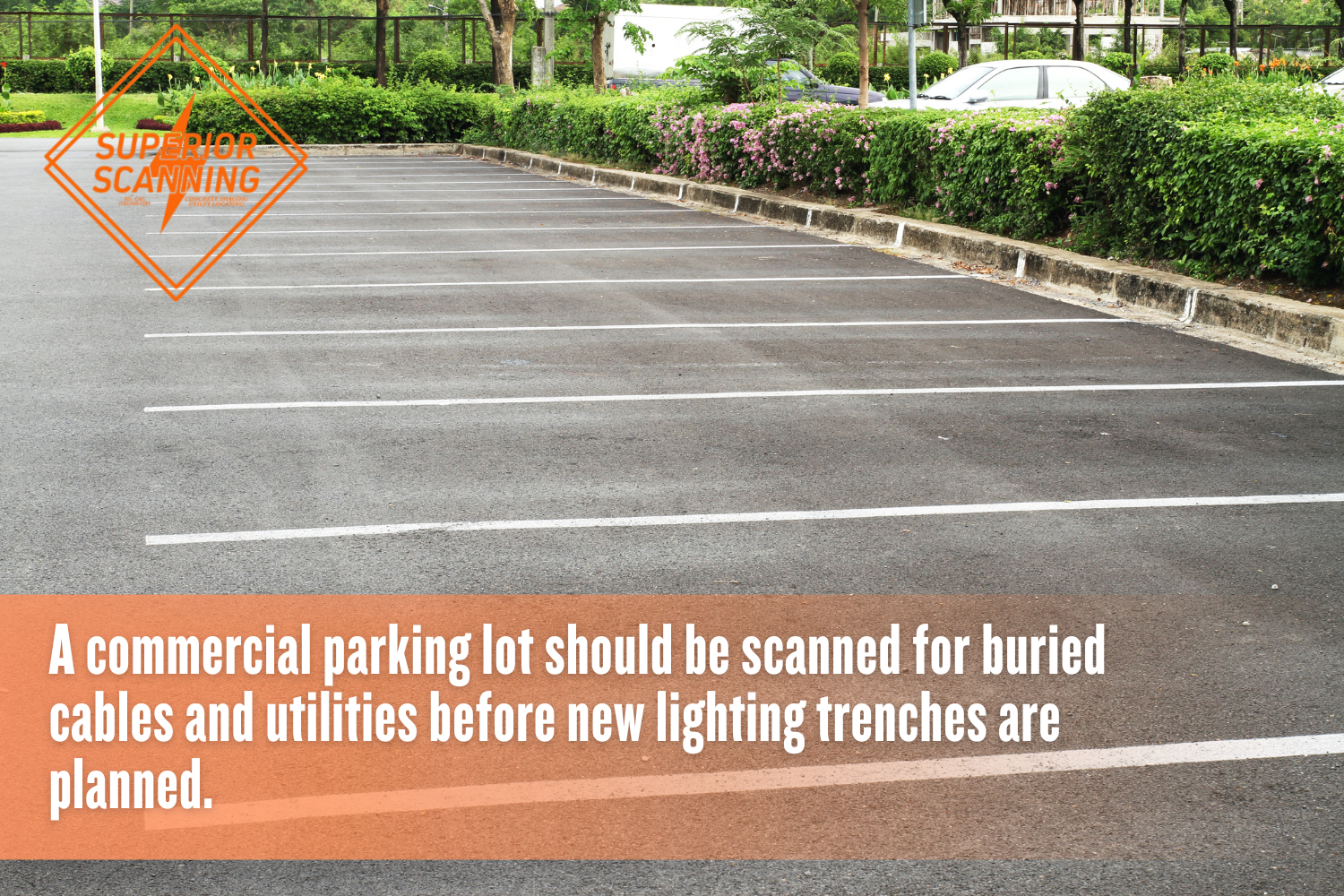
How Does Subsurface Detection Equipment Prevent Accidents?
Advanced scanning technology removes the guesswork from commercial excavation by creating a highly accurate map of buried systems. Specialized detection methods keep trenching crews completely safe from hidden dangers before the first cut happens. Deploying modern equipment ensures electricians know exactly where to dig.
Identifying Live Electrical Lines
Using an advanced electrical wire tracer allows technicians to detect the electromagnetic fields emitted by active power conduits. This process ensures electricians know exactly where high-voltage threats sit beneath the asphalt.
Pinpointing Existing Infrastructure Damage
An industrial cable fault locator helps technicians identify breaks or shorts in existing wiring before installing new poles. This precise tool allows project managers to repair damaged systems without unnecessary, exploratory digging.
Mapping Complex Commercial Grids
Utilizing commercial-grade underground utility locator equipment provides a comprehensive view of intersecting pipes and telecommunication wires. This advanced mapping creates a clear and safe path for new electrical trenches.
Don’t Cut, Core, or Drill Blind
Superior Scanning is trusted on complex job sites
Why Avoid the DIY Approach for Utility Mapping?
Relying on cheap handheld stud finders or consumer-grade tracking wands severely compromises the safety of a commercial job site. Amateur tools simply cannot handle the dense materials found in heavy commercial construction.
- Signal interference: Dense asphalt, rebar-reinforced concrete, and heavily saturated soil easily block the weak signals emitted by a consumer utility line locator.
- False negatives on plastic: Basic magnetic wands cannot detect non-metallic PVC or telecommunication conduits, leaving major blind spots in the excavation path.
- Lack of depth calibration: Only professional cable location services provide accurate depth estimations, which electricians absolutely need to maintain safe clearance distances while digging.
- Liability exposure: Guessing utility locations without certified and insured mapping shifts all financial and legal responsibility for a strike directly onto the contracting company.
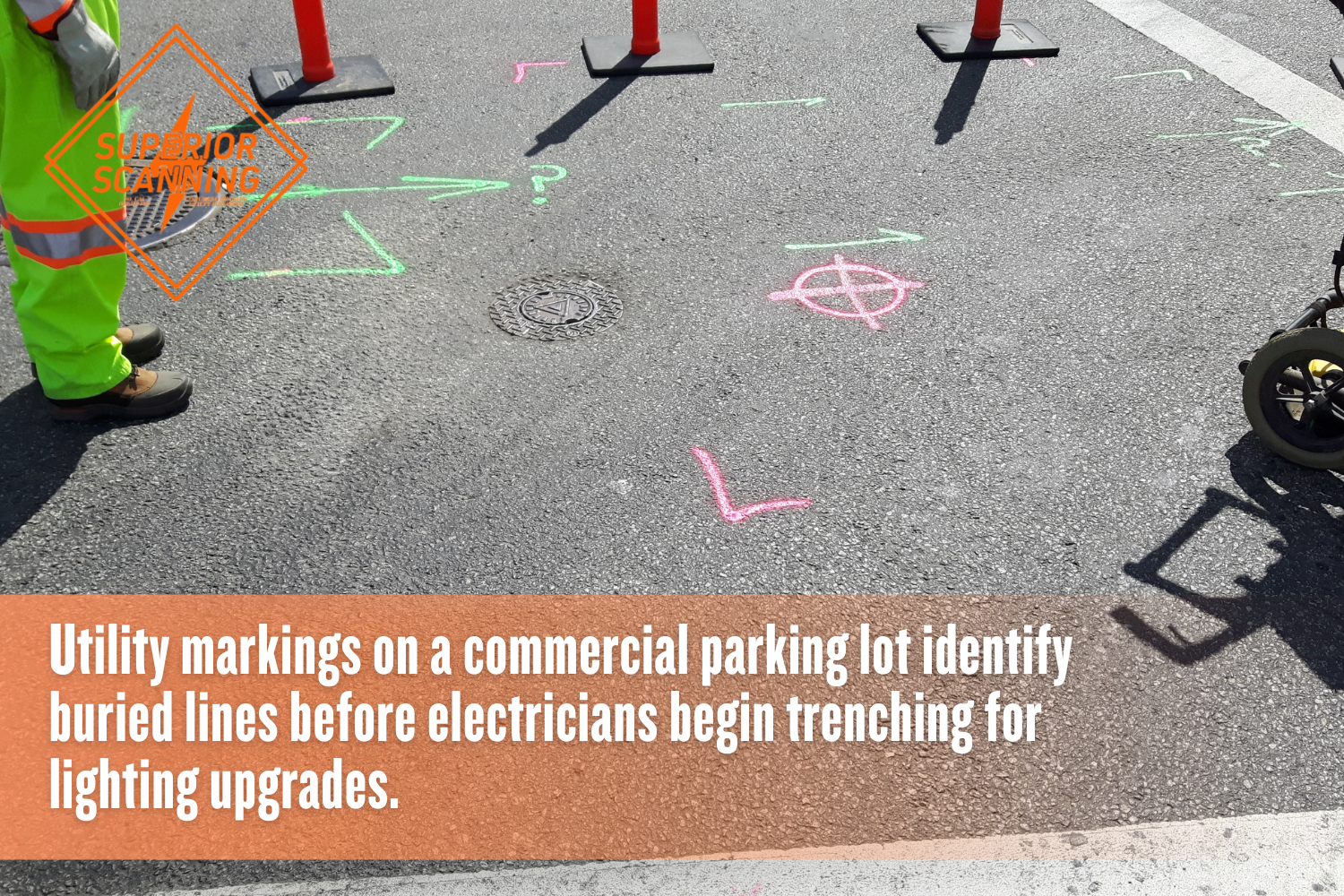
When Should Commercial Contractors Call a Professional?
Securing a specialized underground utility locator at the right stage of the development prevents costly redesigns and emergency work stoppages. Bringing in scanning technicians at these specific project milestones ensures maximum efficiency. Early intervention keeps the entire lighting upgrade on track.
During the Early Site Planning Phase
Mapping the subsurface environment before finalizing trenching routes allows civil engineers and electricians to design lighting grids properly. These early surveys naturally bypass dense utility clusters to save time later.
Before Asphalt Removal or Trenching
Scanning the exact cut zone immediately prior to bringing heavy machinery on site guarantees a safe excavation process. A last-minute check ensures no subtle shifts or newly added lines disrupt the dig.
When Existing Site Blueprints Fail
Calling a scanning team becomes critical the moment an excavation crew discovers a pipe or wire that does not appear on outdated municipal records. Stopping work to map the unknown object prevents catastrophic damage to the surrounding facility.
Don’t Cut, Core, or Drill Blind
Superior Scanning is trusted on complex job sites
Frequently Asked Questions
What is the difference between an underground cable locator and a stud finder?
An underground cable locator uses powerful electromagnetic frequencies to trace live lines through feet of dense soil and concrete, whereas a stud finder only penetrates a few inches of drywall.
How deep can a commercial underground cable locator detect wires?
Professional locators can accurately track electrical cables and utility lines up to 15 feet deep, depending on soil composition, moisture levels, and the size of the target conduit.
Does 811 locate private parking lot lighting cables?
No, 811 only marks public utilities leading up to the main service meter, meaning property owners must hire private utility locating services to map lines running into the parking lot.
Can scanning equipment find broken underground wires?
Yes, technicians use specialized cable fault locators that pinpoint the exact point where a signal drops off, allowing crews to dig precisely at the break rather than trenching the entire line.
How much time does it take to locate utilities in a standard parking lot?
Depending on the area’s size and the complexity of the subsurface grid, a professional utility locating service typically completes a comprehensive parking lot scan within a few hours.
How Will You Protect the Next Trenching Project?
Guessing what lies beneath a commercial parking lot is a gamble no professional contractor can afford to take. Superior Scanning provides rapid, highly accurate utility mapping to keep Southern California job sites compliant, safe, and on schedule.
Serving active construction and facility sites across Los Angeles, Orange, Riverside, and San Diego Counties, highly trained technicians frequently accommodate next-day or same-week requests. Same-day service is also available, depending on crew location and current workload. If a project sits on the border of these regions, contact the dispatch team to confirm coverage.
Request a competitive, flat-rate, or hourly quote today to ensure a completely safe excavation phase.
