
Every contractor knows the sinking feeling of a backhoe scraping metal instead of dirt. Tearing into undocumented ground risks hitting live power conduits or explosive gas mains in an instant.
While the national public notification system is a mandatory first step, bringing in an independent underground utility locator like Superior Scanning provides the real protection against hidden subsurface hazards. Public locators map only city-owned lines, leaving huge, dangerous gaps right where the crew plans to dig. Knowing the difference between public markings and private scanning keeps commercial sites safe, compliant, and moving forward.
Table of Contents
Don’t Cut, Core, or Drill Blind
Superior Scanning is trusted on complex job sites
Quick Glance: 811 vs Private Underground Utility Locator
| Factor | 811 Public Utility Locating | Private Underground Utility Locator |
|---|---|---|
| What it covers | Public utility lines up to the property boundary or meter | Private lines across the actual job site |
| Cost | Usually free to request | Paid professional scanning service |
| Best for | Meeting call-before-you-dig requirements | Finding hidden site-specific hazards |
| Lines marked | Public gas, electric, water, sewer, and telecom mains | Private electric, gas, water, sewer, irrigation, and communication lines |
| Depth details | Usually provides surface path markings only | Can help estimate depth and location using advanced scanning tools |
| Main limitation | Does not cover most private property infrastructure | Requires a separate site visit and professional equipment |
| Why you need it | Helps protect public infrastructure | Helps prevent costly strikes, delays, and jobsite hazards |
| Best approach | Call 811 first | Schedule a private underground utility locator after 811 |
What Exactly Does 811 Cover on a Job Site?
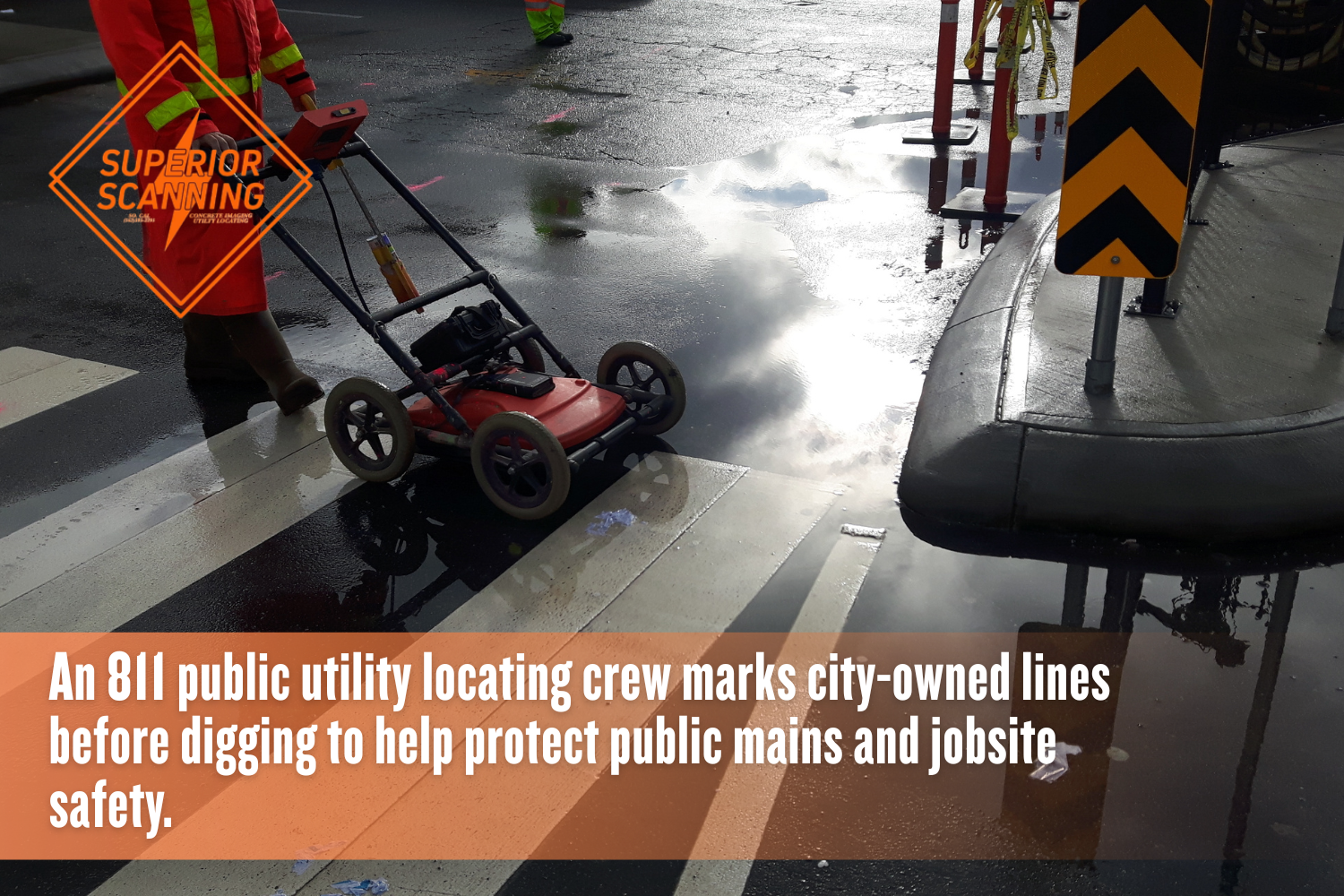
The 811 call-before-you-dig system serves as a required safety measure to protect municipal infrastructure. When you contact this hotline, local agencies send technicians to mark publicly owned lines leading up to the property boundary. They focus strictly on city assets to ensure your excavation does not cause a neighborhood blackout or a water main break.
Public Utility Mains
High-voltage electrical feeds, major gas pipelines, and primary telecommunication cables running under public streets fall right under municipal jurisdiction.
City Water and Sewer Infrastructure
Public workers trace the main distribution pipes supplying the surrounding neighborhoods. The technicians stop working the exact second the tracking tools hit the boundary line where municipal responsibility ends.
What Are the Limitations of Public Utility Locating?
Does 811 cost money? It’s a common question among property owners. While the public hotline service itself is completely free, trusting only those public paint marks leaves a commercial site wide open to serious liability. The cost of striking an unmapped private line can bankrupt a project overnight. Because public technicians strictly map up to the municipal boundaries, the bulk of the actual job site remains completely unmapped and highly dangerous.
Private Lines past the Meter
Public locating stops legally at the utility meter. This cutoff leaves any electrical, gas, or communication lines branching deep into the actual facility completely unmarked.
Lack of Depth Measurements
Public marks show only horizontal paths across asphalt or dirt. They provide zero data on the actual depth of the buried hazard.
Don’t Cut, Core, or Drill Blind
Superior Scanning is trusted on complex job sites
Why Do Private Properties Require Specialized Technicians?
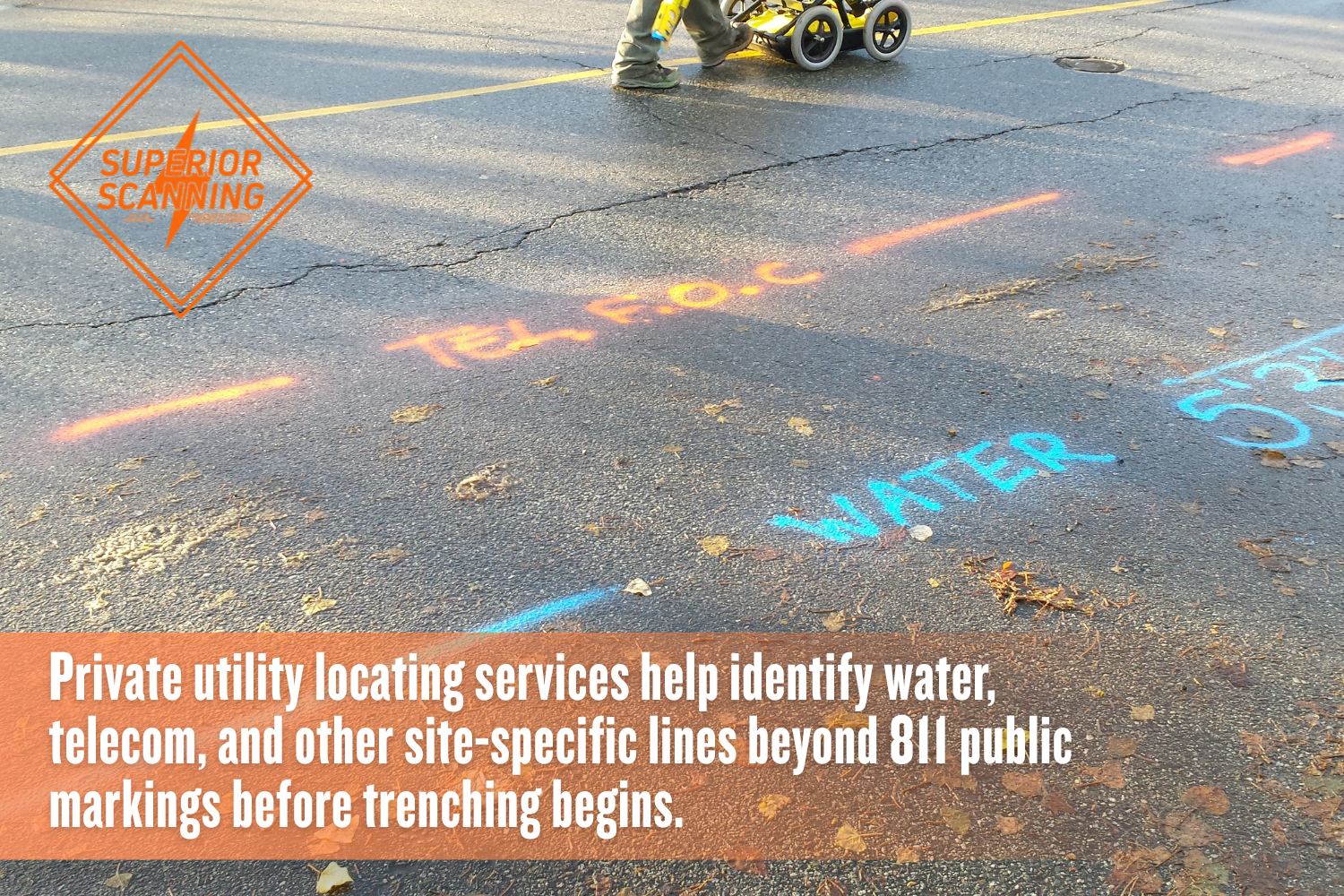
Municipal services simply do not extend past the main meter, which is exactly why commercial properties need specialized professionals on-site. Project managers often ask if 811 locates water lines across commercial campuses, and the answer usually catches people off guard. Once water passes the main municipal meter, it becomes private property, meaning you need a dedicated private utility locator to trace the remaining portion of the network. Bringing in comprehensive private utility locating services ensures an expert identifies facility-specific infrastructure before the trenching starts.
Unmapped Commercial Networks
Older facilities usually hide decades of undocumented electrical and plumbing upgrades. Previous owners often installed these pipes and wires without proper permits or updated blueprints.
Abandoned or Relocated Infrastructure
Rerouted pipes or dead lines rarely show up on modern as-built drawings. Even if abandoned, they still pose major physical obstacles for trenching equipment.
How Does Advanced Technology Protect the Dig Site?
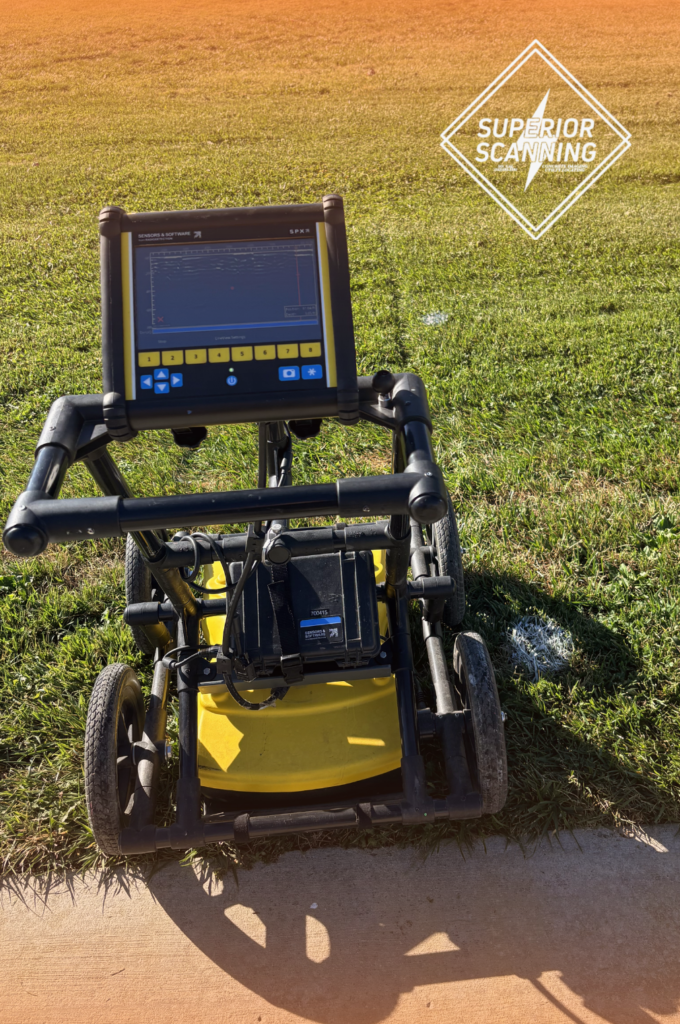
Finding a forgotten pipe beneath a sprawling industrial park requires sophisticated underground utility-locator equipment that municipal workers do not carry. Locating underground utilities through multiple geophysical methods gives you a clear picture of the dirt below. Combining these scans with professional utility mapping services turns a risky guess into a solid engineering plan.
Ground Penetrating Radar Scans
Radar equipment sends high-frequency waves into the earth, which then reflect off non-metallic objects like PVC pipes and concrete vaults, revealing a clear subsurface picture.
Electromagnetic Induction Signals
Active line tracers push specific radio frequencies through conductive metal pipes. This specific tech allows an experienced utility line locator to follow the exact directional path of the hazard.
Comprehensive Utility Mapping
Technicians translate field data into permanent digital blueprints. Site engineers use this exact visual reference to route trenches safely.
Don’t Cut, Core, or Drill Blind
Superior Scanning is trusted on complex job sites
Frequently Asked Questions
Does 811 cost money to use for a commercial project?
No, the national 811 hotline is completely free for all users, but repairing a damaged private line can cost tens of thousands of dollars.
Does 811 locate water lines on private property?
Public technicians only mark water lines up to the municipal service meter, so any pipes branching into a building require an independent scan.
How deep can an underground utility locator scan?
Professional ground penetrating radar detects buried utilities up to 10 feet deep under ideal soil conditions.
Do contractors need a private utility locator if 811 found nothing?
Yes, because a clear public mark just means there are no municipal lines, but the property might still hide dozens of privately owned pipes and wires.
What is the difference between utility marking and utility mapping services?
Utility marking uses temporary paint on the ground, while mapping turns those marks into a permanent digital CAD file for long-term planning.
How Will You Prevent Costly Utility Strikes?
Hoping for the best during a commercial excavation can lead to costly delays and dangerous accidents. Combining the mandatory public 811 system with the precision of a private locator creates a rock-solid safety protocol for your job site.
For active construction and facility sites across Southern California, including Los Angeles, Orange, Riverside, and San Diego counties, Superior Scanning provides fully insured, top-tier scanning expertise. Since construction schedules change fast, we offer flexible dispatching that often accommodates next-day or same-week service requests. Secure the site layout today to ensure the excavation crew digs with absolute confidence.
