
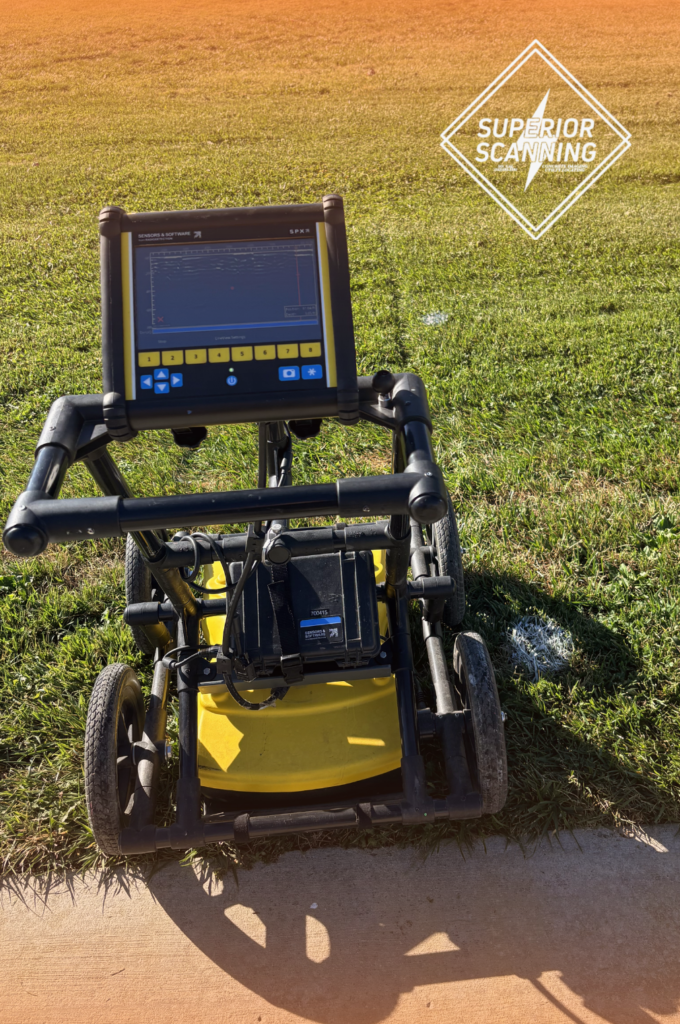

Drilling into a solid concrete slab is dangerous work if you do not know exactly what is buried inside it. Concrete easily conceals live electrical wires, pressurized water pipes, and heavy steel reinforcement. Guessing where these utilities rest instead of scheduling GPR concrete scanning invites severe structural damage and immediate safety hazards.
Mapping the interior of a floor or wall gives contractors, engineers, and facility teams the exact layout required to complete the job without incident. Superior Scanning delivers the necessary clarity, helping crews avoid costly delays before heavy equipment even arrives on site.
Table of Contents
Don’t Cut, Core, or Drill Blind
Superior Scanning is trusted on complex job sites
What Is GPR Concrete Scanning?
GPR concrete scanning uses ground-penetrating radar to examine the interior of a solid slab before anyone cuts into it. This non-destructive testing method allows crews to map the subsurface safely without tearing up the floor just to see what lies underneath.
How does GPR for concrete scanning work?
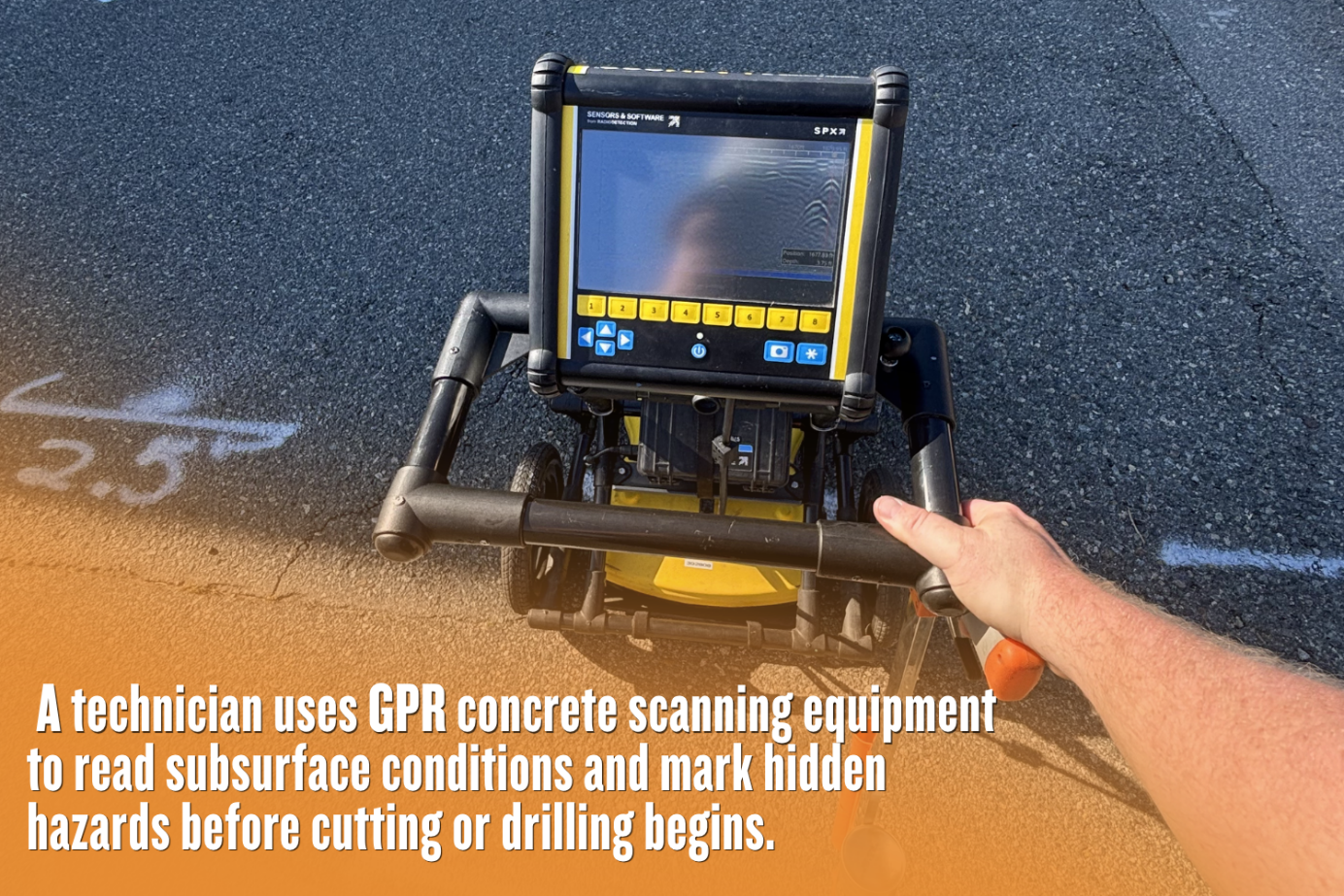
The machine pushes safe radar signals down into the structure, and those waves bounce back up when they hit something dense. A technician reads the returning signals to identify buried obstacles and marks the hazard locations directly on the surface.
What does GPR concrete scanning equipment find?
A trained operator using GPR concrete-scanning equipment can detect almost any major obstacle. They map out thick rebar grids, tensioned cables, hidden conduits, and water pipes. The gear even picks up unexpected air voids or sudden changes in slab thickness.
What Is Core Drilling?
Core drilling is the mechanical process of removing a perfectly round cylinder of material from a tough surface. People in the construction industry often call it concrete coring. Teams use this technique when they need a clean opening but cannot afford to crack or ruin the surrounding structure.
Why do people core drill concrete?
Buildings need open pathways for the internal systems. Workers cut these round holes to run new plumbing pipes, pass electrical wires between floors, or fit large HVAC ducts. Sometimes they just need to install heavy floor drains or pull a physical sample to test the concrete strength back in a lab.
Don’t Cut, Core, or Drill Blind
Superior Scanning is trusted on complex job sites
What Can Go Wrong If You Core Drill Without GPR Scanning?
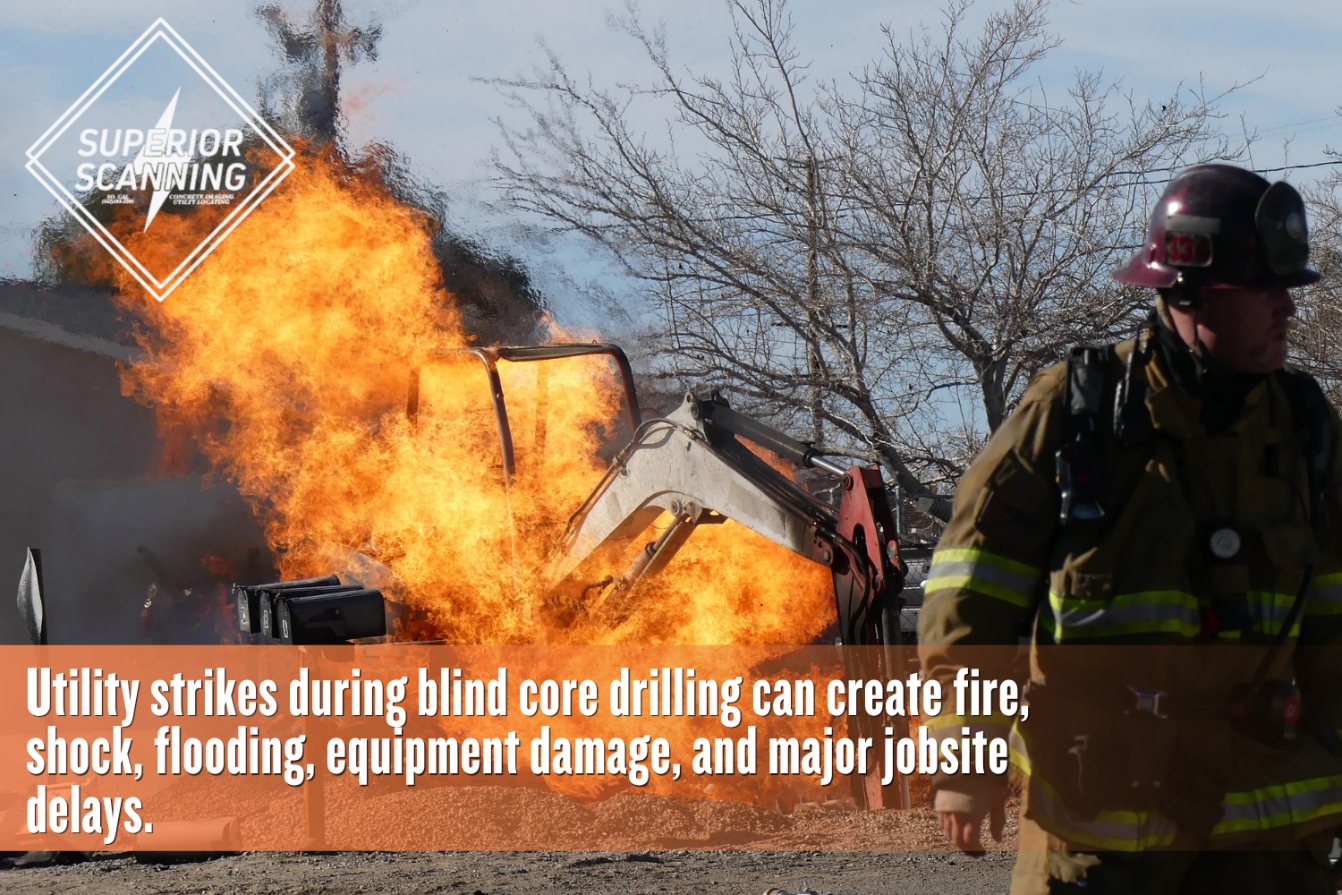
Drilling blind introduces serious physical risks and puts the entire crew in danger. Here is what happens when you skip the scan.
- Hitting rebar: Steel rebar provides essential structural support. If you accidentally cut through it, you weaken that specific area. Work halts immediately while structural engineers determine how to fix the mistake.
- Damaging post-tension cables: These steel cables hold thousands of pounds of tension. Snapping one is incredibly expensive to repair and poses a catastrophic safety hazard that can compromise the entire building.
- Cutting into electrical conduits: Slicing into an active power line triggers sudden power outages and poses severe shock and fire risks. The project stops dead while emergency repairs take over the schedule.
- Breaking plumbing or drain lines: Solid floors hide pressurized water mains. Hitting one causes instant flooding inside the building, ruined materials, and a massive cleanup bill.
- Delaying the whole project: One missed hazard halts progress and pushes back every other trade on the schedule. Mapping the area first lets the crew choose safe paths, keeping the timeline intact.
- Ruining drilling equipment: Diamond drill bits are expensive. Hitting a hidden chunk of steel or a dense cable easily shreds the gear, adding instant replacement costs and hours of downtime.
How Can Superior Scanning Help Before Core Drilling?
Superior Scanning hands construction crews the exact field data they need. The team locates hidden hazards, marks the findings right on the floor in bright paint, and helps everyone plan a safer route.
What services can support core drilling projects?
The company provides thorough concrete GPR scanning to handle standard slabs and complex commercial structures. The team also handles private utility locating and detailed utility mapping, so every job site stays safe and moving.
Don’t Cut, Core, or Drill Blind
Superior Scanning is trusted on complex job sites
Frequently Asked Questions
What is GPR concrete scanning used for?
GPR concrete scanning is used to locate hidden objects within solid structures, such as rebar, post-tension cables, conduits, and voids.
Should you scan concrete before core drilling?
Yes. Scanning first is the only reliable way to reduce the risk of hitting hidden electrical wires, plumbing pipes, or tensioned cables.
Can GPR find rebar in concrete?
Yes. The radar technology accurately maps internal rebar patterns, allowing the crew to find a safe spot to drill.
Can GPR detect electrical conduits in concrete?
The equipment locates most embedded conduits, and technicians often use it alongside other locating tools to ensure absolute certainty.
Who should I call before core drilling concrete?
Call a specialized scanning company, such as Superior Scanning, to map the floor and mark hazards before anyone starts cutting.
Schedule GPR Concrete Scanning Before Core Drilling
You absolutely need a clear picture of the subsurface before letting a drill bit touch the floor. Core drilling blindly is dangerous and can drain a project budget in seconds if you hit active utilities or tensioned steel.
Superior Scanning gives contractors, engineers, and facility teams the hard data they need to reduce risk and avoid costly delays. Reach out to the professional team today to keep the next project safe, on track, and free of expensive accidents.
