
How much does private utility locating cost? Digging blindly can quickly turn a normal construction job into a financial nightmare. One ruptured pipe or sliced cable instantly brings work to a halt. It also creates immediate safety risks and leaves you holding a massive repair bill.
That is why property owners and contractors turn to experienced teams like Superior Scanning to clear a path forward. The final price tag hinges on exactly what targets are buried, the square footage involved, and site access. Breaking down these pricing details up front gives your excavation crew a clear game plan and helps limit expensive surprises.
Table of Contents
Don’t Cut, Core, or Drill Blind
Superior Scanning is trusted on complex job sites
How Much Does Private Utility Locating Cost?
Every scanning company calculates rates a little differently. Your location, the size of the footprint, and the gear needed all play a part in the final estimate.
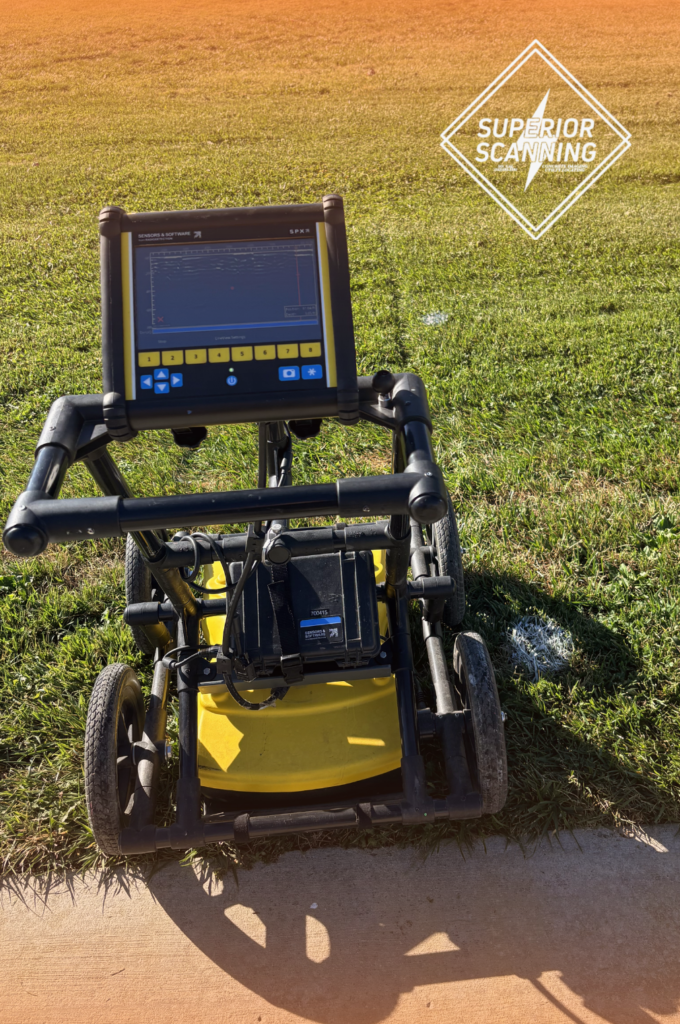
Most small residential projects are subject to a flat minimum service fee. This base charge covers the technician’s travel time and the initial sweep of the yard. On the other hand, large commercial developments usually switch to an hourly, daily, or flat-fee project rate. Expect prices to climb if your project requires advanced ground-penetrating radar (GPR), detailed utility locating services, or formal digital maps.
To give you a rough idea, some local providers might charge roughly $250 per hour for radar work. Another outfit might bill a flat $275 fee to cover the first two hours on-site. Keep in mind that these figures are just rough examples. Final Southern California rates will vary based on your property’s unique conditions.
What Affects the Cost of Private Utility Locating?
No two job sites are exactly alike. Unique property challenges demand different amounts of field time and specialized equipment. Knowing the main factors that influence pricing will help you map out an accurate budget:
- Area Size: Mapping massive commercial campuses takes far longer and costs more than clearing a narrow backyard trench.
- Utility Complexity: Tracking a messy web of plastic and metal lines demands more effort than finding a single copper main.
- Equipment Requirements: Relying on advanced GPR for non-metallic targets adds to the baseline cost of standard electromagnetic tools.
- Site Accessibility: Navigating physical obstacles like dense landscaping, heavy traffic, or thick concrete slows the crew and increases labor hours.
- Final Deliverables: Creating permanent digital maps or computer-aided design (CAD) files requires back-office drafting, which costs more than standard field paint and flags.
Why Does Private Utility Locating Cost More Than Calling 811?
Dialing 811 is a mandatory first step before any shovel hits the dirt. Yet public locators rarely mark every single hazard on a parcel. Private crews must step in to locate the owner-installed lines that city workers are legally allowed to ignore. Knowing exactly where public responsibility ends will save your crew from a catastrophic strike.
What Does 811 Usually Mark?
Public utility workers only care about the infrastructure the city actively owns. The locating responsibility usually stops dead at the property line or the main service meter. Once the power or water passes through that meter, it is no longer a public problem.
What Does 811 Usually Miss?
Any utility buried beyond the meter is the property owner’s responsibility. Public crews will happily walk right past private gas lines, backyard lighting feeds, pool plumbing, and communication lines running between outbuildings. Trusting an 811 ticket alone leaves dangerous blind spots across the property.
What Do You Get When You Hire a Private Utility Locator?
Writing a check for a private sweep buys you hard data and peace of mind. The upfront fee acts as cheap insurance against a devastating accident. You get tangible field intelligence that keeps your heavy equipment moving safely.
Clear Field Markings
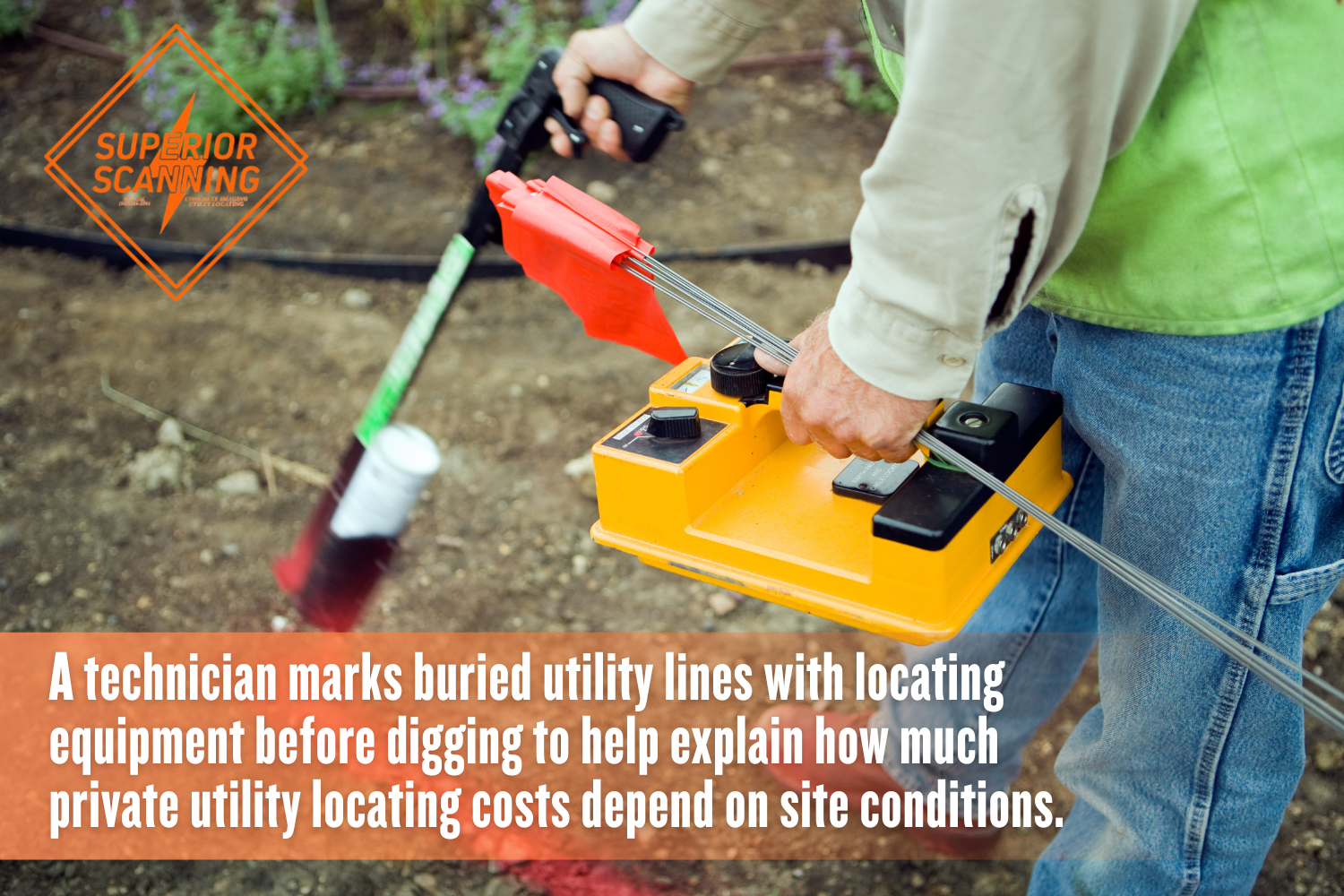
Field technicians apply industry-standard color codes directly to the concrete or dirt. Bright spray paint and colored flags give your machine operators a foolproof visual guide. They can see exactly where the hazard runs before lowering the bucket.
Utility Depth Estimates When Possible
A skilled technician can often estimate the depth of a buried target. Just keep in mind that these numbers are highly educated guesses rather than legal guarantees. Wet clay and rocky soil can sometimes distort radar signals, making exact depth readings tricky.
Better Planning Before Digging or Cutting
Seeing the invisible underground web allows project managers to pivot early. If a massive sewer line sits right where you planned a footing, you can adjust the blueprints today. Catching the conflict early prevents nasty change orders next week.
Optional Utility Mapping for Project Records
Paint eventually washes away in the rain. Upgrading to a digital map gives facility managers a permanent record of site infrastructure. Engineers and property owners can reference these files for decades.
Don’t Cut, Core, or Drill Blind
Superior Scanning is trusted on complex job sites
Is Private Utility Locating Worth the Cost?
Ripping through a high-voltage line or a water main instantly stops a job site. The emergency repair invoice will always dwarf the price of a standard radar sweep. Beyond the financial hit, striking an active utility puts every worker near the trench in serious physical danger.
Having clear markings on the pavement lets your operators dig with confidence. It protects the overall project timeline and prevents embarrassing delays with your client. Spending a few hundred dollars on utility locating is always cheaper than a single bad guess.
When Should You Call a Professional Utility Locating Company?
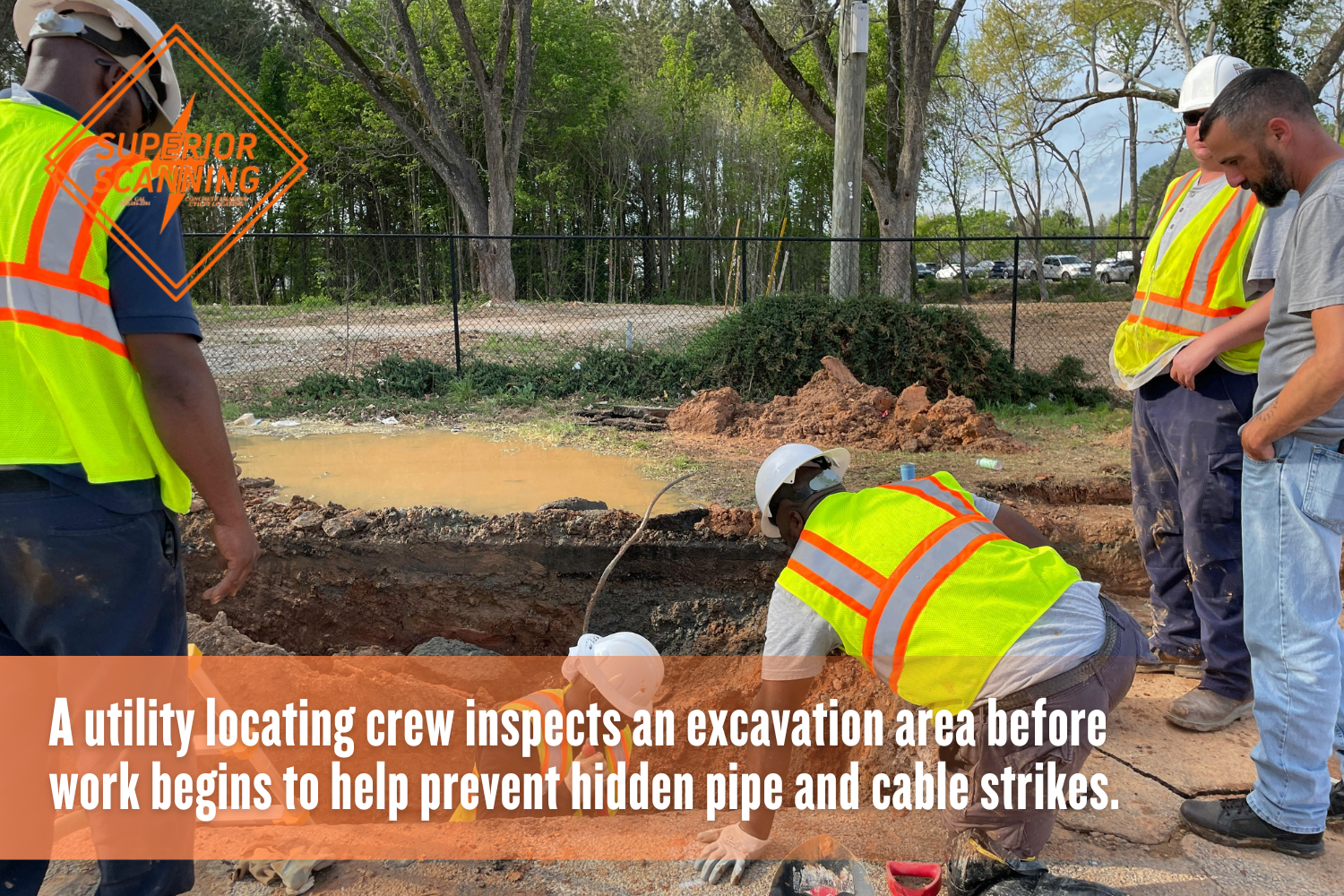
Any project that breaks the surface requires a proper sweep. You should call an expert on-site before:
- Breaking ground: Trenching, grading, or drilling holes for fence posts.
- Cutting concrete: Sawing or coring through existing slabs.
- Excavating deeply: Digging for major installations like massive backyard pools.
- Renovating commercial properties: Navigating sites with outdated, unreliable, or missing blueprints.
Never assume an old blueprint is accurate. Superior Scanning routinely clears these risky sites by providing private utility locating, concrete scanning, and digital mapping across Los Angeles, Orange County, Riverside, and San Diego.
How Can You Get a More Accurate Utility Locating Quote?
A vague request usually results in a vague estimate. The more details you share with the dispatcher, the more accurate your final quote will be. Follow a few basic steps to get a rock-solid pricing breakdown.
Share the Project Address and Work Area
Hand over the exact street address right away. This allows the scheduling team to pull up satellite imagery and calculate the driving distance. Be very specific about which corners of the property actually need attention.
Send Site Plans, Photos, or Drawings
Visual context is incredibly helpful. Emailing over a quick smartphone photo or a PDF blueprint reveals potential roadblocks. It allows the technician to spot strange utility routes or access issues before they leave the office.
Explain What Work Is Being Done
Clearly explain the end goal of your project. Are you running a narrow trench for a new gas line, or are you coring twenty holes through a warehouse floor? The required equipment and time on site shift based on your exact construction plans.
Ask What Is Included in the Price
Never assume a flat fee covers everything. Ask the dispatcher to break down the exact deliverables included in the quote. You need to know if the price covers the travel fee, radar equipment, physical paint markings, and the final digital report.
Don’t Cut, Core, or Drill Blind
Superior Scanning is trusted on complex job sites
Frequently Asked Questions
How much does private utility locating usually cost?
Rates generally start with a minimum service fee and scale up to larger project-based quotes based on square footage, buried targets, and reporting requirements.
Is private utility locating different from 811?
Yes. Public 811 services only mark city-owned lines up to the meter, while private crews trace the owner-installed pipes running throughout the rest of the parcel.
Can an underground utility locator find PVC pipes?
Sometimes. Since plastic does not carry an electromagnetic signal, the technician must rely on ground-penetrating radar or a tracer wire inserted into the line to locate the line.
Do private utility locating services include depth?
Many technicians will provide an estimated depth, but the exact accuracy depends heavily on soil density, utility material, and overall radar signal quality.
When should utility locating be scheduled before excavation?
You should book a scanning crew several days before any crew trenches, grades, drills, or cuts into the concrete.
Get Clearer Answers Before You Dig With Superior Scanning
Superior Scanning helps contractors, engineers, and homeowners find buried hazards before the heavy machinery arrives. Our field team uses advanced radar and electromagnetic tools to keep your excavation crew completely safe. We actively clear complicated construction sites across Los Angeles, Orange County, Riverside, San Diego, and the surrounding Southern California areas.
Contact Superior Scanning today to grab a reliable quote and keep your next project moving safely.
