
Don’t Cut, Core, or Drill Blind
SuperiorGPR is trusted on complex job sites
What Are Utility Marking Colors?
Utility marking colors are temporary paint lines or small physical flags placed on the ground to show the approximate location of buried pipes and cables. These bright indicators give construction crews a clear visual map of what sits beneath the surface before any earthmoving work begins. Decoding these visual cues helps excavation teams navigate the jobsite safely.
Why Are Utility Marking Colors Used Before Digging?
Locators use these specific colors to drastically reduce the risk of striking buried electric, gas, water, sewer, or communication lines. Damaging these hidden underground utilities creates immediate safety hazards, massive neighborhood power outages, severe project delays, and incredibly costly emergency repairs.
Who Uses 811 Utility Marking Colors?
Public utility owners and designated locating teams use these standard colors when responding to an official 811 or DigAlert request. Independent contractors and private utility locating companies also follow this exact same color system to maintain safety and visual consistency across the jobsite.
Why Are Utility Marking Colors Important?
Recognizing utility marking colors is critical for keeping the excavation team safe and the project moving forward without interruption. These markings turn invisible hazards into clear surface warnings that guide daily operations. Following these uniform codes prevents catastrophic utility strikes and eliminates confusing guesswork on the jobsite.
How Do Utility Line Marking Colors Help Prevent Damage?
These utility line marking colors help equipment operators and project managers make much safer digging and cutting decisions on a daily basis. They function as a critical part of the pre-construction planning process rather than just random spray paint on the dirt.
Why Should Crews Check Markings Before Cutting, Coring, Trenching, or Excavating?
Crews performing concrete cutting, slab coring, trenching, potholing, or deep excavation need to fully understand these markings before starting the heavy machinery. A clear grasp of the color code prevents a drill or saw blade from slicing straight into an active power line or a highly pressurized gas pipe.
Why Do Utility Markings Still Matter on Familiar Sites?
Buried utilities rarely sit exactly where property owners expect to find buried lines, even on highly familiar sites. Past building renovations, unrecorded pipe repairs, abandoned lines, and privately owned utilities frequently create dangerous surprises that only fresh surface markings can reveal.
What Does Each Utility Marking Color Mean?
The American Public Works Association established a uniform color code so that field workers can instantly identify specific buried hazards. Here is exactly what each utility marking color means on the jobsite:
- Red: Electric power lines, cables, conduit, and lighting cables.
- Yellow: Gas, oil, steam, petroleum, or other gaseous materials.
- Orange: Communication, alarm systems, signal lines, cables, or conduit.
- Blue: Potable water systems and drinking water lines.
- Green: Sewers and buried drain lines.
- Purple: Reclaimed water, irrigation systems, and slurry lines.
- Pink: Temporary survey markings and measurements.
- White: Proposed excavation limits or planned routing.
Don’t Cut, Core, or Drill Blind
SuperiorGPR is trusted on complex job sites
What Do Utility Marking Colors and Symbols Mean Together?
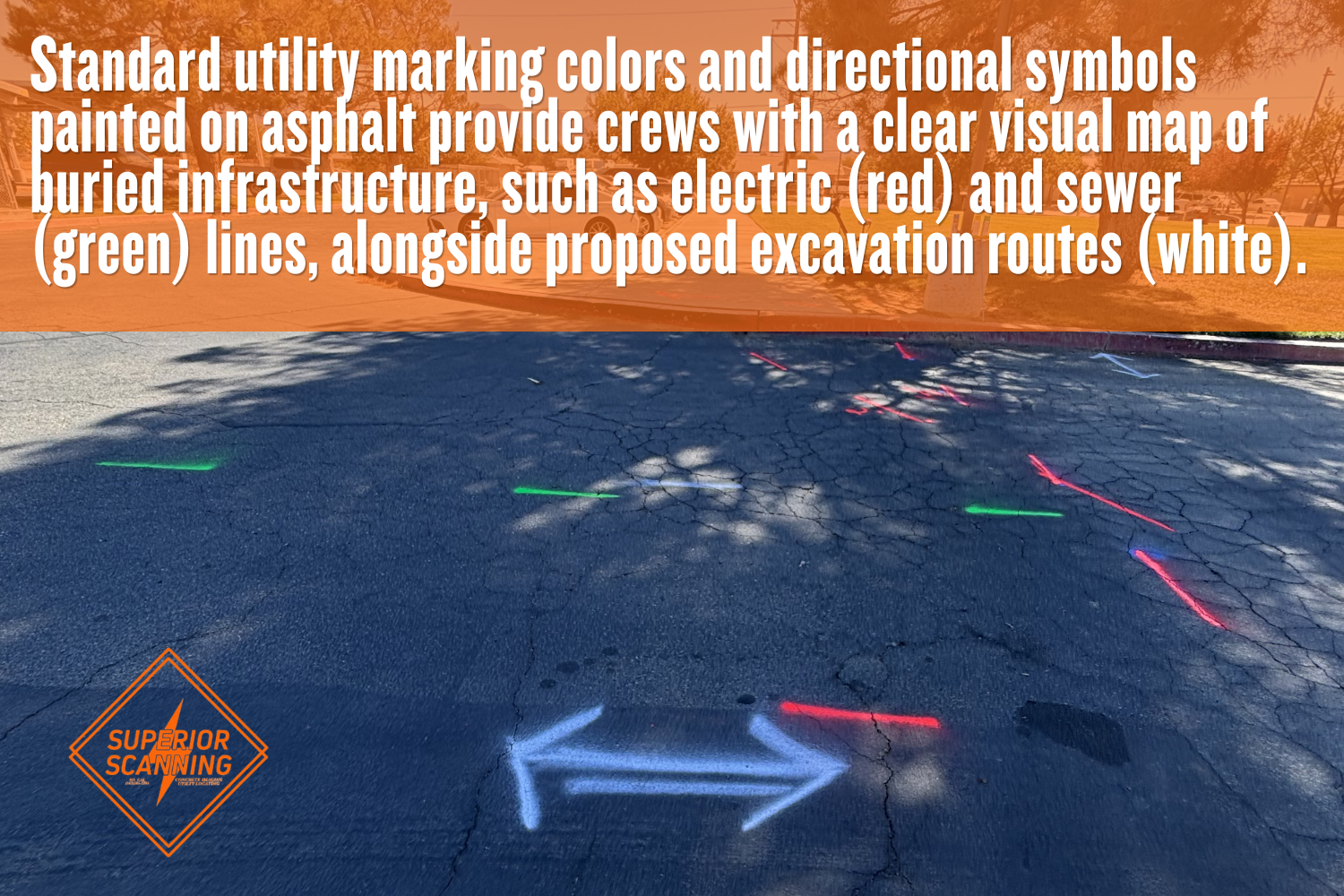
Paint colors alone tell only part of the story when mapping complex underground infrastructure. Locators frequently combine utility-marking colors and symbols to provide field workers with a highly detailed map of hidden pipe systems. Reading both the primary colors and the specific ground notes ensures the safest possible excavation process.
What Do Arrows, Letters, and Numbers Mean Next to Utility Markings?
Technicians pair paint colors with notes, directional arrows, company abbreviations, and specific symbols to indicate the exact utility type and flow direction. These extra details tell heavy equipment operators the pipe’s width, the identity of the utility owner, and the specific route the line takes across the property.
Why Are Flags and Paint Both Used on a Site?
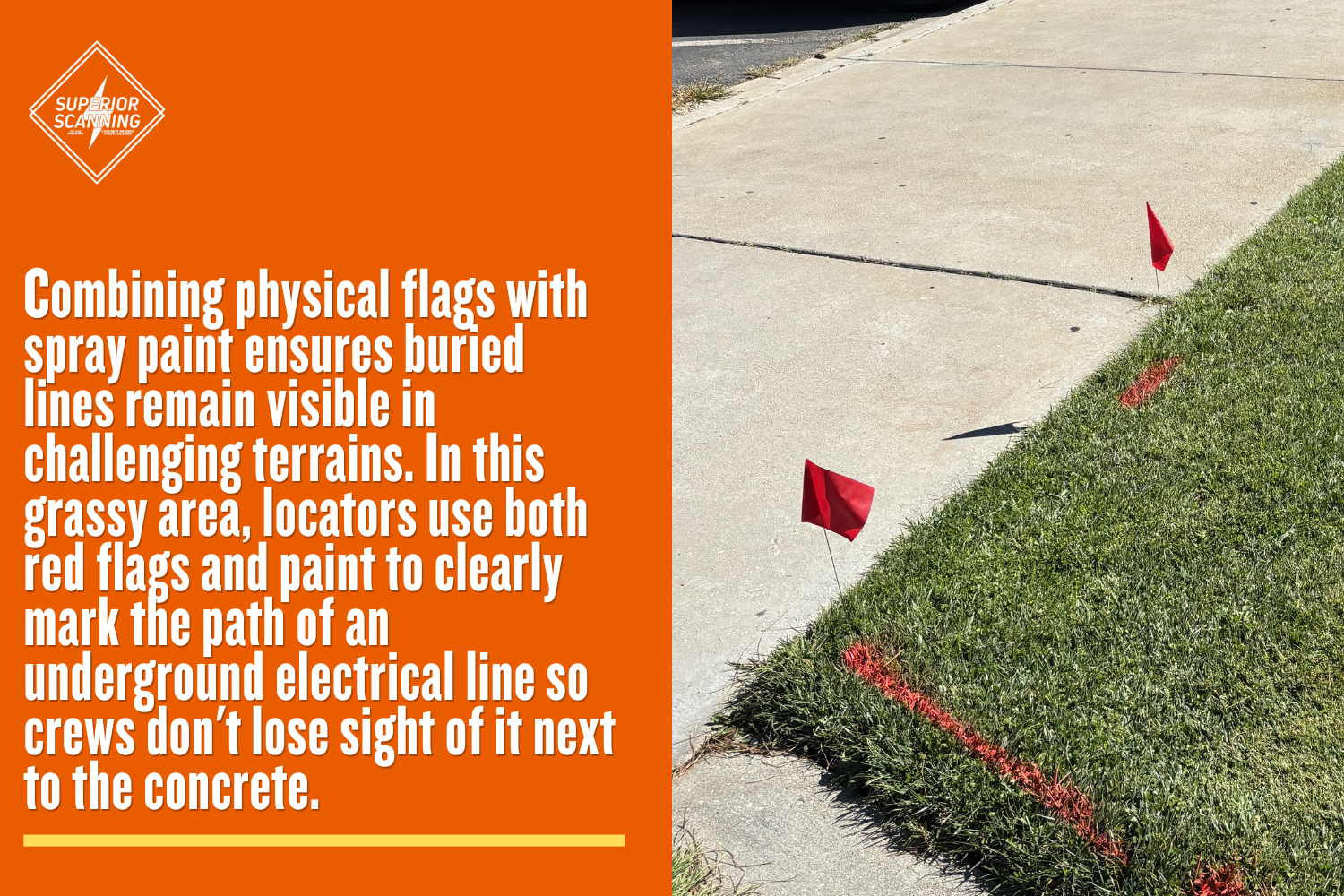
Combining flags and spray paint helps make surface markings much easier to see in constantly changing site conditions. Paved asphalt areas are easily marked with spray paint, while tall grass or muddy dirt lots require physical flags to maintain clear visibility for the crew.
Why Should Workers Pay Attention to Symbols, Not Just Colors?
Color alone simply identifies the broad utility category without providing technical specifics. Ground notes and drawn symbols help project managers identify the type of line present, the depth of the pipe, and how it physically navigates through the active work zone.
When Should You Call a Professional Like Superior Scanning?
Public 811 markings stop right at the main utility meter, leaving the rest of the property unmarked. Project managers must call a professional team under the following job-site conditions:
- Digging on commercial properties: Public locators will not mark the private lines running between commercial buildings or across private parking lots.
- Cutting concrete slabs: Standard 811 services simply do not scan structural concrete for embedded conduits, post-tension cables, or hidden rebar.
- Planning large excavations: Complex projects require deep ground-penetrating radar to properly map abandoned pipes and unrecorded utility networks.
- Working in congested areas: Dense underground systems require advanced diagnostic tools to untangle conflicting signals and verify safe digging zones.
Why Choose Superior Scanning?
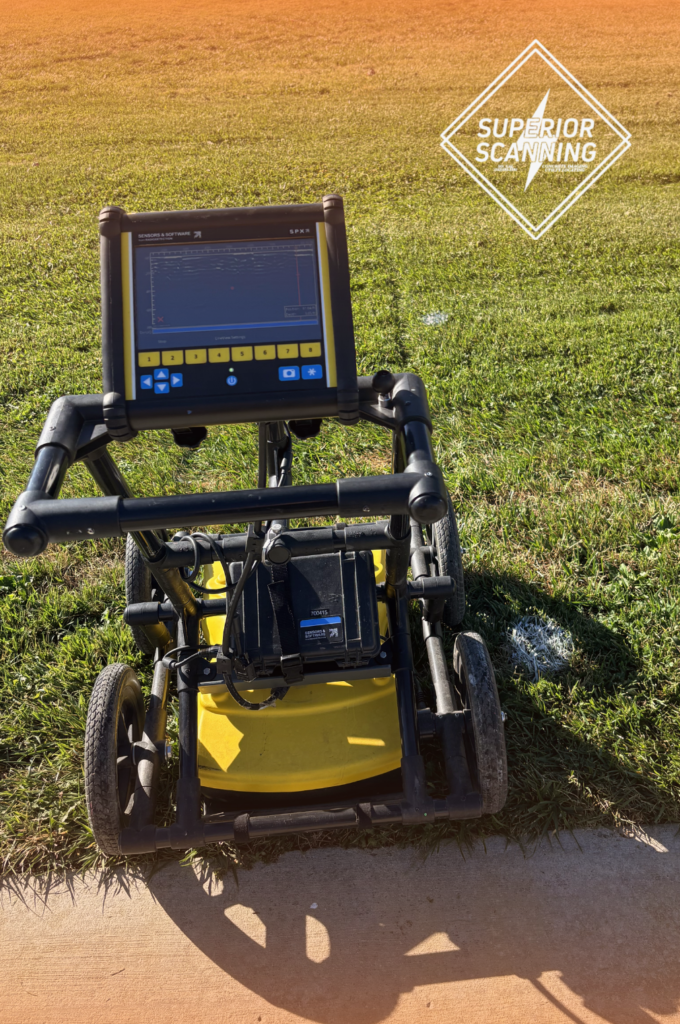
When contractors search for reliable locators, Superior Scanning stands out as a dedicated team helping crews across Southern California cut, core, and excavate with significantly fewer surprises. The company provides ground penetrating radar, concrete scanning, comprehensive private utility locating services, and highly detailed utility mapping. Trained technicians deploy directly to active job sites throughout Los Angeles, Orange County, Riverside, and San Diego to ensure daily operations remain completely safe. Site managers frequently ask about the cost, and while the exact price depends on the size of the project, the investment is always cheaper than repairing a severed pipe.
Don’t Cut, Core, or Drill Blind
SuperiorGPR is trusted on complex job sites
Frequently Asked Questions
What Do Utility Marking Colors Mean?
Utility marking colors are standard visual codes used to identify the specific type of buried pipe or cable running beneath a jobsite.
What Is the Difference Between Utility Marking Colors and Symbols?
The color identifies the broad category of the utility, while symbols and letters provide specific details about pipe size, ownership, and direction.
Do 811 Utility Marking Colors Show Exact Depth?
Standard 811 surface markings only show the approximate horizontal path of the utility and never indicate the exact depth of the buried line.
Are Utility Line Marking Colors Enough Before Cutting or Excavation?
Basic public markings fall short because public locators completely ignore all privately owned utilities running past the main service meter on a property.
When Should I Call a Private Utility Locating Company?
Calling a private utility locating company is necessary anytime a crew plans to dig on commercial property, cut concrete, or excavate past the public utility meter.
Need Help Understanding Utility Marking Colors Before You Dig?
Understanding utility marking colors is only the first step in maintaining a highly safe and efficient jobsite. Planning to cut, core, trench, or excavate requires far more data than standard public surface markings can provide. Superior Scanning steps in to provide the missing information with expert private utility locating, advanced concrete scanning, and highly detailed utility mapping.
Reach out to the Superior Scanning team today to secure a complete site sweep and make clearer field decisions before heavy work begins.
