
Don’t Cut, Core, or Drill Blind
Superior Scanning is trusted on complex job sites
What Is the Core Technology Behind a Concrete Scanner?
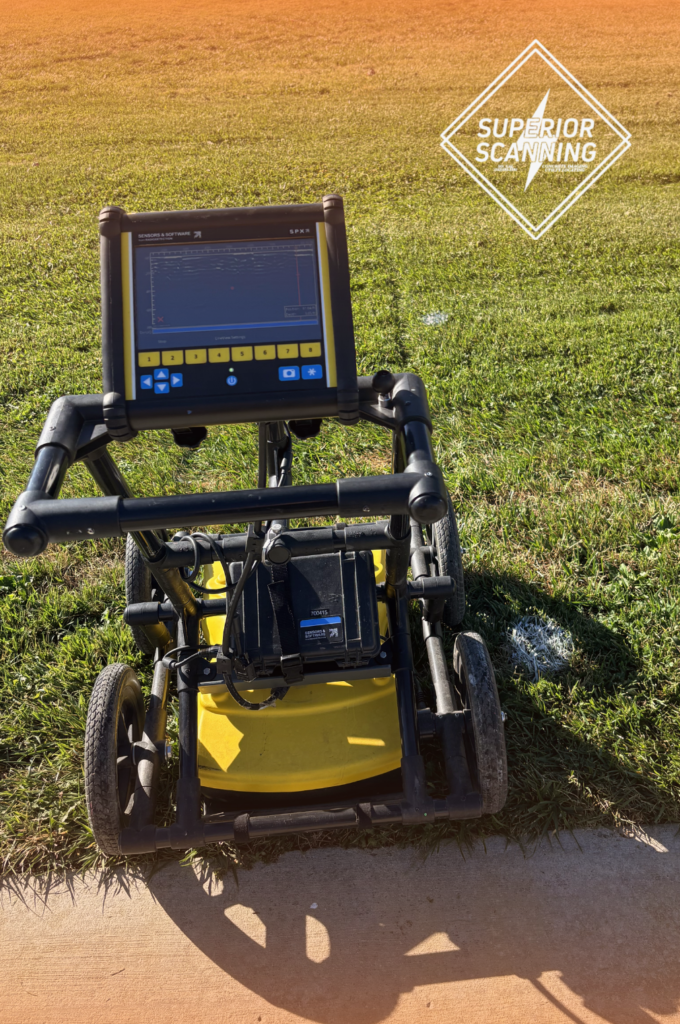
The technology behind a concrete scanner comes down to basic physics. It sends invisible pulses into the floor to map out hidden obstructions. There is no destructive drilling required. A ground-penetrating radar (GPR) scanner lets crews see right through solid rock. This keeps your team safe and prevents costly damage to the building.How Does Ground Penetrating Radar Measure Depth?
Think of it like sonar for the ground. Ground Penetrating Radar works by measuring time. The machine tracks exactly how long it takes for a signal to go down into the floor and bounce back up to the receiver. That split-second speed tells the operator exactly how deep an object is buried.How Do Radio Waves Penetrate the Concrete Slab?
The antenna pushes radio waves down into the slab. Technicians swap out different frequencies depending on the project requirements. High frequencies give a crystal-clear picture of the top few inches. Low frequencies push much deeper into the foundation but provide a slightly softer image.How Does the Machine Capture Signal Reflections?
Those waves travel smoothly through the slab until they hit something different. When the signal smacks into a steel pipe or a piece of plastic, it bounces. The machine captures that specific reflection. Then, it drops a digital marker right on the screen.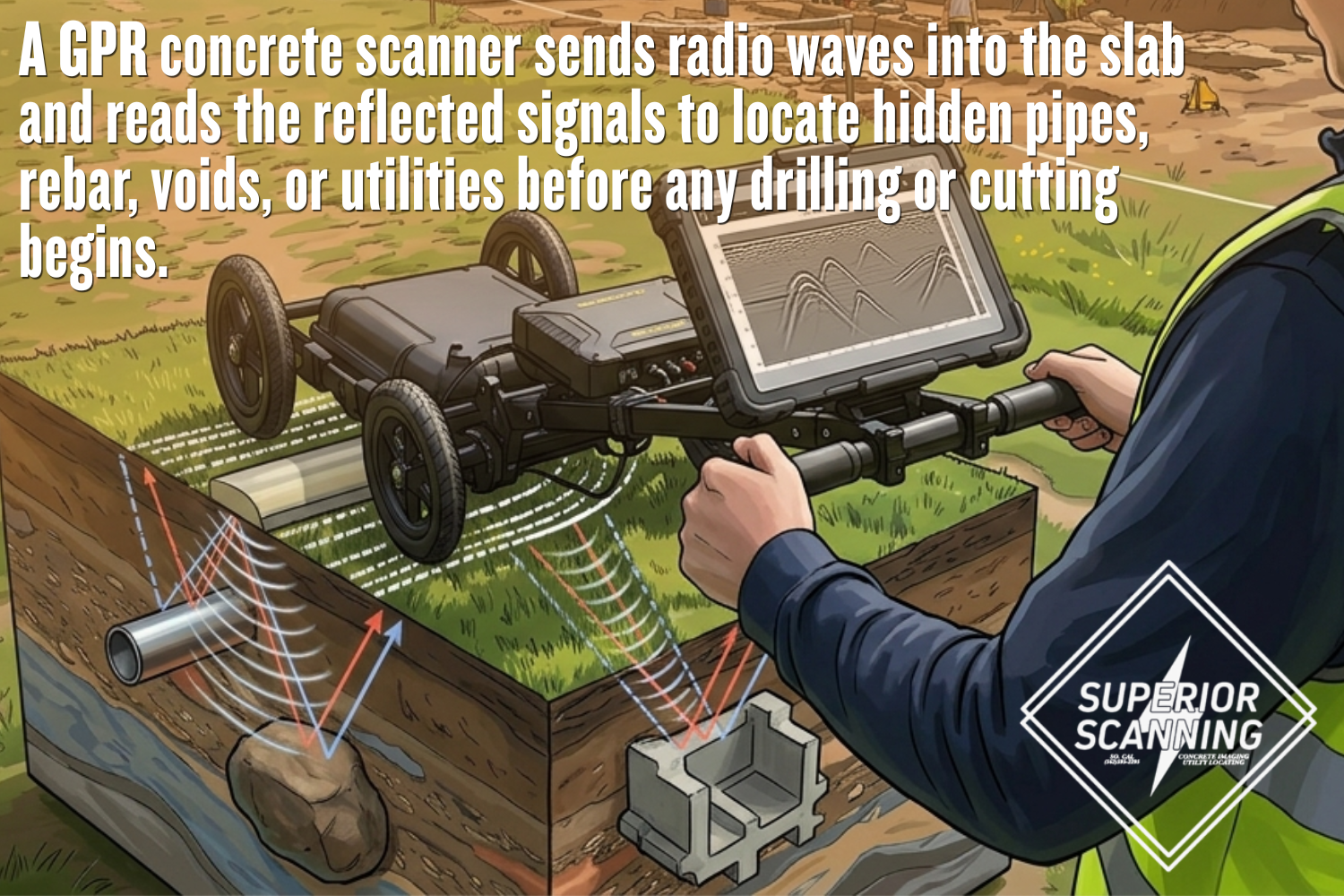
How Does a GPR Scanner Differ From a Traditional Concrete X-ray?
If you have ever dealt with the massive safety zones and delays of a traditional concrete X-ray machine, you know exactly why professional crews increasingly prefer the speed and safety of modern radar. Here is a quick breakdown of how the two methods compare:Don’t Cut, Core, or Drill Blind
Superior Scanning is trusted on complex job sites
What Exactly Does a Rebar Scanner Detect Inside a Slab?
Different buried materials create unique physical signatures on a radar screen. Advanced concrete scanning and imaging give you a massive advantage because it finds multiple types of hazards at the exact same time.Embedded Steel and Rebar Grids
Steel is highly conductive, so it strongly reflects radar signals. This bright, strong reflection makes a rebar scanner incredibly reliable. Technicians can map out tight structural grids in minutes before any cutting starts.High-Tension Post-Tension Cables
Hitting a post-tension cable is a construction nightmare. These cables are pulled incredibly tight to support the weight of the floor. If a drill snaps one, the building can suffer catastrophic structural failure. A reliable rebar detector easily spots these tensioned bundles, so your team can drill safely around them.Non-Metallic PVC and Air Voids
Magnetic locators completely miss plastic. Radar, however, picks up changes in material density. When the signal hits an empty sinkhole or a polyvinyl chloride (PVC) pipe, the wave actually speeds up. This shift allows the equipment to find non-metallic utility lines without issue.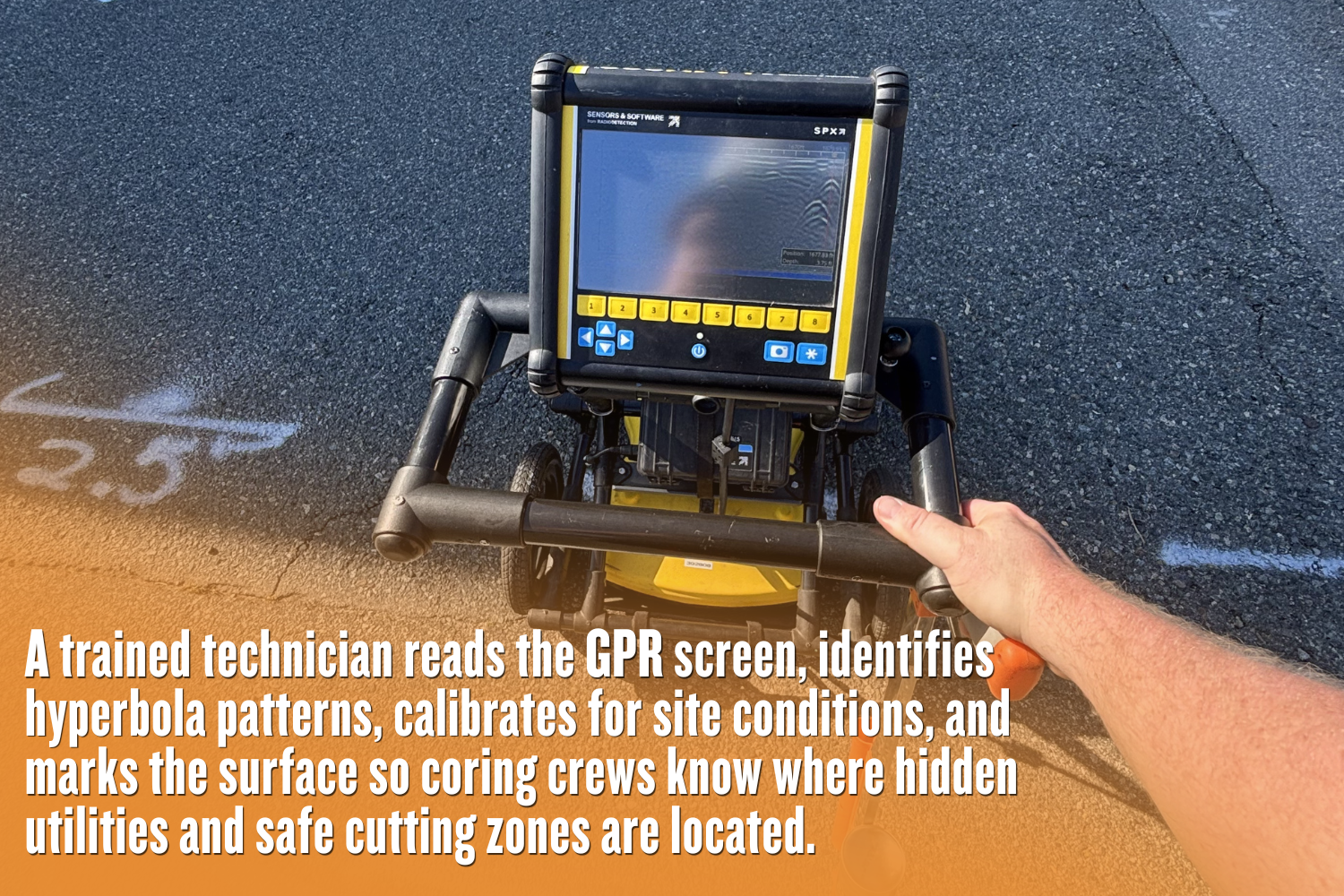
How Do Technicians Translate Raw Data Into Usable Site Maps?
Raw radar data looks confusing to an untrained eye. It takes real field experience to understand it. Analysts from top concrete scanning companies know exactly how to read the screen. They turn complicated digital waves into clear safety boundaries for your coring team.Hyperbola Pattern Identification
Round objects create a distinct arch shape on the monitor. Technicians look for this specific hyperbola pattern as they push the cart across the floor. The very peak of that arch represents the exact center of the buried pipe.Dielectric Constant Calibration
Wet concrete scans differently from bone-dry concrete. Operators must adjust the machine settings based on the floor’s age and moisture. Getting this dielectric constant right ensures the depth calculations are absolutely perfect.Physical Surface Marking
Digital data eventually becomes a physical boundary. Technicians use colored tape and marking paint directly on the job site floor. These bright lines show the coring crew exactly where they can safely cut.Don’t Cut, Core, or Drill Blind
Superior Scanning is trusted on complex job sites
