

Don’t Cut, Core, or Drill Blind
SuperiorGPR is trusted on complex job sites
What Is Concrete Slab Scanning?
Concrete slab scanning is a completely safe way to see inside a floor without breaking it apart. Teams use this technology to map the interior structure of a slab before any physical work begins. Visualizing the layout eliminates dangerous assumptions.How Is Concrete Slab Scanning Different From General Concrete Scanning?
General concrete scanning typically focuses on massive pillars or vertical retaining walls. Slab scanning focuses squarely on the floors you walk on. You typically need slab scanning services when you are planning to cut, trench, or anchor into flat ground.Why Is Concrete Slab Scanning Important Before Cutting, Coring, or Drilling?
Going in blind is a massive gamble for any contractor. Scanning a floor first helps construction crews avoid expensive mistakes and dangerous accidents on the job site. Project managers rely on this step to speed up the workflow and make confident decisions in the field.How Can Slab Scanning Help Prevent Damage?
Technicians can easily spot hazards such as rebar, electrical lines, and high-tension cables before a drill bit even touches the ground. The scan also highlights sudden changes in slab thickness or hidden voids. Knowing this information prevents catastrophic structural damage.How Can Slab Scanning Help Save Time and Money?
Hitting a water line means instant downtime. By mapping the floor first, contractors reduce the number of repairs and eliminate costly change orders. The team gets to work faster because workers are not second-guessing every move.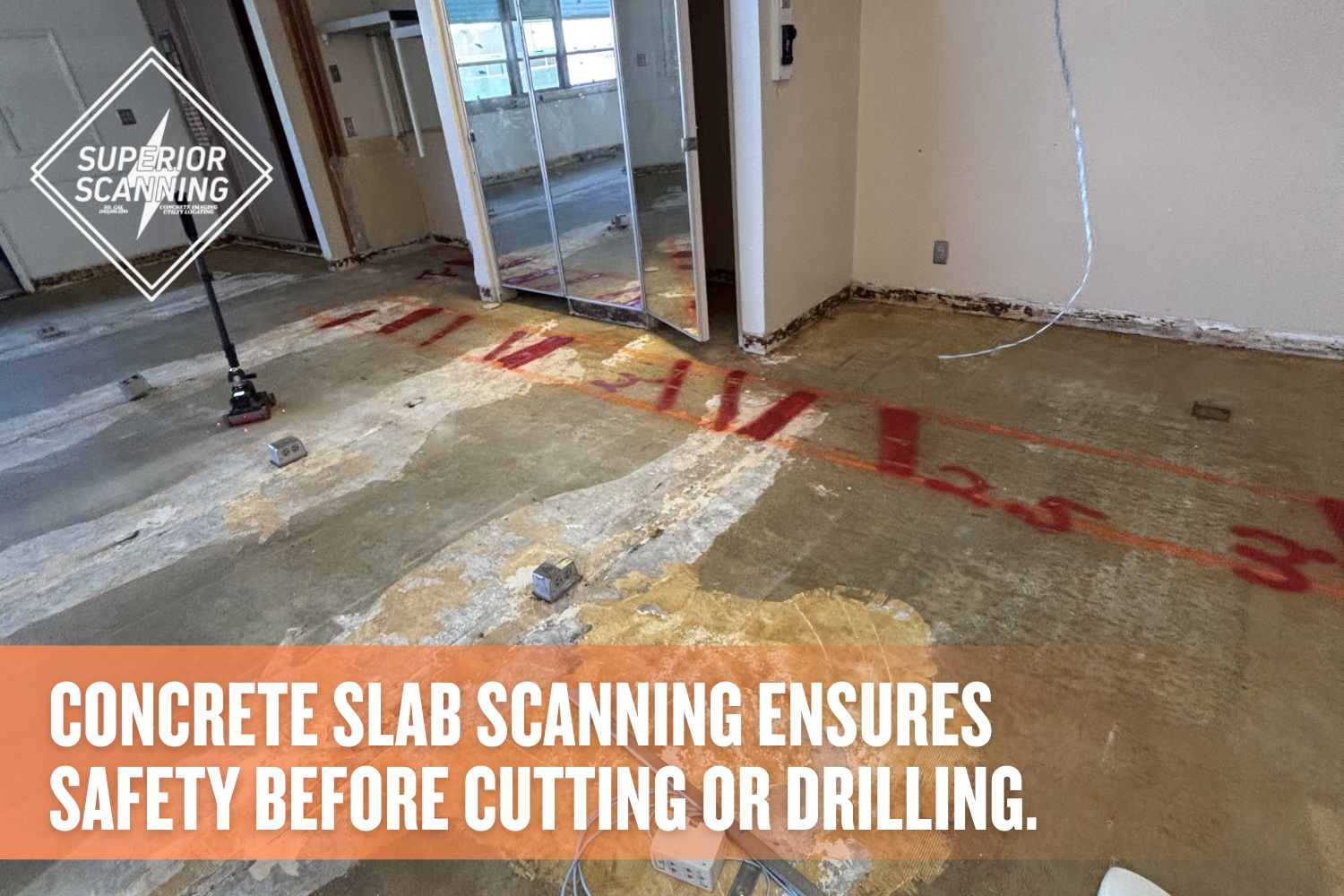
What Can Concrete Slab Scanning Find?
Advanced GPR slab scanning detects a wide range of materials hidden beneath the floor. This data lets the crew adjust the approach based on hard facts rather than outdated blueprints. The equipment usually uncovers several specific structural elements:- Rebar: Scanners map the exact spacing and depth of reinforcing steel to protect drill bits and maintain the concrete’s structural strength.
- Electrical conduit: The equipment tracks hidden lines so crews can avoid triggering dangerous electrical strikes or shutting down building power.
- Post-tension cables: Locating these high-tension steel cables prevents accidental cuts that could permanently compromise the building’s structural integrity.
- Voids and slab changes: Ground radar detects air pockets and sudden drops in floor thickness, helping engineers plan much safer anchoring strategies.
How Does Concrete Slab Scanning Work?
The entire process takes place on your job site without disrupting the surrounding area. A technician rolls specialized equipment over the floor and translates the data into a safe drilling plan. A standard visit follows a reliable pattern from arrival to marked-out results.What Happens During a Slab Scanning Visit?
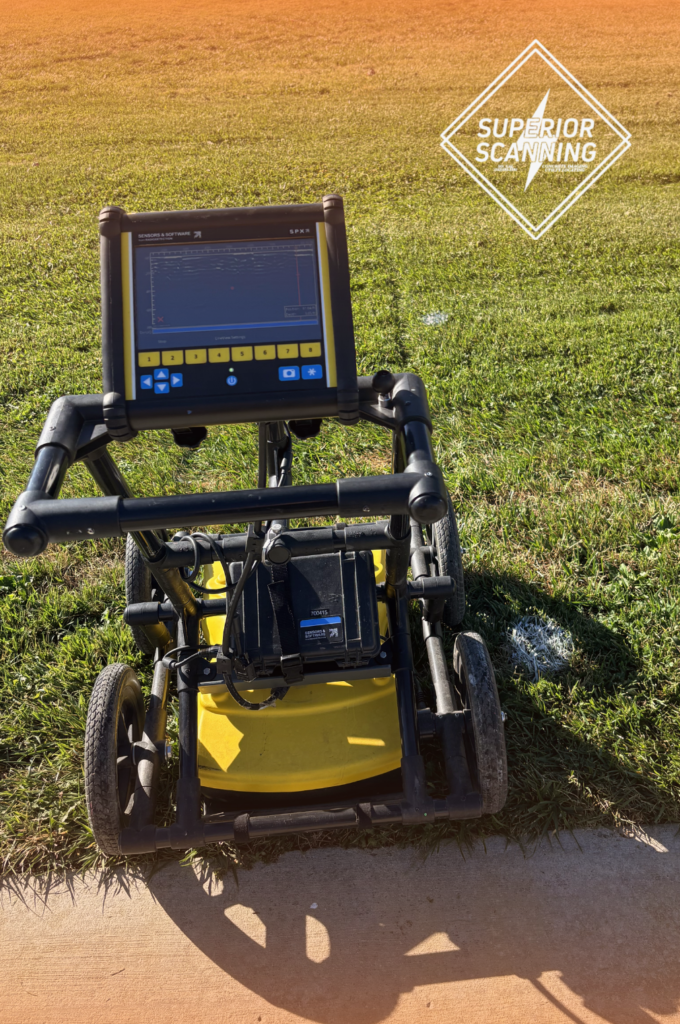
First, the technician checks the area to ensure the concrete is free of debris. The operator then pushes a specialized cart across the floor to gather structural data. The results appear instantly on a screen, allowing the expert to mark hazards directly on the ground.What Do the Markings Mean After a Slab Scan?
Bright paint or tape on the floor acts as a direct roadmap for your cutting crew. These field-ready visual guides are infinitely more practical than handing a worker a complicated printed report.When Should You Schedule Concrete Slab Scanning?
You always want to bring a scanning team in before tearing up the floor. Getting this done early keeps the project moving without unnecessary delays. Here are the most common scenarios that absolutely require an inspection:- Before saw cutting: Scanning is critical when you have no idea what utilities were buried during the original construction.
- Before core drilling: Mapping the slab ensures the drill never slices through crucial data cables or water pipes.
- Before installing anchors or heavy equipment: Finding a clear path prevents you from hitting rebar and ruining the anchor hole.
- Before commercial renovations: Previous tenants often alter buildings without updating blueprints, so a physical scan reveals exactly what is inside the floor today.
Don’t Cut, Core, or Drill Blind
SuperiorGPR is trusted on complex job sites
What Problems Can Happen If You Skip Concrete Slab Scanning?
Cutting corners by skipping a scan is a fast way to blow your budget. Blind drilling invites immediate safety hazards and triggers massive logistical nightmares. Working without a scan puts the entire project at risk.What Safety Risks Can Happen?
The physical dangers are very real for the equipment operator. A worker could hit a live power line, strike a pressurized pipe, or snap a tension cable, violently rupturing the concrete.What Project Problems Can Happen?
An accidental strike means all work stops immediately. You will be stuck paying for emergency repairs and dealing with frustrated clients as your project timeline falls apart.Is Concrete Slab Scanning Worth It?
Compared to the massive cost of repairing a severed utility line, a quick scan is incredibly cheap insurance. It provides peace of mind and keeps the job site running smoothly. Discover how exact floor data improves your daily operations.How Does Slab Scanning Help Crews Work With Fewer Surprises?
Uncertainty slows workers down. When your team knows exactly where it is safe to drill, they work faster and produce cleaner results.Why Is Slab Scanning Better Than Guessing Based on Plans Alone?
Paper plans are rarely accurate for older buildings. They get lost, outdated, or completely ignore last-minute changes made during the initial build. A real-time scan gives you the unvarnished truth about your floor.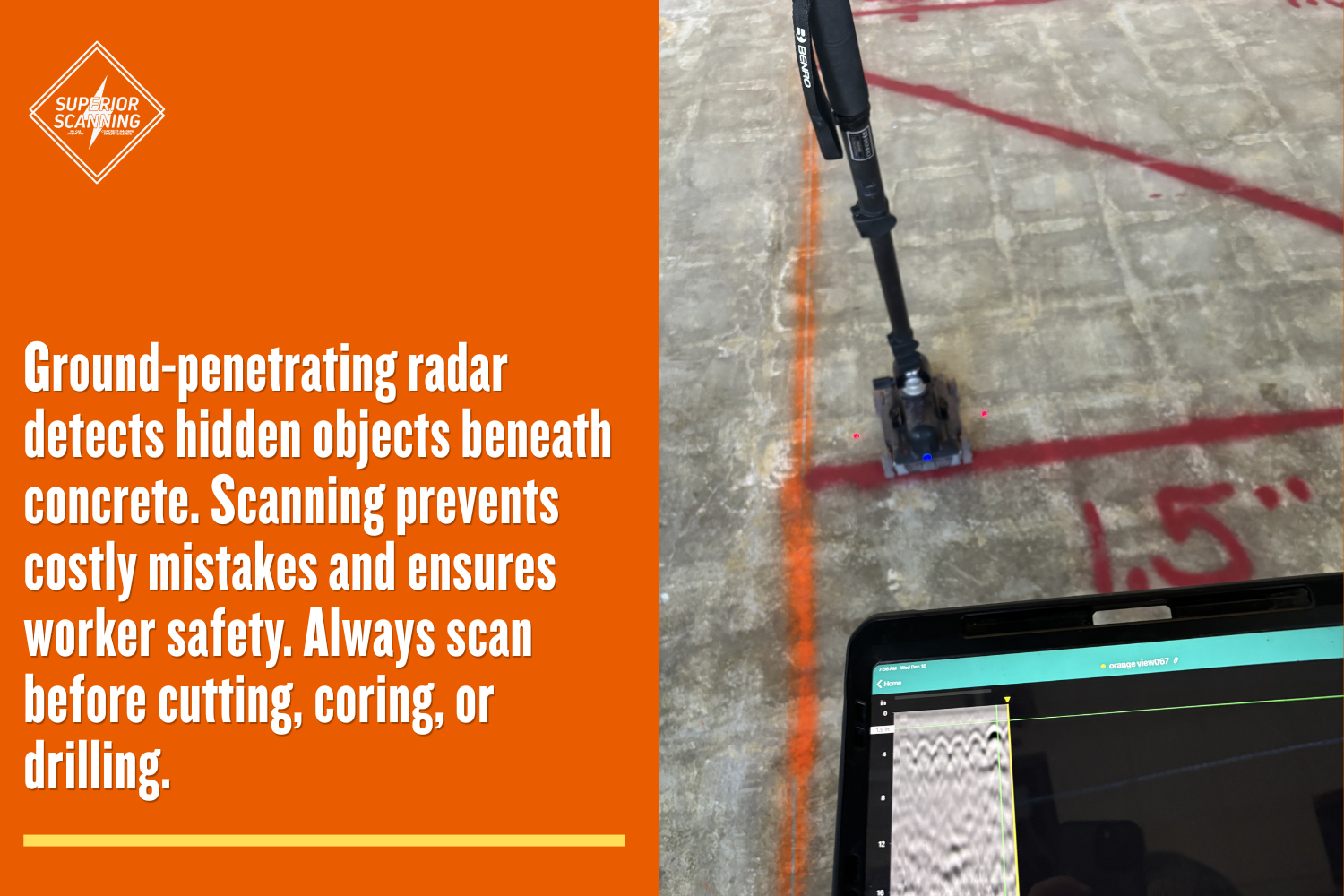
When Should You Call a Professional for Concrete Slab Scanning?
Reading radar data requires serious training and experience. Calling in a dedicated expert is the only way to get dependable, accurate markings on a complex job site. Certain complex situations demand a professional scanning team.What Are the Signs You Should Call a Professional Like Superior Scanning?
Reach out to an expert if blueprints are missing or if the work involves an older commercial building. You also need professional help if the project involves post-tension slabs, high-risk utilities, or a crew that requires clear physical markings before work begins.Why Work With a Professional Slab Scanning Company?
Experienced technicians know how to accurately interpret messy radar signals. They communicate clearly with your crew and leave behind precise markings to keep your project moving safely.Why Choose Superior Scanning for Concrete Slab Scanning in Southern California?
Contractors trust Superior Scanning to deliver reliable and fast results. We exist to help your team cut, core, and excavate with zero costly surprises. Our technicians are ready to secure job sites across Los Angeles, Orange County, Riverside, and San Diego.Don’t Cut, Core, or Drill Blind
SuperiorGPR is trusted on complex job sites
