
Quick-Glance Guide: Top Tips for Hiring GPR Services
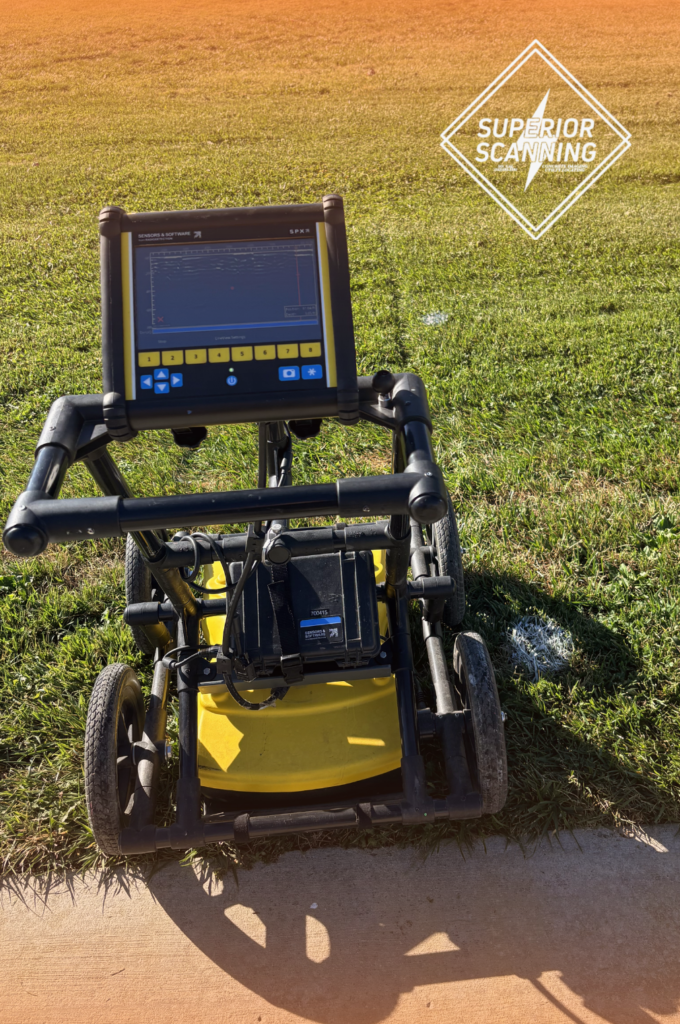
- Verify equipment quality: Choose a company with modern, well-maintained, and properly calibrated machines.
- Require certified technicians: Look for operators with relevant training and proven field experience.
- Demand immediate reporting: Ensure the provider delivers clear, actionable on-site reports right after the scan.
- Prioritize interpretation skills: Pick a team that can accurately read subsurface data in context and explain the results clearly.
How Deep Does a GPR Scan Actually Penetrate?
People often want to know how deep a GPR scan can reach. The practical answer depends on antenna frequency, soil or slab conditions, moisture, and the material being scanned. You cannot use the same setup across all environments. GPR systems work best when the operator matches the antenna and survey approach to the site conditions. In general, lower frequencies can reach deeper, while higher frequencies usually provide better detail closer to the surface.
High-Frequency Shallow Scans
High-frequency antennas capture high-resolution images of objects buried just a few inches to a few feet below the surface. These tools are often used for concrete inspections, where spotting shallow targets such as rebar or conduit is most important.
Low-Frequency Deep Penetration
When deeper penetration matters, lower-frequency antennas may be a better fit. You lose some fine visual detail, but the signal can travel farther into the ground. Technicians often use these tools for deeper mapping and locating utility lines buried several feet below the surface.
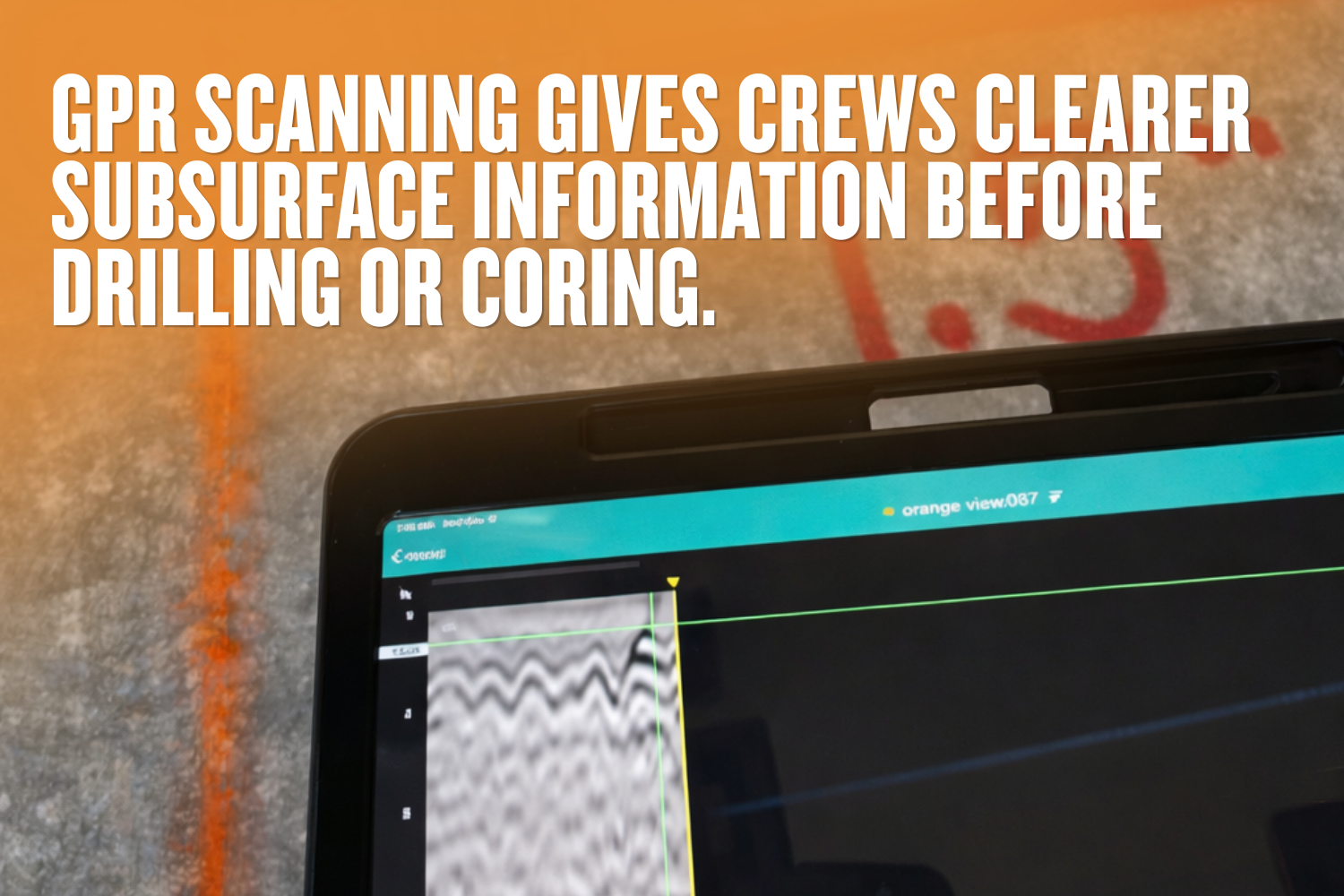
Don’t Cut, Core, or Drill Blind
SuperiorGPR is trusted on complex job sites
What Should You Look for in GPRS Service Providers?
Choosing the right scanning team can affect the usefulness of the field data before excavation begins. Look for a company with current equipment, experienced operators, and clear reporting. Strong GPR scanning services stand out because they combine advanced technology with people who know how to interpret subsurface data in context and explain what the scan may or may not reveal.
Advanced GPR Locator Technology
Old equipment can create problems on modern job sites. Accurate ground radar results depend on well-maintained, properly calibrated machines and an operator who can interpret the data in context. An outdated GPR locator may make it harder to capture clear data on a busy construction site.
Certified GPR Scanning Technicians
The person running the machine is just as important as the machine itself. A poorly trained worker might scan an area without recognizing an important signal. Look for technicians with relevant training, field experience, and a clear process for interpreting confusing radar returns.
Transparent GPR Utility Mapping Reports
You should not have to wait days to figure out what is buried under your feet. A trustworthy GPR scanning service hands over clear, actionable on-site reports immediately after the scan wraps up. That way, the crew has clearer information for planning next steps without losing valuable time.
Which Factors Affect Ground-Penetrating Radar Accuracy?
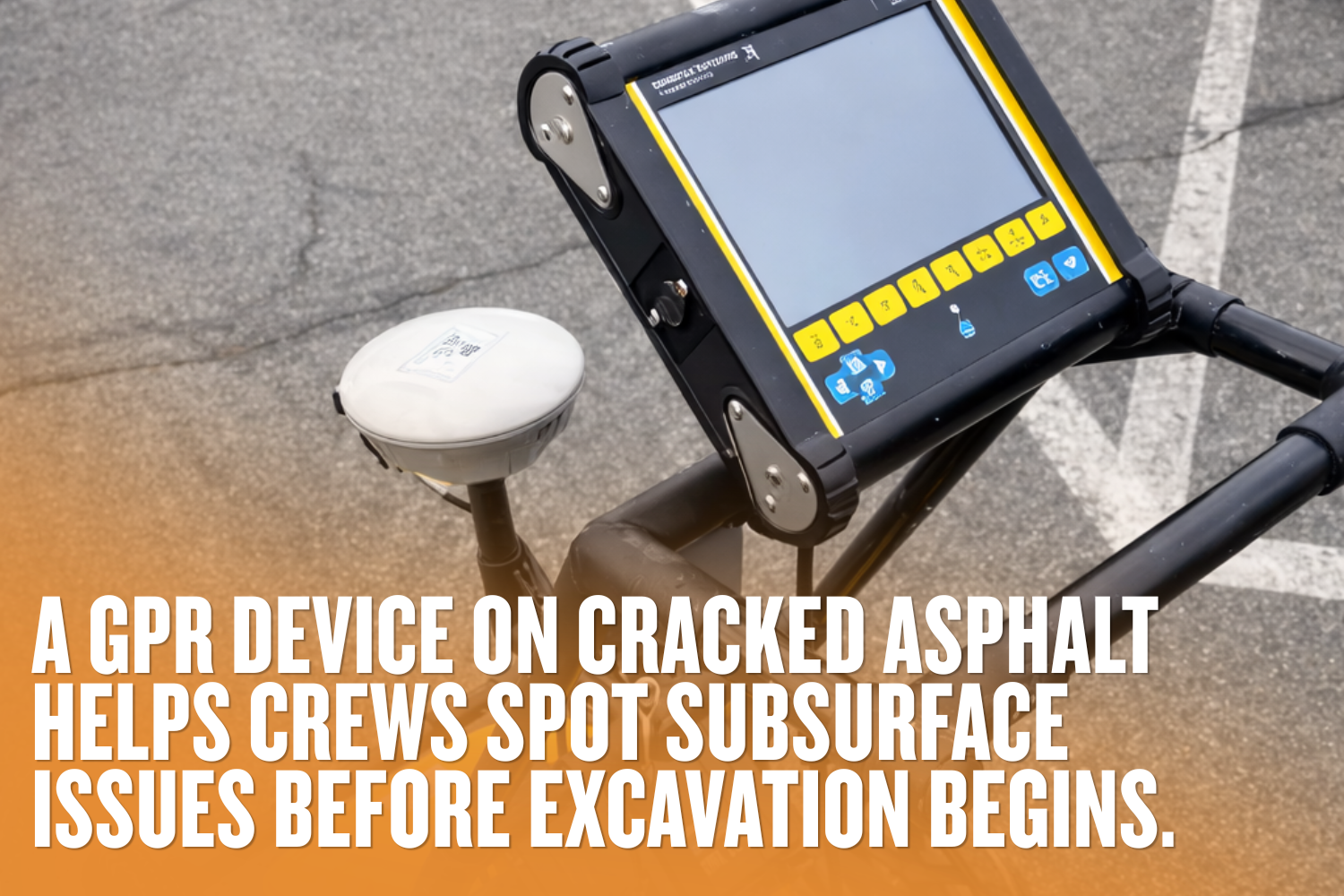
Soil and site conditions can affect how well a ground-penetrating radar machine performs during an inspection. A few specific environmental elements can influence signal quality and interpretation:
- High soil moisture or standing water pooling on the ground.
- The density of embedded rebar inside a poured concrete slab.
- The age and curing stage of the concrete.
- Thick layers of buried debris or highly conductive clay soils.
Don’t Cut, Core, or Drill Blind
SuperiorGPR is trusted on complex job sites
Frequently Asked Questions
What is GPRS, and how does it work?
The technology maps the underground world by emitting radio waves into the soil or concrete, capturing echoes as those waves bounce off buried materials or subsurface boundaries, and displaying the returned data in real time to support ground-penetrating radar utility locating.
Can a GPR scan find plastic pipes?
GPR can detect many non-metallic targets, including some plastic pipes and conduits, but results depend on depth, surrounding material, moisture, and target contrast.
Is ground penetrating radar safe?
Ground-penetrating radar uses radio-wave pulses and is widely used as a non-invasive inspection method. Site-specific safety procedures still matter during field work.
What materials block ground radar signals?
Thick metal and highly conductive clay soils can significantly weaken or limit the radar signal’s range.
How long does GPR utility mapping take?
Timing varies by site size, access, congestion, and reporting needs. Smaller routine scans may take a few hours, while larger or more complex areas can take longer.
How Can You Secure Your Project With Expert GPR Scanning?
Taking a guess about what lies beneath a job site can lead to repairs, delays, and added risk. Bringing in an experienced scanning team can reduce uncertainty and give the project team clearer subsurface information before excavation or drilling begins.
Superior Scanning brings trained specialists and advanced equipment right to the site to support ground-penetrating radar work with practical field data. Contact Superior Scanning today to schedule an inspection and keep the project moving with better information.
