


A clear sewer video can show what a pipe looks like today. CCTV (closed-circuit television) sewer inspection records visible internal conditions, but footage alone cannot establish an exact failure date.
Superior Scanning can help you document accessible pipe conditions and clarify what needs further investigation. A useful CCTV sewer inspection supports maintenance and repair decisions when you weigh the findings against pipe material, repair history, and site conditions.
What Can CCTV Sewer Inspection Tell You?
CCTV sewer inspection shows visible defects, obstructions, and the condition of accessible pipe surfaces. When reviewed with other evidence, including maintenance records and site conditions, those findings support a remaining-life assessment.
Current Pipe Inspection Findings
A pipe inspection can document visible cracks, shape changes, shifted joints, and worn surfaces that suggest structural concerns. Grease and debris affect flow and can indicate a need for cleaning.
Condition Grades and Lifespan Limits
NASSCO (National Association of Sewer Service Companies) developed PACP (Pipeline Assessment Certification Program) to standardize pipe condition records. A defect grade describes severity; it does not assign a fixed number of remaining years.
What Can Pipe Camera Inspection Miss?
Pipe camera inspection can miss hidden damage and conditions outside the pipe. A report published by the EPA (Environmental Protection Agency) explains why ordinary CCTV is limited to the visible interior. A remaining-life assessment must account for information that ordinary camera footage may not establish:
- Remaining wall thickness and material strength.
- Damage on the pipe's exterior.
- Defects hidden beneath wastewater, grease, or deposits.
- Soil support and bedding conditions outside the pipe.
- Conditions in sections the camera cannot access.
Additional assessment may be appropriate when wall loss, poor support, or a serious structural defect is suspected. A specialist can choose testing that addresses the remaining uncertainty.

What Else Affects Remaining Pipe Life?
Remaining pipe life depends on the material, operating conditions, and surrounding environment. Installation age provides context but does not establish a failure date. Combine inspection findings with the following supporting information:
- Pipe material and documented installation history.
- Previous repairs and recurring performance problems.
- Soil, groundwater, and support around the pipe.
- Traffic loads, construction activity, and ground movement.
- Wastewater exposure and operating conditions.
For example, two similar-looking pipes may face different loads if one lies under a truck route and the other under a lawn. A remaining-life review needs to account for that difference.
.superiorgpr-blog-cta h3 {
margin: 0 0 10px;
font-size: 32px;
line-height: 1.15;
font-weight: 900;
color: #000000;
text-transform: uppercase;
}
.superiorgpr-blog-cta h3 span {
color: #d66a0a;
}
.superiorgpr-blog-cta p {
margin: 0 0 20px;
font-size: 18px;
line-height: 1.5;
color: #222222;
font-weight: 500;
}
.superiorgpr-blog-cta__buttons {
display: flex;
flex-wrap: wrap;
justify-content: center;
gap: 12px;
}
.superiorgpr-blog-cta .superiorgpr-blog-btn {
display: inline-block;
padding: 14px 22px;
font-size: 15px;
line-height: 1.2;
font-weight: 800;
text-transform: uppercase;
text-decoration: none !important;
color: #ffffff !important;
border-radius: 6px;
transition: all 0.25s ease;
}
.superiorgpr-blog-cta .superiorgpr-blog-btn--primary {
background: #d66a0a;
border: 2px solid #d66a0a;
}
.superiorgpr-blog-cta .superiorgpr-blog-btn--primary:hover {
background: #b95700;
border-color: #b95700;
}
.superiorgpr-blog-cta .superiorgpr-blog-btn--secondary {
background: #000000;
border: 2px solid #000000;
}
.superiorgpr-blog-cta .superiorgpr-blog-btn--secondary:hover {
background: #d66a0a;
border-color: #d66a0a;
}
@media (max-width: 767px) {
.superiorgpr-blog-cta h3 {
font-size: 24px;
}
.superiorgpr-blog-cta p {
font-size: 16px;
}
.superiorgpr-blog-cta .superiorgpr-blog-btn {
width: 100%;
text-align: center;
}
}
Can Video Drain Inspection Show Deterioration?
Repeated video drain inspection can document changes in the same visible pipe sections. Comparable footage helps separate physical changes from differences in recording conditions.
Comparable Repeat Footage
Match the pipe section and observation locations before comparing recordings. Record any differences in cleaning, water levels, or visibility that could make the pipe look better or worse without an actual change in condition.
Consistent Condition Records
Save dated footage with consistent descriptions and locations for each finding. These records can reveal a condition trend, but a specialist must interpret that trend alongside other evidence before using it in a remaining-life estimate.
Where Does GPR Utility Mapping Fit?
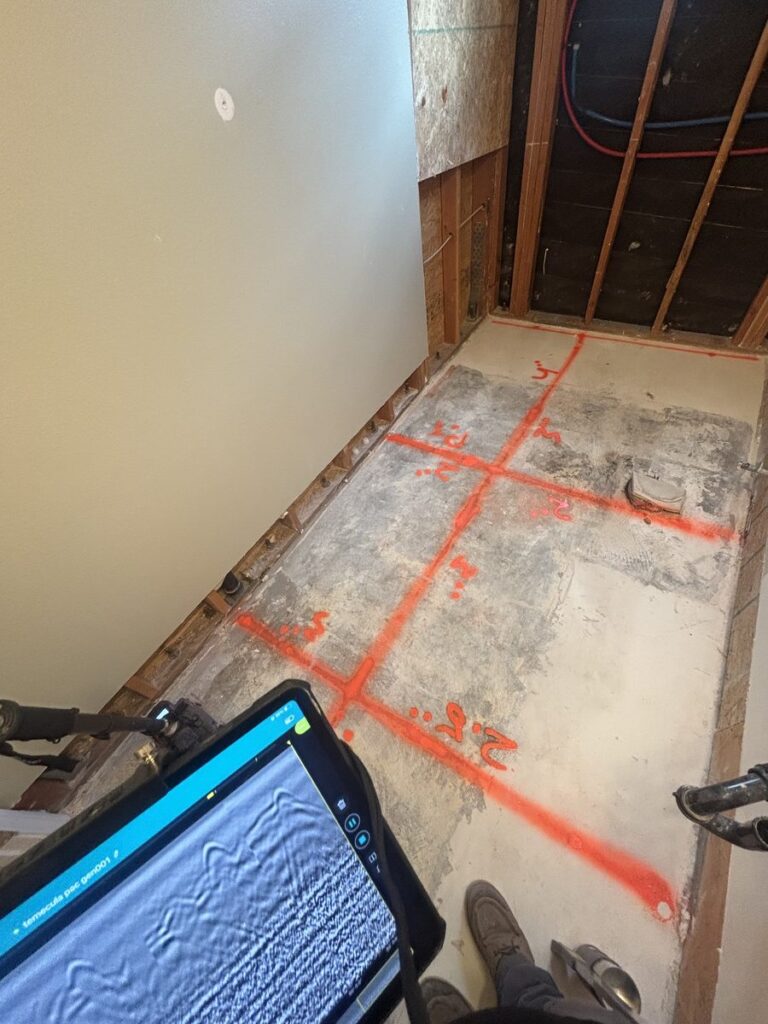
GPR (ground-penetrating radar) utility mapping can add pipe-route and nearby-utility context when site conditions allow detection. Teams can use that information alongside camera findings to plan further investigation or access for repairs.
Surface utility mapping focuses on the position of buried features, while specialized pipe-wall testing helps assess material loss or strength. A utility map alone does not establish remaining wall strength or years of service; discuss GPR utility mapping for project planning as part of the agreed scope.

What Should a Sewer Camera Service Recommend?
A sewer camera service should explain visible findings, inspection coverage, and practical next steps. Priorities depend on defect severity and what a failure could affect at that location.
Maintenance and Monitoring
Grease or debris may support targeted cleaning followed by another look at obscured surfaces. Set monitoring intervals based on observed conditions, recurring problems, and site needs, and record the rationale in the report.
Repair or Engineering Review
High structural defect grades may warrant engineering evaluation, according to NASSCO. Before choosing a repair, discuss coverage gaps and further testing with a qualified specialist, and ask what evidence supports any remaining-life estimate.
Check what to confirm when booking an inspection so the agreed scope matches the decision you need to make. Remaining-life estimates should explain the supporting evidence and uncertainty, since an estimate cannot guarantee future performance.
Frequently Asked Questions
Sewer pipe lifespan varies with material, installation quality, exposure, and maintenance. Published averages describe broad groups of pipes, while estimating remaining life at one property requires evidence of condition and a review of local conditions.
A sewer camera may reveal visible corrosion, pitting, or other surface deterioration where the pipe wall is clear. Ordinary footage alone does not measure remaining wall thickness or show how much load the pipe can carry.
A cracked sewer pipe needs an assessment of the damage and the rest of the line before choosing a repair. A qualified plumbing contractor or engineer can compare localized repair, rehabilitation, and replacement options.
A sewer inspection can miss damage on obscured surfaces, in sections the camera cannot reach, or outside the pipe. Clear footage of the visible interior does not rule out hidden wall deterioration or poor soil support.
Standing water may reflect a low section of pipe, restricted flow, or conditions at the time of the inspection. The observation alone does not establish collapse or remaining lifespan, and a follow-up assessment can help identify the cause.
What Will You Do with the Findings?
Start with the recorded condition evidence and identify what the camera could not show. A CCTV sewer inspection can guide maintenance, while a remaining-life estimate needs a broader review.
Discuss inspection coverage, recorded findings, and relevant locating or mapping needs with Superior Scanning. If structural concerns arise, share the footage with a qualified plumbing contractor or engineer before choosing how to repair or replace the line.


