
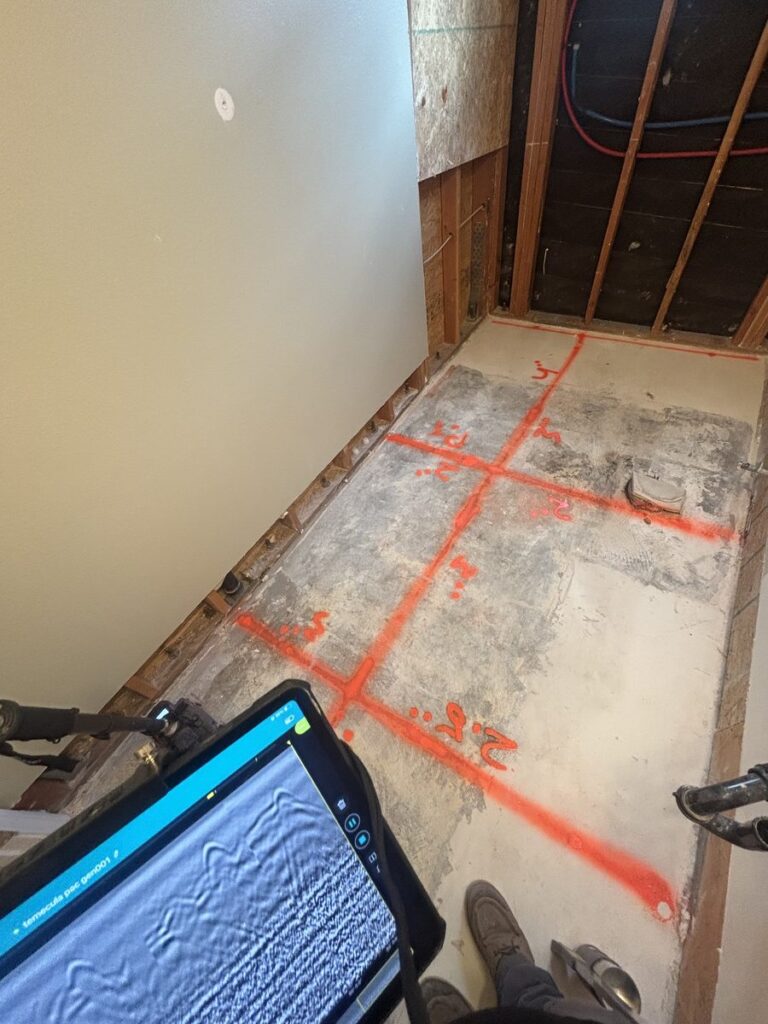

Digging blindly into concrete or soil carries immense risk for any construction team. When commercial plumbers handle complex sewer service upgrades, striking an unknown gas line completely shuts down an active job site.
For safe excavation, subsurface experts like Superior Scanning map the ground accurately before heavy machinery arrives.
Table of Contents
Don’t Cut, Core, or Drill Blind
Superior Scanning is trusted on complex job sites
Why Is Blind Digging Dangerous?
Blind digging is dangerous because it exposes construction crews to hidden underground utilities, which can cause fatal accidents and massive property damage. Digging without a clear picture of the subsurface environment can turn a standard excavation into a major financial liability. Plumbers face serious physical threats when heavy machinery breaks ground without prior scanning.
Risk of Gas Line Strikes
Puncturing pressurized gas mains can trigger immediate site evacuations and major safety hazards.
Damage to Unmarked Conduits
Severing electrical or telecommunications cables halts work and triggers expensive repair fines.
Unnecessary Concrete Destruction
Drilling or trenching in the wrong spot forces crews to patch and pour replacement slabs.
What Subsurface Hazards Threaten Excavation?
A commercial construction site hides multiple utility systems beneath the surface that pose severe safety and financial risks if struck during a sewer service project. Uncovering these hidden dangers requires professional leak detection and advanced imaging tools to keep repair crews safe.
- High-voltage electrical lines
- Pressurized natural gas pipes
- Telecommunication and fiber optic cables
- Post-tension cables within concrete slabs
- Existing water mains and abandoned infrastructure

How Do Locators Improve Project Efficiency and Water Leak Detection?
Utility locators improve project efficiency by eliminating the guesswork associated with extensive trenching through precise subsurface imaging. Project managers can maintain strict timelines and budgets by establishing precise utility depths and locations early on. This proactive approach supports seamless water leak detection and prevents project standstills.
Accurate Dig Site Mapping
Clearly marked pathways allow heavy machinery operators to dig quickly and confidently.
Prevention of Costly Delays
Avoiding accidental utility strikes keeps the workflow moving without emergency repair pauses.
Streamlined Permitting Processes
Providing exact utility maps to city inspectors accelerates approval for commercial plumbing projects.
Don’t Cut, Core, or Drill Blind
Superior Scanning is trusted on complex job sites
Which Technologies, Including Sewer Line Camera Inspection, Detect Utilities?
Professionals performing private utility locating use advanced imaging tools to map the ground accurately before extensive plumbing work. Combining radar with a plumbing camera inspection creates a complete picture of the underground environment.
- Ground Penetrating Radar (GPR) for non-metallic and metallic targets
- Electromagnetic locators for tracing conductive lines
- CCTV cameras that provide comprehensive CCTV pipe inspection services alongside a detailed sewer line camera inspection
- Concrete X-ray equipment for highly detailed structural imaging

When Should Plumbers Call a Locator for Slab Leak Detection
Plumbers should call a locator before breaking ground to lay the groundwork for flawless project execution. Securing professional subsurface mapping at the correct phase prevents retroactive planning and keeps site workers safe. Integrating these locating services early prevents costly delays and accidents.
Before Concrete Coring
Mapping rebar and conduits prior to concrete core drilling prevents structural compromises during slab leak detection.
Prior to Deep Trenching
Scanning the proposed trench path identifies intersecting utilities before backhoes deploy.
During the Initial Bidding Phase
Understanding subsurface complexities upfront ensures accurate cost estimates for clients.
Don’t Cut, Core, or Drill Blind
Superior Scanning is trusted on complex job sites
Frequently Asked Questions
What is the difference between 811 and private utility locators?
Public 811 only marks public utilities up to the meter, while private locators map everything on private property.
How deep can utility locators detect buried pipes?
Ground-penetrating radar can typically detect utilities up to ten feet deep, depending on soil conditions.
Do plumbers need to scan the concrete before trenching for a sewer inspection?
Yes, scanning concrete before a sewer inspection prevents accidental strikes on post-tension cables and electrical conduits.
How much do residential leak detection services usually cost?
Leak detection costs depend on the size of the property and the complexity of the underground utility network.
Can ground-penetrating radar find PVC pipes during a sewer line inspection?
Ground-penetrating radar accurately locates non-metallic materials, such as PVC pipes, during a routine sewer line inspection.
Protect Your Next Project With Accurate Locating
Subsurface utility engineering fundamentally changes how commercial plumbing teams approach excavation. Guaranteeing safety and precision across Los Angeles, Orange, Riverside, and San Diego counties requires reliable data. Eliminate guesswork and secure the site to keep the job on schedule.
Call Superior Scanning today to book utility locating services and keep the next construction phase safe.
