Get answers before you core, cut, trench, or excavate. GPR concrete
scanning, private utility locating, and utility mapping — marked clean
and documented, so a hidden line never becomes an incident report.
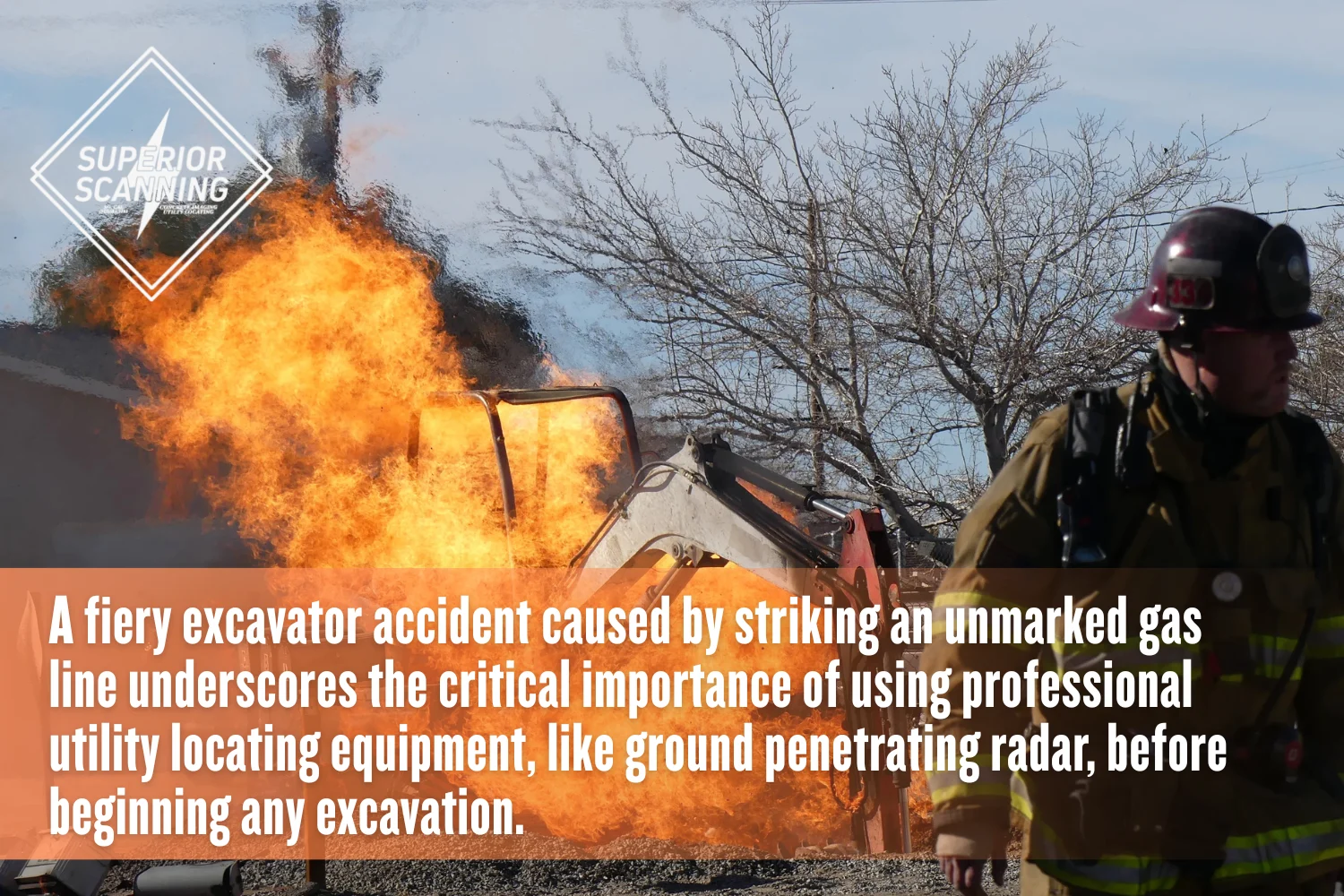
No one wants to be the person who hits a live pipe, because swinging an excavator bucket into the dirt without knowing what lies beneath is a massive risk. It puts lives at risk and can shut down a job site in seconds. People often assume standard depth estimates will save them, but relying on those old blueprints is a fast track to a dangerous blowout.
Bringing in a trusted partner like Superior Scanning changes the equation. The team provides accurate mapping to locate gas lines before anyone breaks ground. Knowing exactly where hazards hide keeps the job moving forward without those stomach-dropping surprises.
You might look at a municipal blueprint and think you know exactly where a pipe sits. The reality underground almost never matches those original plans. City codes specify a specific burial depth, but over the years, the earth shifts. Surface modifications alter the distance between the pipe and the shovel blade. Booking private utility locating clears up this dangerous uncertainty. It gives your crew a clear picture before the heavy machinery even rolls up.
Soil Erosion and Weathering
Weather patterns constantly change the landscape. Heavy rain and strong winds strip away layers of topsoil season after season. This slow weathering process exposes older pipes, leaving them much closer to the surface than the day they were laid. A pipe buried three feet deep in 1990 might have only 10 inches of cover today. Contractors have to account for this natural erosion. You need to safely find underground utilities to avoid a costly strike.
Surface Landscaping Alterations
Think about how much a property changes over a decade. A previous owner might have added a new driveway, graded the backyard, or built a massive retaining wall. These projects drastically alter the ground elevation over existing infrastructure. You might be standing on a freshly paved surface, completely unaware that a volatile pipe sits just inches below your boots. Accounting for these landscaping changes is exactly what an underground utility locator does to properly assess the site.
What Assets Does a Private Utility Locator Find?
Public locators stop at the meter, so a private utility-locating company steps in to map the infrastructure beyond that point. Technicians identify several critical underground components:
Private gas lines supplying pool heaters and outdoor kitchens
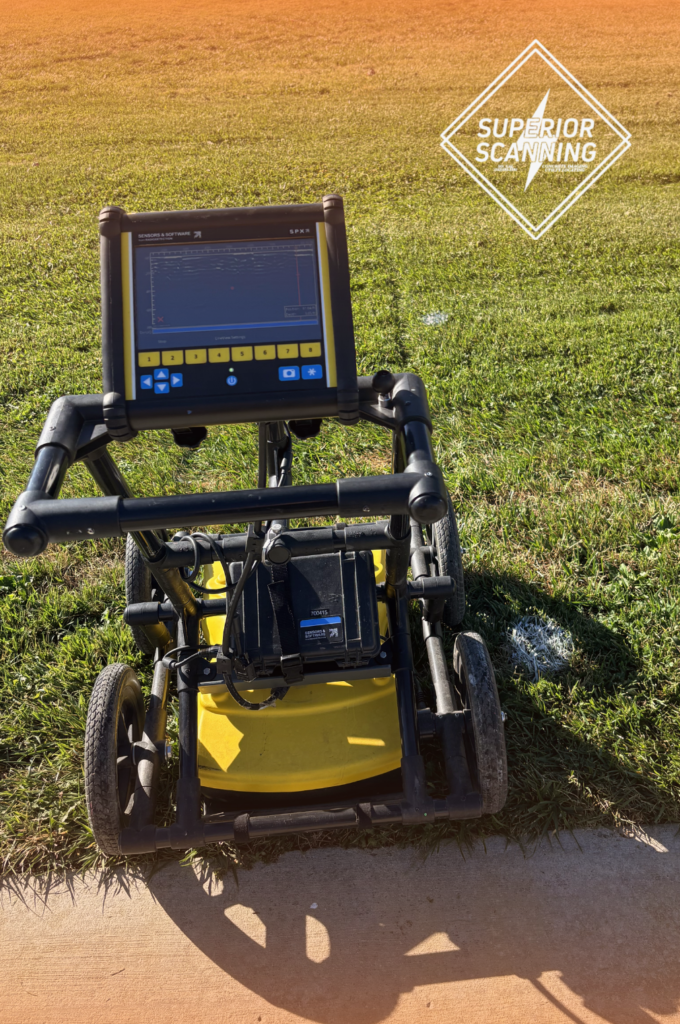
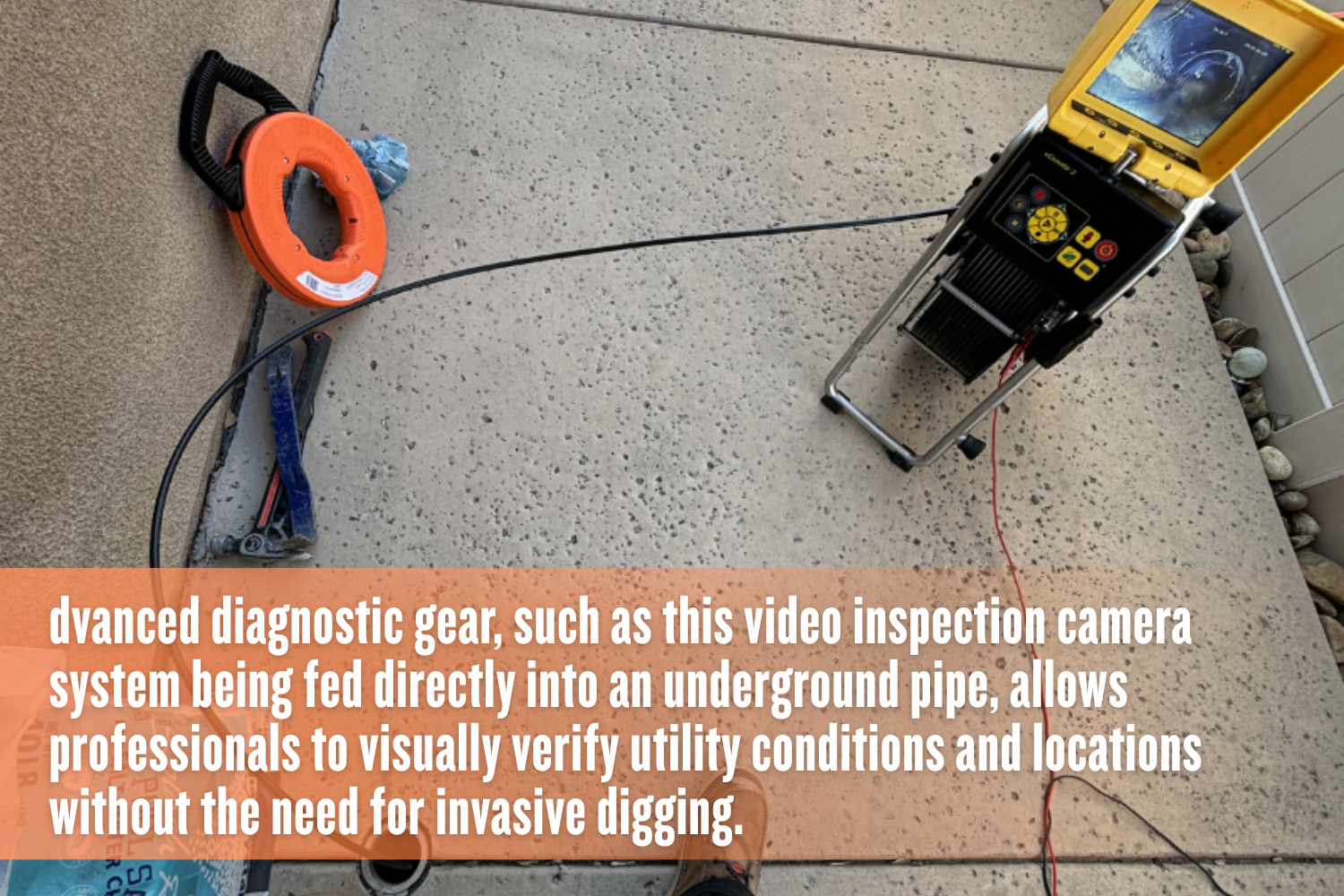
You cannot rely on guesswork when dealing with volatile pipes; old blueprints are just a starting point. Professional underground utility locating services use advanced diagnostic gear to pinpoint coordinates and depths without ever touching a shovel. These tools replace assumptions with hard data, creating a work environment where crews can dig with confidence.
Electromagnetic Tracing Equipment
Conductivity is the key to this method. Technicians clip a specialized transmitter right onto a tracer wire or a metal pipe. That device pushes a specific frequency up through the dirt. A technician then walks the site with a receiver to pick up the signal. This process allows a utility locator to track the exact path of conductive materials from one end of the property to the other.
Ground Penetrating Radar
Since not everything underground is made of metal, Ground Penetrating Radar (GPR) addresses this by sending high-frequency radar pulses directly into the ground. The signal then bounces back, revealing what is hidden below, which is exactly how technicians spot non-metallic assets made of plastic or PVC. GPR even spots unmarked voids in the soil. Mixing this radar technology with traditional tracing creates a highly accurate utility mapping plan for the entire project.
Why Hire a Utility Locating Company?
Smart project managers do not leave things to chance. Site supervisors mandate utility locating before any major digging happens to actively prevent catastrophic site failures, including:
Severe physical injury or dangerous explosions
Massive repair costs and municipal safety fines
Significant project timeline delays and work stoppages
How deep are residential gas lines usually buried?
City codes often require a minimum depth of 18 to 24 inches. The reality is that actual depths vary wildly due to topsoil erosion and years of previous landscaping changes.
Can ground-penetrating radar detect plastic gas pipes?
Yes, Ground Penetrating Radar is the best technology for spotting non-conductive materials like plastic or PVC that standard electromagnetic wands completely miss.
Who is responsible for locating private gas lines?
The public 811 service only marks up to the street meter. The property owner or general contractor takes full responsibility for underground utility locating beyond that point.
Does a utility locator guarantee exact depth?
While modern equipment is incredibly accurate, technicians provide highly reliable depth estimates rather than absolute guarantees because of changing soil conditions and potential signal interference.
How long does underground utility locating take?
Most standard commercial site surveys take just a few hours, though the exact timeframe depends on the total acreage and subsurface complexity, making utility locating services highly efficient for tight schedules.
Need to Guarantee a Safe Dig?
Every successful project starts with a safe foundation. Project managers need to secure a clear picture of the subsurface before the excavators ever touch the dirt.
Reach out to Superior Scanning to get accurate and up-to-date information about every buried hazard waiting in the work zone. Protect the crew and the project budget by scheduling an inspection today. You deserve to dig with total confidence.