
Don’t Cut, Core, or Drill Blind
SuperiorGPR is trusted on complex job sites
What Are Underground Utility Locating Services?
Before you even think about firing up an excavator, you need to know what you might hit. Underground utility locating services help identify and mark the approximate path of public and private utility lines below a job site before excavation. This can include water pipes, fiber optic lines, gas mains, electric lines, sewer lines, and other subsurface installations, depending on site conditions, available records, and the methods used.
The goal is to reduce uncertainty before digging starts. With better visibility into buried infrastructure, crews can plan excavations more carefully, reduce the risk of utility damage, and make safer field decisions.
Why Hire Private Underground Utility Locating Services?
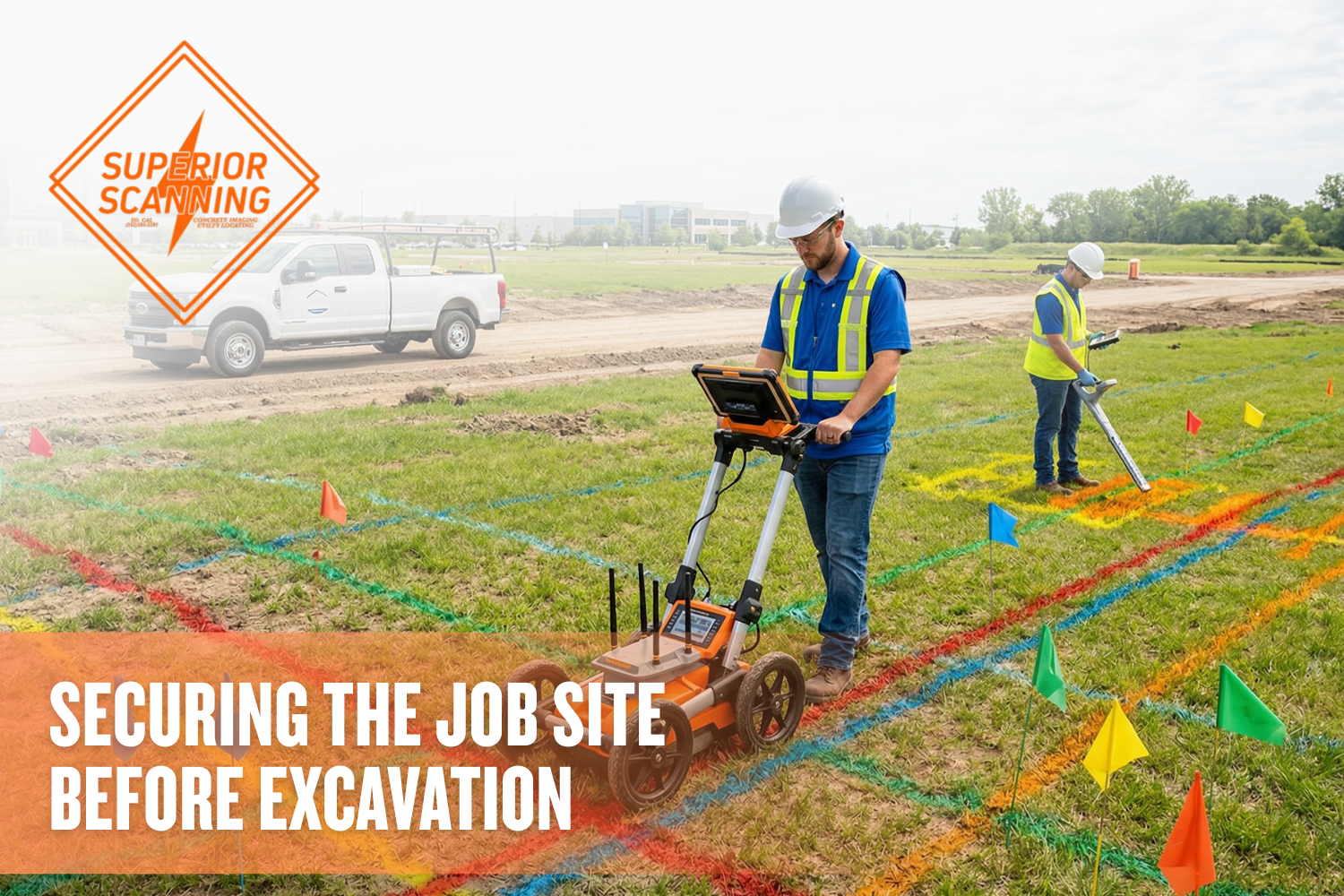
Calling the city or a municipal 811 service is a good start. However, a private locator can help when a project may involve private lines, complex site conditions, or utility paths that fall outside standard operator-owned coverage.
Opting for private underground utility locating services brings distinct advantages to your job site that save you both time and headaches:
- Locating private lines and certain facilities that may not be covered through the standard 811 process.
- Supporting more complete site planning when excavation extends beyond utility-member markings.
- Using multiple locating methods, records review, and field interpretation to improve visibility into buried infrastructure.
How Do Experts Find Buried Utilities?
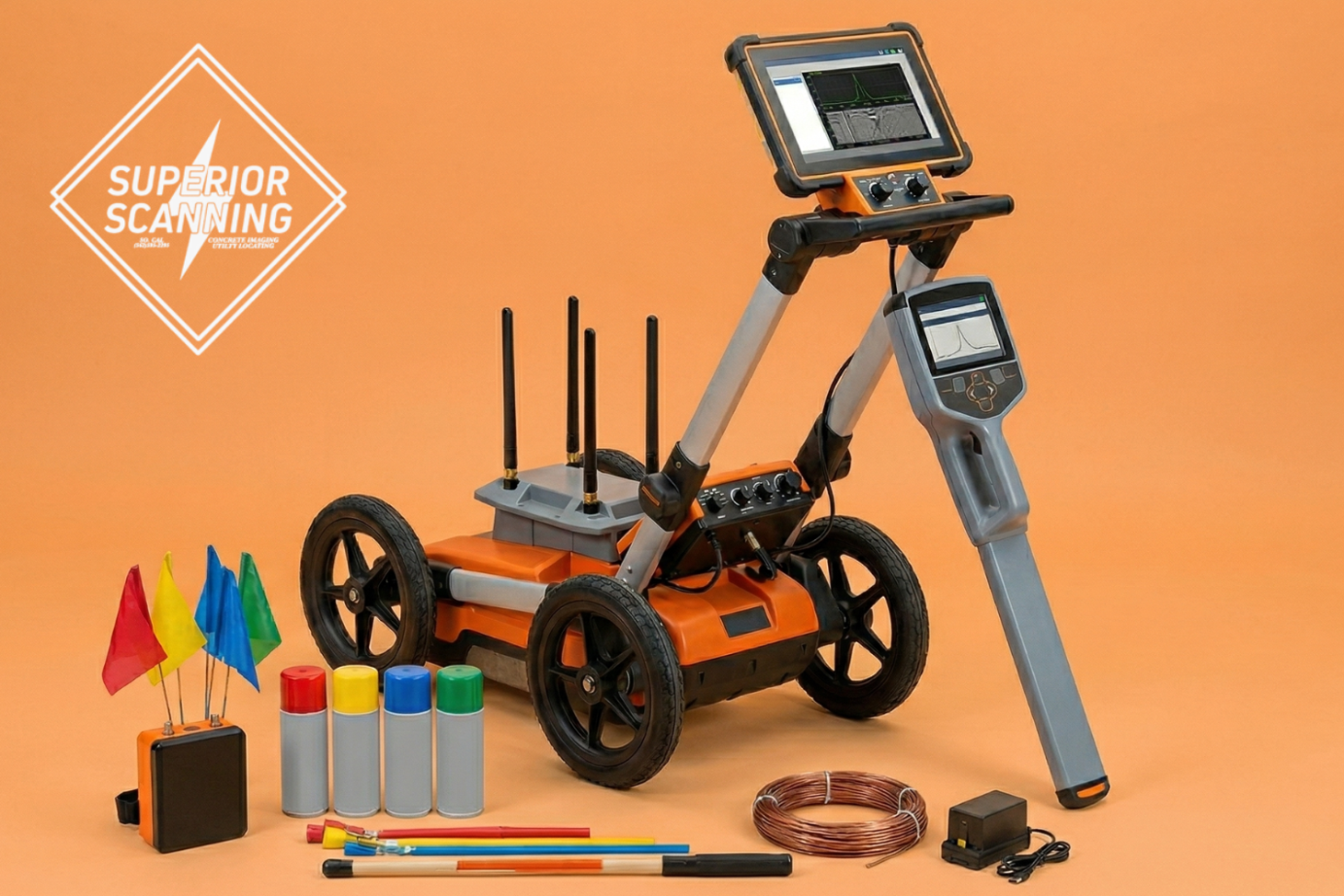
You might wonder how technicians actually see through concrete and dirt without digging a hole. They rely on a few highly specialized tools to safely scan the ground. By combining different scanning methods, experts can build a more complete picture of site conditions and buried utilities.
Ground Penetrating Radar (GPR) Scanning
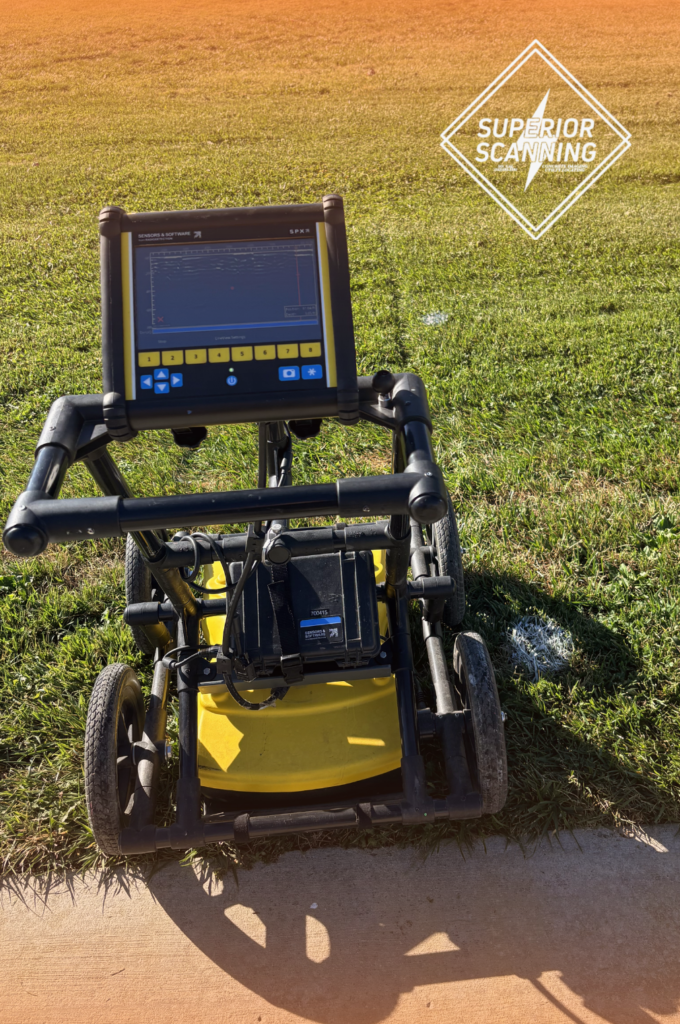
Think of Ground Penetrating Radar (GPR) scanning like an ultrasound for the earth. The operator pushes a machine that sends high-frequency radar pulses down into the soil. When those pulses encounter changes in subsurface materials, some of the signal reflects back to the receiver. In favorable conditions, this process can help locate metallic and some non-metallic features, including certain pipes, conduits, and buried structures.
Electromagnetic Induction Tracing
This method is commonly used for conductive utilities such as copper wires, metal pipes, tracer-wire-equipped lines, and certain power or communications cables. A technician connects or induces a signal onto the utility line, then uses a handheld receiver to trace the approximate route from the surface. It is a useful method for following conductive lines without disturbing the ground.
Acoustic Pipe Detection
Sometimes, radar does not provide enough clarity for certain pressurized water lines. In some cases, acoustic tools can help technicians trace those lines or pinpoint leaks by listening for sound traveling through the pipe or the surrounding ground. This method is typically used as a supplemental technique rather than a stand-alone solution for every buried utility.
What Are the Risks of Skipping This Step?
Deciding to skip the site-scanning phase is a serious mistake that can lead to safety issues, property damage, and project disruption. Guessing what lies beneath the dirt increases the risk of striking an active line, which can lead to injuries, repair costs, and delays that affect the entire job.
Dangerous Physical Injuries
The most serious consequence of a utility strike is the risk to worker and public safety. Contact with energized electrical lines or damage to gas infrastructure can result in shock, fire, explosion, or other severe injuries. Taking the time to map the site properly helps reduce the chance of these dangerous incidents during excavation.
Expensive Infrastructure Repairs
Imagine accidentally severing the main fiber-optic cable serving a busy neighborhood. Damaging a buried utility can result in repair costs, service restoration expenses, project disruption, and potential liability or penalties, depending on the circumstances. Unexpected costs like these can put significant pressure on a construction budget.
Significant Project Delays
An accidental strike forces everyone to drop the tools and stop working immediately. The site may shut down while safety inspectors assess the area and repair crews fix the problem before any digging can resume. These interruptions can disrupt the schedule and increase both project cost and deadline pressure.
Who Requires Underground Utility Locating Services in California?
A surprisingly wide variety of industries rely on accurate utility mapping just to function safely on a daily basis. It is not just massive commercial developers who need this kind of protection.
A wide range of contractors, consultants, property owners, and public works teams use underground utility locating services in California before trenching, grading, drilling, coring, or excavation. These professionals typically include the following:
- Commercial construction firms preparing land for new building foundations.
- Environmental consultants who need to test soil and groundwater conditions safely.
- Everyday residential property owners planning major home additions or digging out backyard pools.
- Municipal contractors tasked with repairing city roads and public sidewalks.
Don’t Cut, Core, or Drill Blind
SuperiorGPR is trusted on complex job sites
Frequently Asked Questions
How Deep Can Ground Penetrating Radar Detect?
Detection depth varies based on soil conductivity, moisture, antenna frequency, and target type. In favorable conditions, GPR can detect deeper features, while conductive or saturated soils can significantly limit usable depth.
What Is the Difference Between 811 and Private Locators?
811 connects excavators with utility operators who mark facilities they own or maintain in the work area. Private locators are often hired to help identify private lines and other buried facilities that may fall outside standard 811 coverage.
Are Private Locating Services Accurate?
Accuracy depends on site conditions, access, utility type, available records, and the methods used. Qualified locators often combine multiple tools and field-verification steps to increase confidence in the results.
How Much Do Utility Locating Services Cost?
Your total cost for professional locating services will depend heavily on the overall size and the specific complexity of your planned excavation site.
Can Ground Penetrating Radar Find Plastic Pipes?
GPR can often help detect plastic pipes when there is sufficient contrast between the pipe and the surrounding material, but results vary with soil conditions, depth, moisture, and equipment.
Ready to Secure Your Dig Site?
Protecting workers, schedules, and buried infrastructure starts with better site information. When hidden pipes and cables are identified before digging begins, contractors can plan excavation with clearer visibility and fewer surprises.
Superior Scanning provides underground utility locating services that help property owners and construction teams move forward with a safer, more informed approach. Contact Superior Scanning to discuss project scope, site conditions, and scheduling.
