
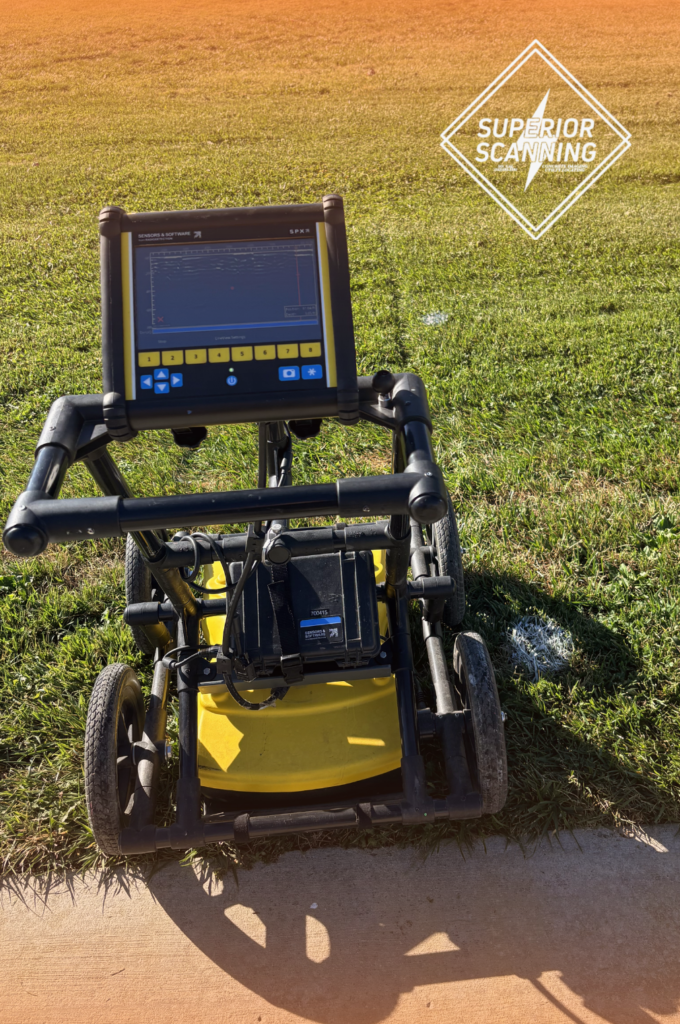
Assuming a single piece of radar equipment provides a flawless picture of the subsurface is a dangerous gamble. Ground penetrating radar (GPR) is a powerful asset for site safety. Treating the machine as an infallible X-ray tool often leads to catastrophic utility strikes and massive budget overruns. A GPR pipe locator is highly effective but has specific limitations depending on soil conditions and material types. Project managers must understand these blind spots before breaking ground.
Superior Scanning serves as a highly knowledgeable technical partner capable of navigating these hidden hazards. We ensure complete site safety by mapping what standard equipment might miss.
Don’t Cut, Core, or Drill Blind
Superior Scanning is trusted on complex job sites
Table of Contents
What Materials Can a GPR Pipe Locator Detect?
Ground-penetrating radar (GPR) relies on distinct changes in material density to accurately map the subsurface. Project managers trust this specific equipment to identify targets that traditional magnetic tools miss completely. The technology excels at outlining structural shifts beneath the soil.
Non-Metallic Polyvinyl Chloride (PVC) Lines
This underground pipe locator easily spots plastic and PVC systems. It detects the density difference between the hollow plastic and the surrounding dirt.
Buried Concrete and Clay Structures
A GPR locator effectively maps historical clay pipes and massive concrete storm drains. The radar pulses reflect clearly when they hit these dense materials.
Large Metallic Water Mains
The radar waves recognize thick iron and steel water lines immediately. The sudden change from soft soil to hard metal creates a strong visual anomaly on the screen.
What Are the Major Blind Spots of a GPR Locator?
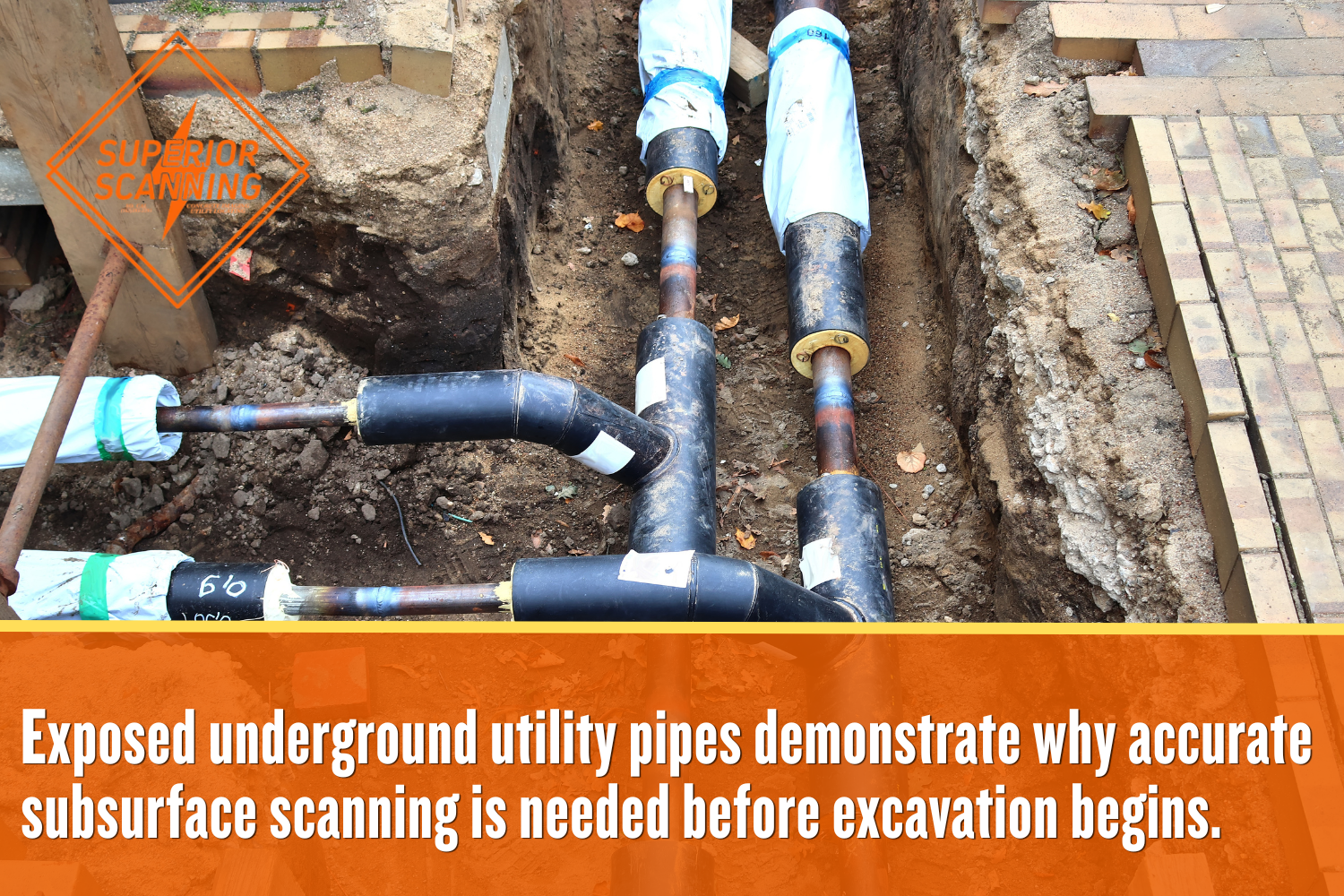
Certain environmental conditions and structural challenges can cause radar signals to fail or reflect inaccurately. Knowing the exact breaking point of the technology prevents false confidence during the excavation phase. You must watch out for specific underground environments:
- Highly saturated clay soils that absorb radar wave frequencies
- Extremely small or unpowered utility lines buried deeply
- Objects hidden beneath densely reinforced concrete structures
Don’t Cut, Core, or Drill Blind
Superior Scanning is trusted on complex job sites
Why Do Soil Types Hinder Utility Locating Equipment?
Soil composition directly dictates radar penetration depth through its dielectric properties. Water and heavy minerals act as a natural shield, severely limiting the effectiveness of radar pulses. Site technicians must continually evaluate the land’s geological makeup to determine scan viability.
Severe Signal Absorption in Wet Clay
High moisture content in dense clay completely absorbs radar waves. This stops the utility locator tool from seeing anything beyond a few inches deep.
Excessive Wave Scattering in Rocky Terrain
Boulders and large rocks scatter the radar signals in unpredictable directions. The underground utility locator equipment struggles to form a clear image of the actual pipes.
Rapid Signal Loss in Saline Environments
Saltwater conducts electricity and instantly drains energy from radar pulses. Utility locating equipment cannot penetrate coastal soils with high salinity levels.
When Should You Use an Underground Wire Locator Instead?
A comprehensive site survey always layers multiple technologies to compensate for the inherent weaknesses of radar mapping. Alternative locating methods become absolutely necessary when radar reaches physical limits. Technicians switch to an underground wire locator or a specialized pipe and cable locator for the following targets:
- Live electrical cables supplying commercial buildings
- Small telecommunication and fiber optic wires equipped with tracer wires
- Deeply buried cast iron pipes situated in heavily saturated clay
Don’t Cut, Core, or Drill Blind
Superior Scanning is trusted on complex job sites
Frequently Asked Questions
How deep can a GPR pipe locator accurately see?
The equipment typically sees between three and ten feet deep, depending entirely on the soil composition and moisture levels.
Can ground-penetrating radar detect empty PVC pipes?
Yes, the radar detects the density difference between the empty plastic pipe and the surrounding compacted soil.
What is the difference between a GPR locator and an EM locator?
Radar sends radio waves to detect changes in physical density, while electromagnetic tools trace actual electrical currents flowing through metal lines.
Does wet ground affect an underground pipe locator?
High moisture levels attenuate radar signals and significantly reduce how deep the machine can see into the earth.
Can a pipe locator find dead electrical wires?
A technician can locate inactive wires by connecting a transmitter directly to the line to induce a traceable signal.
Will Hidden Hazards Disrupt the Next Excavation?
Understanding equipment limitations before approving an excavation plan is crucial for site safety. Relying on a single locating method leaves the construction site vulnerable to massive financial and physical liabilities. Avoid these dangers by utilizing comprehensive site scans.
Contact Superior Scanning to deploy a multi-technology approach that guarantees a completely mapped and secure job site.
