
Don’t Cut, Core, or Drill Blind
SuperiorGPR is trusted on complex job sites
Quick Review: 5 Steps to Prepare for Scanning
- Clear the scanning area of debris and obstacles
- Clearly mark your intended cutting zones with chalk
- Remove standing water and puddles from the slab where possible
- Have your as-built structural plans ready for review
- Coordinate access so scanning can happen without unnecessary disruption
Tip #1: Have You Cleared the Scanning Area of All Debris and Obstacles?
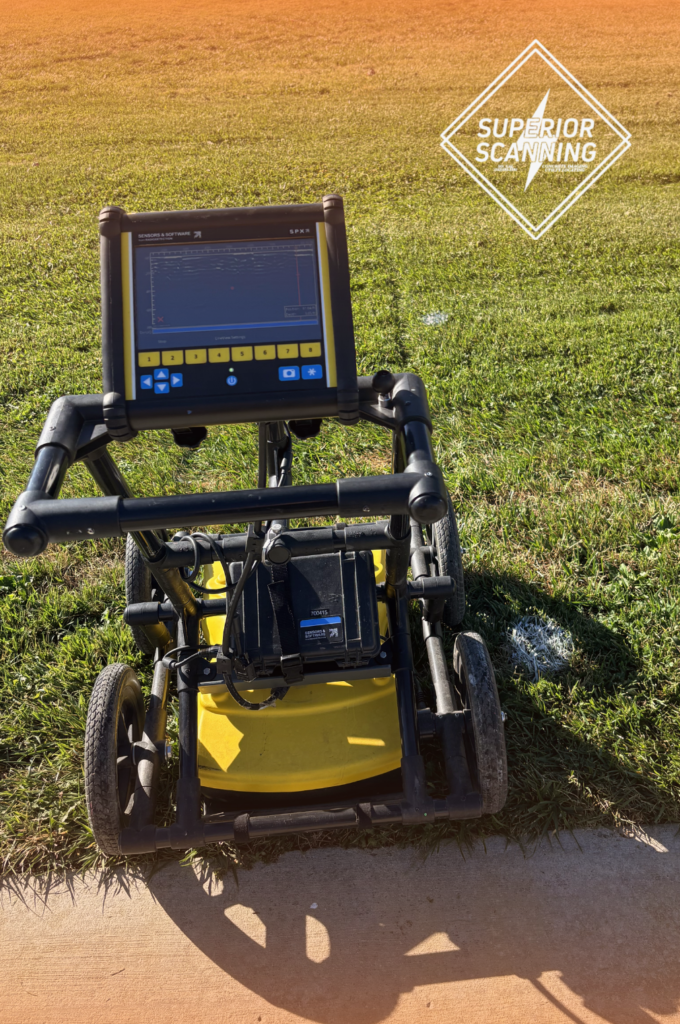
The scanning area should be cleared of obstacles so the equipment can move across the slab without interference. A concrete scanner works best when it can maintain consistent contact and movement across the slab surface.
If debris covers the slab, the technician may not be able to effectively scan the target area. Project managers should have crews sweep and clear the target zone before scanning begins. That includes removing loose dirt, scattered tools, and leftover lumber from the marked area. A cleaner surface can help support smoother scanning and more consistent data collection. It can also reduce delays during the concrete scanning process.
Tip #2: Is Your Target Area Clearly Marked and Accessible?
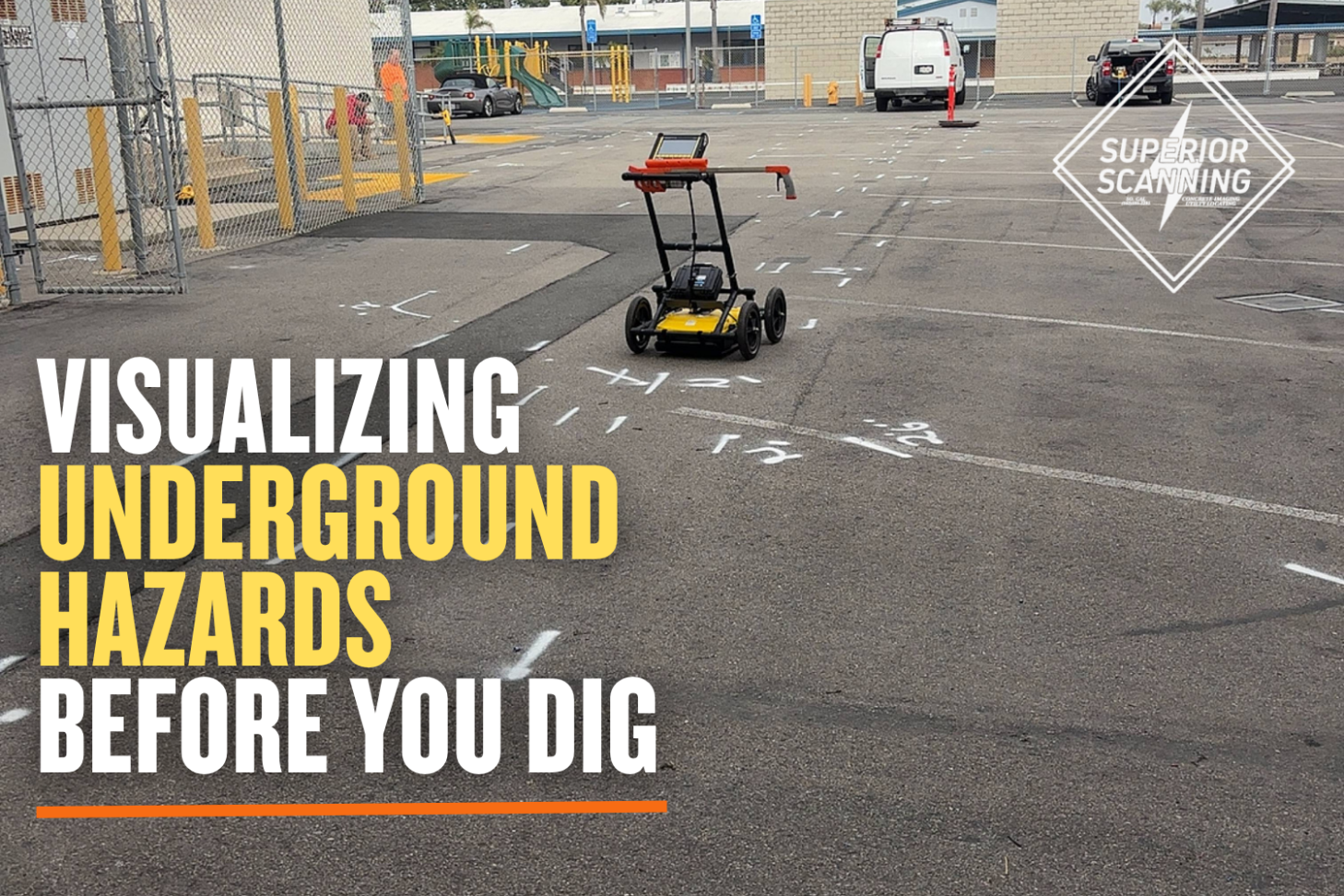
The technician should be able to see exactly where the drilling crew plans to work. Contractors should clearly mark the proposed coring zones with chalk or tape before the GPR concrete scanning services begin.
Physical access also matters. If scanning is needed on a high wall, elevated deck, or overhead area, the technician will need safe access to that surface. If the GPR scan needs to be performed on a high wall or an elevated deck, stable scaffolding or a scissor lift should be in place before the technician arrives.
Don’t Cut, Core, or Drill Blind
SuperiorGPR is trusted on complex job sites
Tip #3: Have You Removed Standing Water From the Concrete?
Standing water can interfere with scanning conditions, so it should be removed from the concrete whenever possible. Excess moisture can degrade signal quality, though a GPR scanner may still function on slightly damp surfaces depending on site conditions. Large puddles, however, make scans harder to interpret and reduce data quality.
To minimize these issues, crews should clear or push off as much standing water as possible before scanning begins. Even a brief cleanup step improves access and supports better conditions for the penetrating radar equipment, ultimately helping the crew achieve clearer, more reliable results.
Tip #4: Can You Provide As-Built Plans or Structural Drawings?
Providing the technician with as-built plans can offer valuable context. While concrete scanning with GPR can be performed independently, existing drawings still support interpretation. Access to blueprints allows the operator to compare live-scan data with the original design intent, making it easier to identify the expected post-tension cable spacing and improving the efficiency of the utility-locating process.
It also helps the team recognize conditions that do not match the drawings, ensuring more accurate and reliable results.

Tip #5: Do You Know the Crucial Difference Between GPR and a Concrete X-Ray?
Many people mix these two up on the job site. One major difference is how each method affects site access and safety procedures. Traditional concrete X-ray methods use radiation-based imaging and require additional safety controls. If radiography is used, access to the area may need to be restricted during the imaging procedure.
Ground Penetrating Radar works differently. Professional concrete scanning services using GPR rely on radio waves and do not emit harmful radiation. In many cases, nearby work can continue during scanning without the same access restrictions used for concrete X-ray.
Don’t Cut, Core, or Drill Blind
SuperiorGPR is trusted on complex job sites
Frequently Asked Questions
What should I do before GPR concrete scanning begins?
Before GPR concrete scanning begins, clear the slab of debris, remove standing water where possible, and mark the intended cutting zones with chalk or tape.
Does standing water affect a GPR scanner?
Yes. Standing water can affect signal quality and make scan data harder to interpret.
Is a concrete X-ray safer than radar scanning?
Ground Penetrating Radar is often easier to use on active job sites because it does not emit harmful radiation and usually does not require the same access restrictions as traditional concrete X-ray.
Do concrete scanning services need structural blueprints?
No. Concrete scanning services do not require structural blueprints, but as-built plans can help the technician compare scan data with the expected layout.
How close does the penetrating radar equipment need to be to the floor?
The penetrating radar equipment works best when it can move directly across the concrete surface with consistent contact and access to the target area.
Keep Your Job Site Moving With Proper Scan Preparation
A safer concrete cut depends on strong coordination across the job site. Clearing debris, drying the slab where needed, and marking the target area can help the technician work more efficiently. Poor site preparation can slow the scanning process and create avoidable delays for the project. With the site prepared, the scanning team can move into the area with better access and clearer targets. Superior Scanning provides GPR concrete scanning services for Southern California projects. That scan data can support safer planning and better coordination before cutting begins.
