Concrete Scanning Services for Safer Drilling, Coring, and Cutting
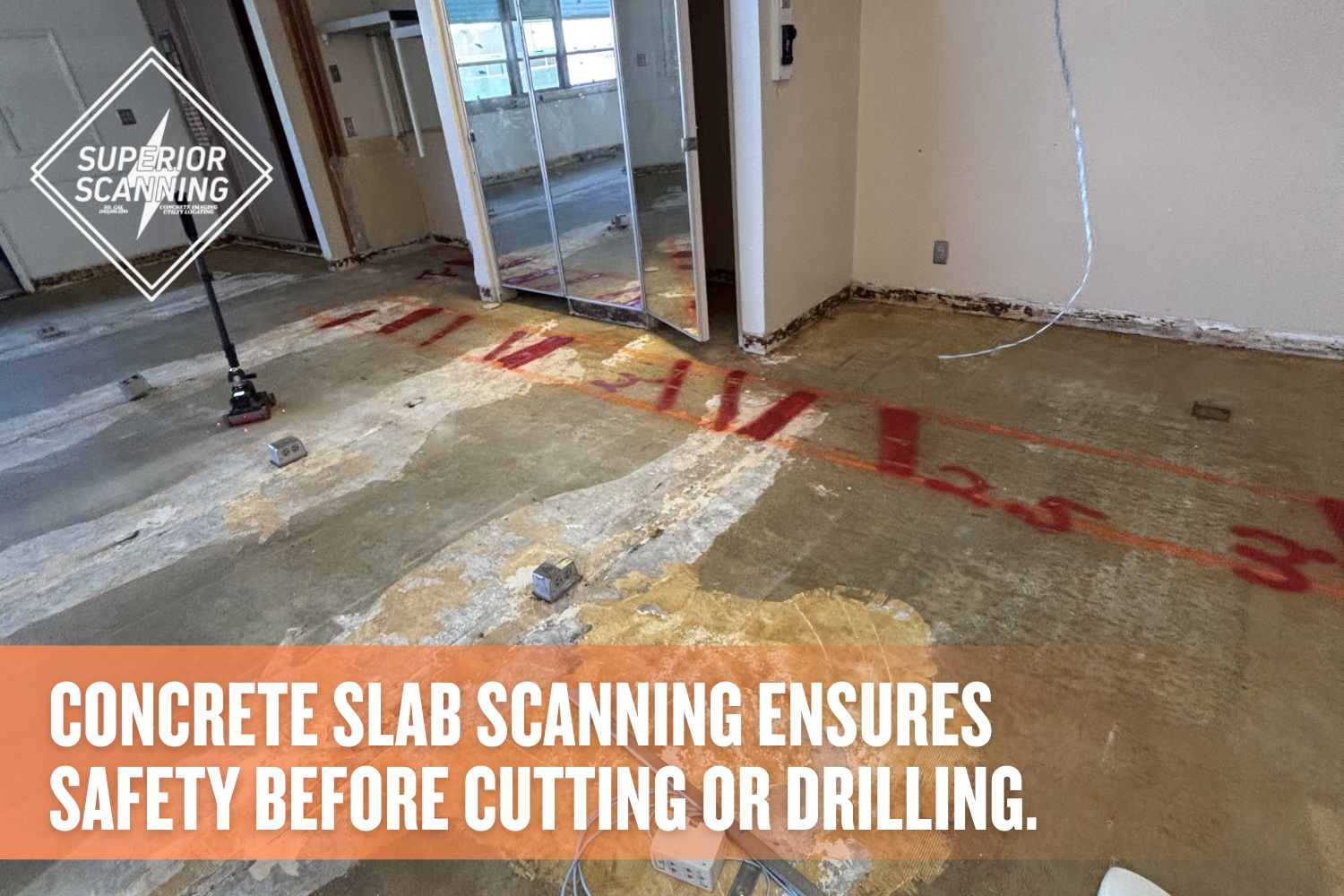
Cutting into concrete without knowing what lies beneath is a costly risk that can damage conduit or snap tension cables. Superior Scanning uses Ground Penetrating Radar (GPR) to precisely locate rebar, conduit, and post-tension cables, reducing hazards before drilling, coring, or saw cutting.
As a trusted concrete scanning company in Southern California, we provide fast scheduling and responsive service to keep job sites safe and projects on track.
What Is Concrete Scanning?
Construction teams rely on concrete scanning as a non-destructive means of inspecting structures before heavy machinery arrives. Think of it as a medical imaging tool for a building.
You use this process before drilling, coring, cutting, trenching, anchoring, or renovation to map out hidden obstructions. Scanning concrete helps crews plan penetrations accurately and helps prevent costly mistakes before the work even begins.
When Customers Typically Need It
Concrete scanning is most often scheduled right before destructive work begins. Project managers call us in to clear specific areas and avoid costly surprises. Typical situations include:
- Before core drilling
- Before saw cutting
- Before anchoring heavy equipment
- Before major demolition
How GPR Concrete Scanning Works
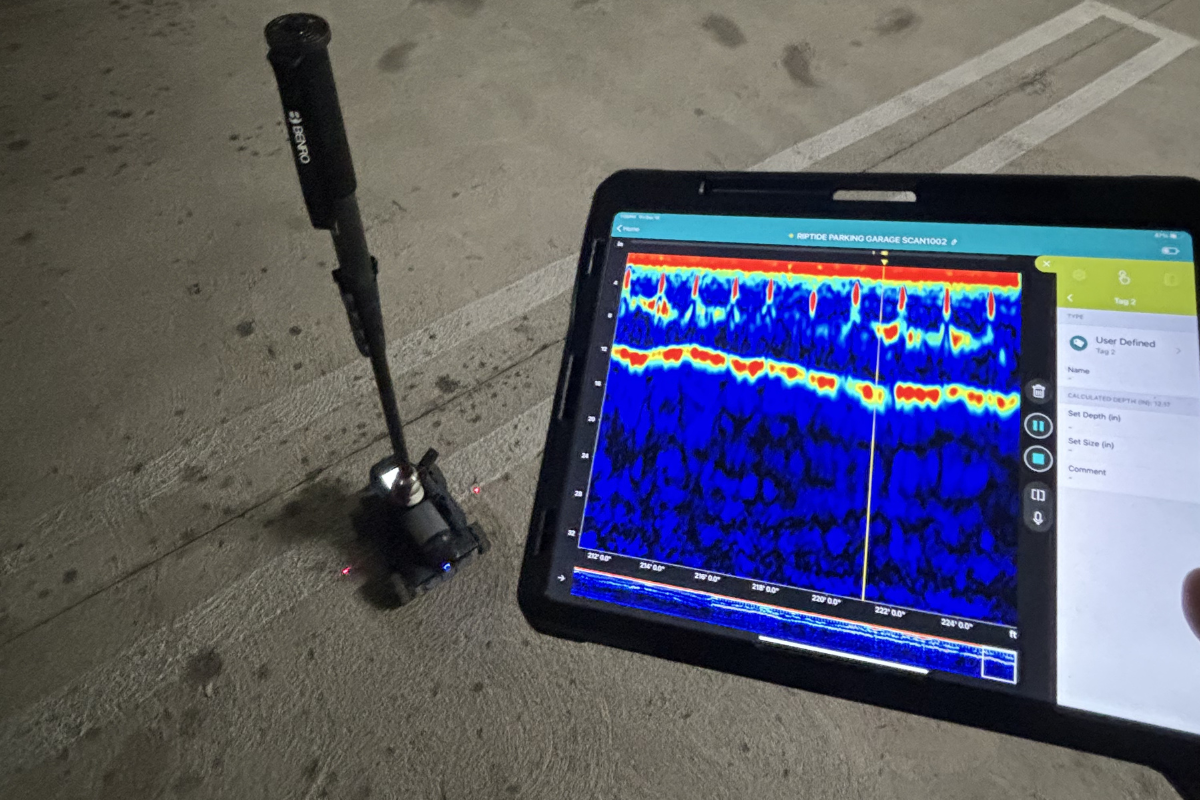
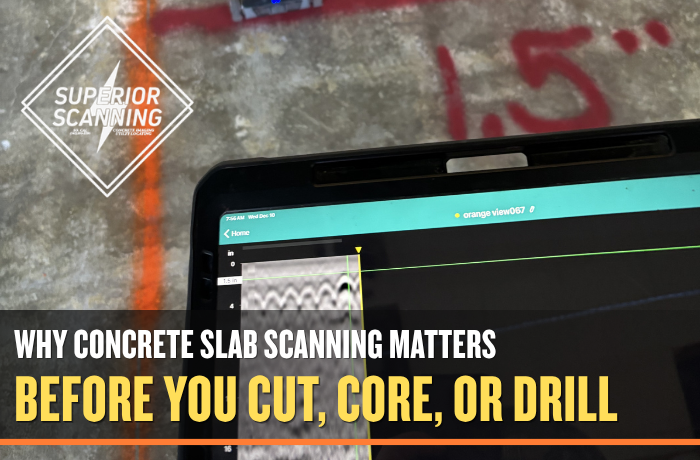
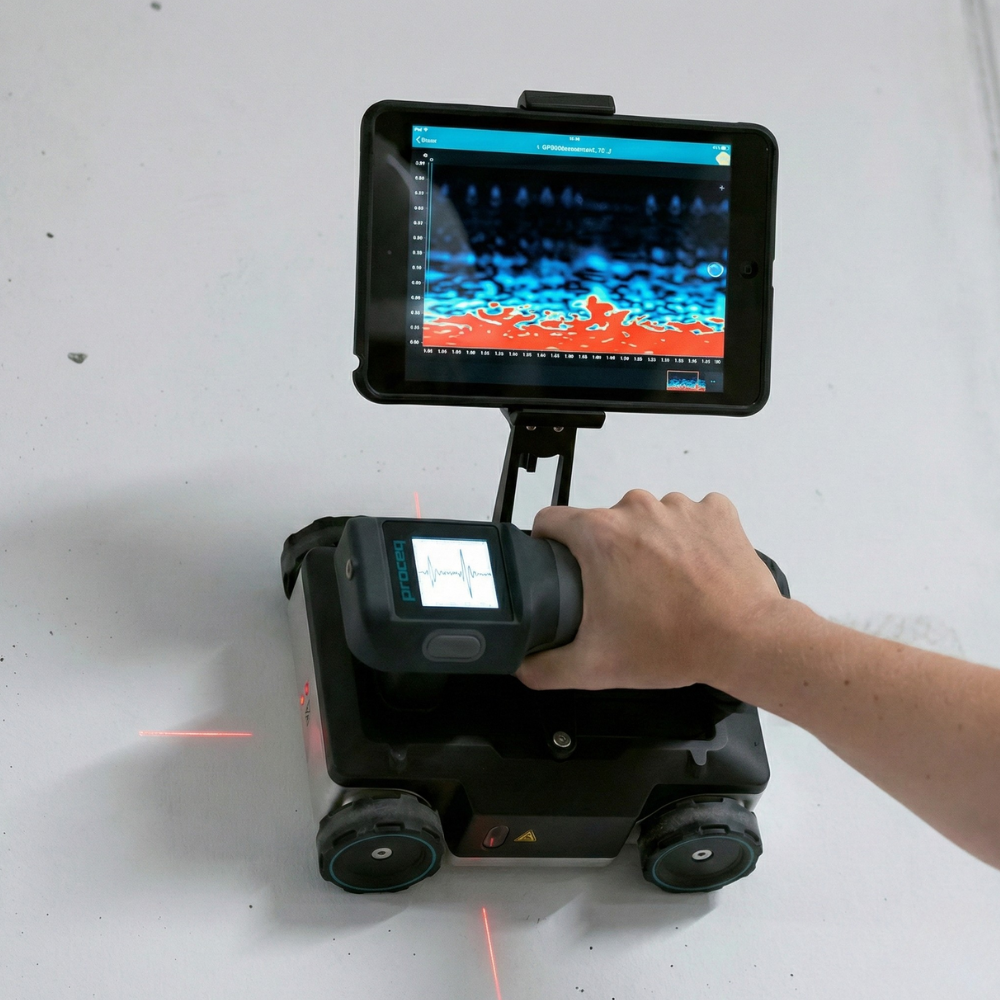
GPR concrete scanning uses safe radio waves that send pulses into a slab, detect changes in signal strength as signals bounce back from different materials, and provide technicians with immediate data to mark exact object locations directly on the surface.
How the Scanning Process Works on Site
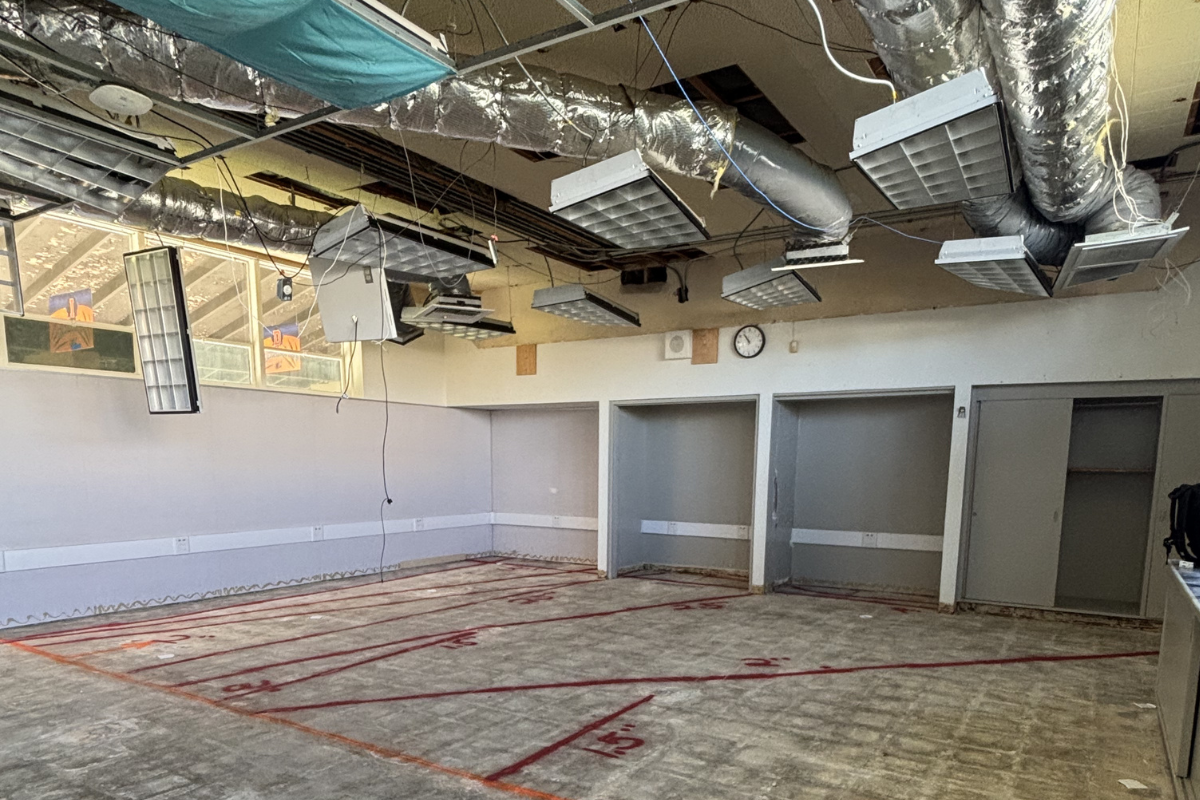
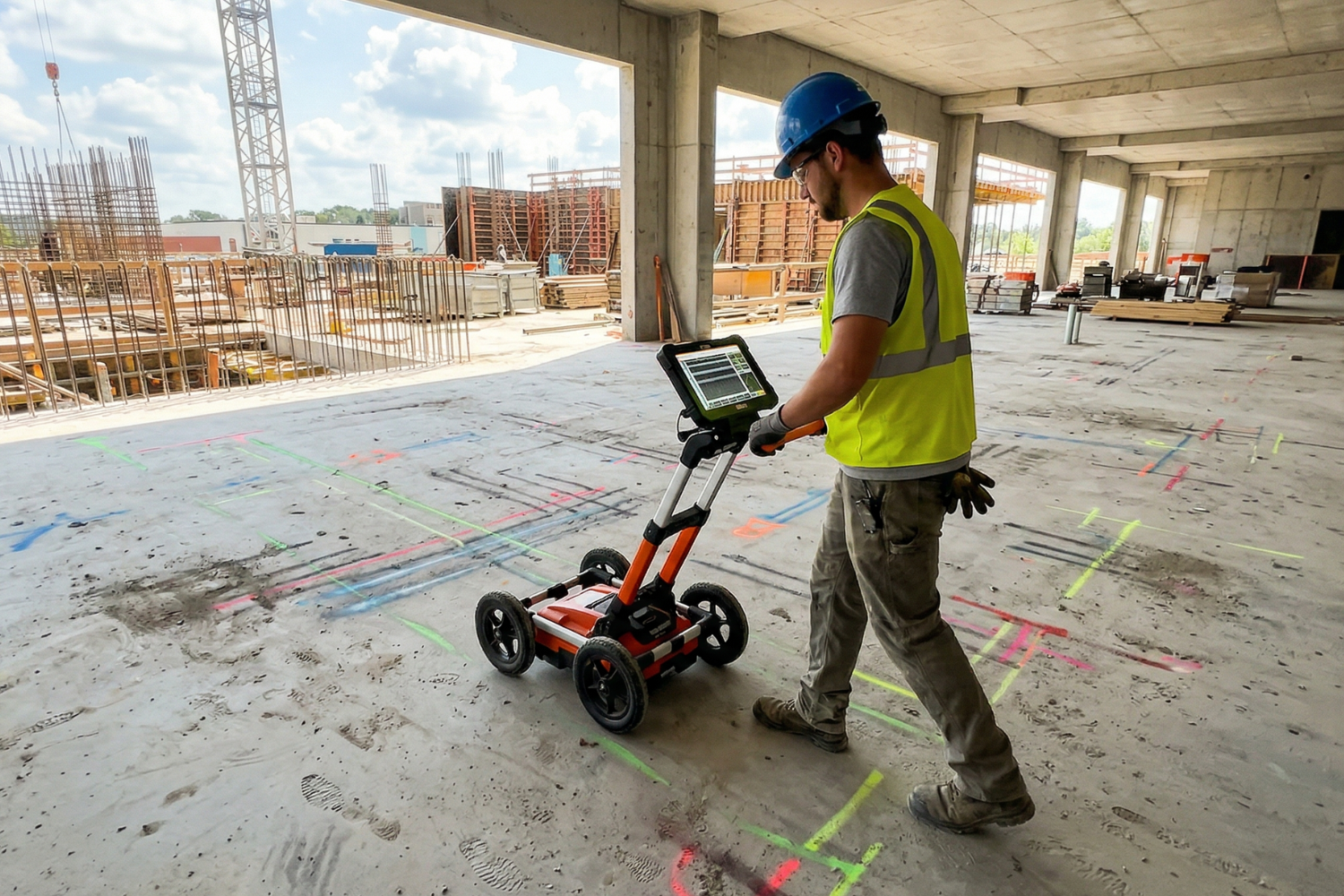
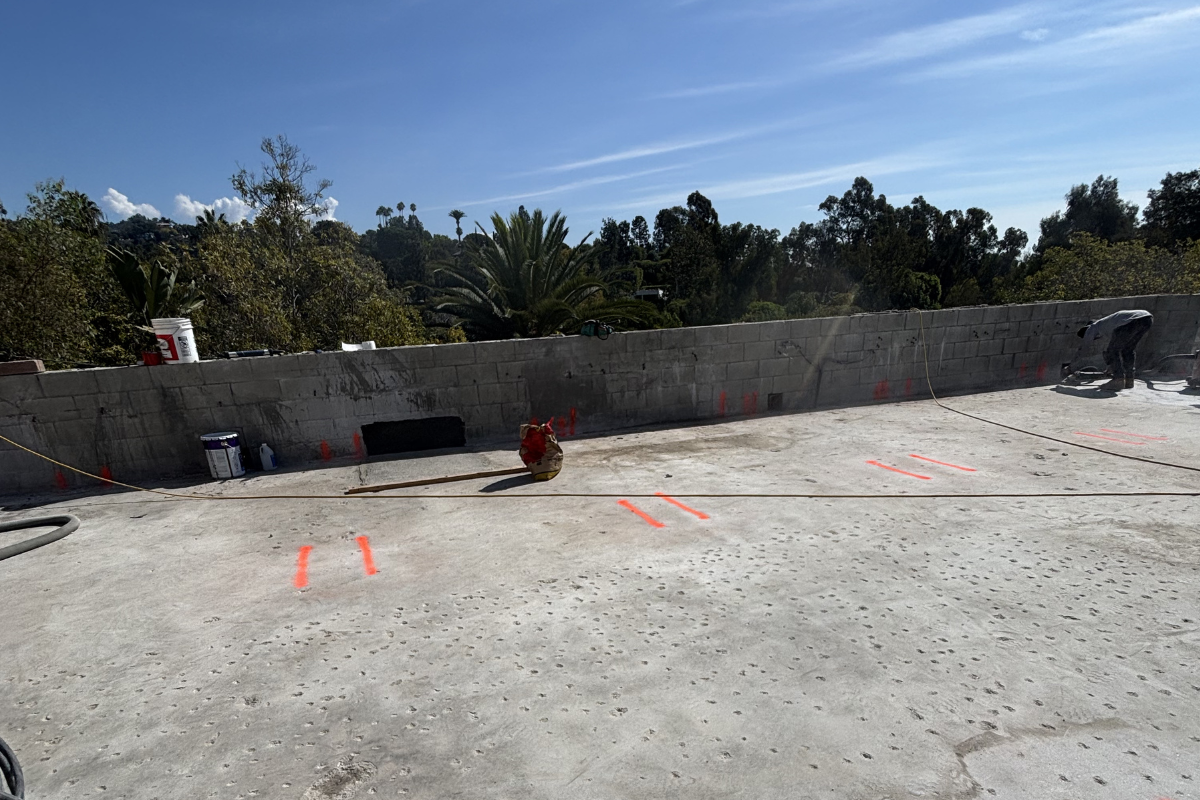
Everything starts when a trained technician arrives on-site with specialized GPR concrete scanning equipment calibrated for the specific work area. After scanning the surface, the technician identifies embedded targets and marks them with physical markings on the concrete. This real-time information allows the construction crew to proceed safely and confidently.
Why GPR Is Commonly Used for Concrete Scanning
Concrete scanning with GPR is fast, practical, and well-suited for busy construction sites, supporting quick decisions right before cutting or coring. The technology is quiet, safe, and effective in occupied buildings or active projects, easily identifying rebar, conduit, and post-tension elements without halting nearby work.
What Concrete Scanning Can Detect
Reliable concrete scanning services reveal hidden objects within slabs, walls, and decks, helping crews avoid costly mistakes and safety hazards. Here are the key items technicians can identify.
Rebar
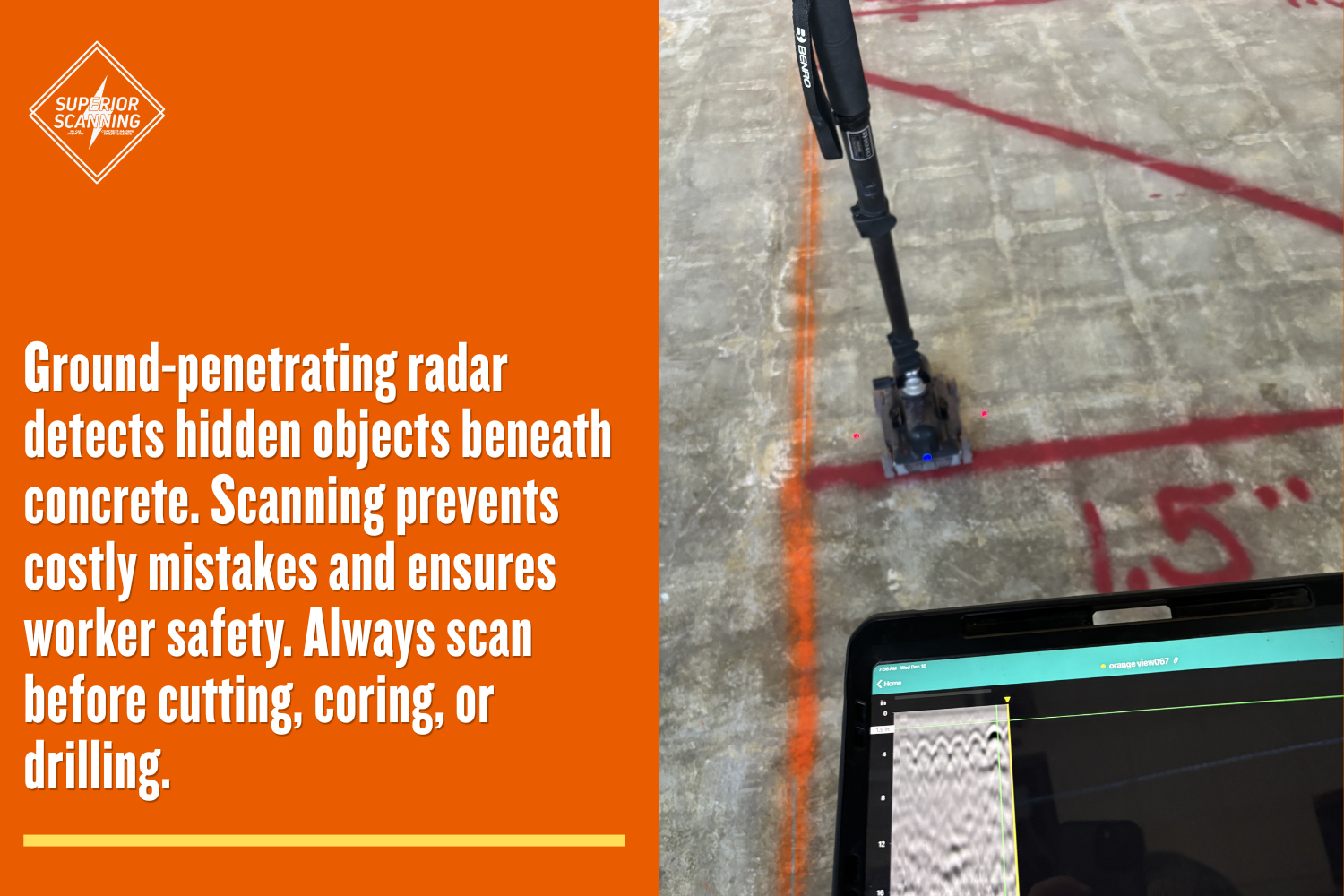
Rebar is commonly embedded in slabs, walls, and decks to reinforce structural strength. Striking it during drilling or coring can dull blades and compromise the concrete integrity. GPR rebar scanning enables crews to locate reinforcement accurately, supporting safer, more efficient on-site decisions.
Post-Tension Cables
Post-tension cables carry massive structural tension, making them extremely dangerous to hit. A snapped cable can burst through concrete, creating severe safety hazards and costly liability issues. Scanning PT slabs before any penetration ensures these cables are identified and avoided.
Conduit and Other Embedded Utilities
Conduits and electrical pathways are often hidden deep within slabs or walls. Accidentally striking live systems during cutting or drilling can cause serious injury or damage. Concrete scanning is a standard precaution on renovation and tenant-improvement projects to protect crews and installed utilities.
Other Obstructions or Anomalies
Radar can also detect voids, thickness changes, or unusual embedded objects. These findings are especially valuable in older buildings where blueprints are incomplete or inaccurate. Technicians deliver jobsite-specific results based strictly on what the radar reveals in the exact work area.
When You Should Schedule Concrete Scanning
Concrete scanning is typically scheduled right before destructive work begins, giving project managers the assurance that specific areas are clear and helping crews avoid costly surprises while keeping the project moving safely.
Before Core Drilling
Running a core drill without mapping the area first is a massive risk. You have to identify safe locations for plumbing, electrical, and mechanical penetrations. Bringing in concrete scanning before core drilling keeps the project moving and prevents unexpected utility strikes.
Before Saw Cutting
Slab cutting and trenching require immense power. You must locate hazards before those blades touch the floor. This practice avoids structural conflicts and keeps you from destroying critical utility lines. Using concrete scanning before saw cutting ensures the team plans safe cut paths.
Before Anchoring or Installing Equipment
Heavy machinery requires secure mounting. Scans are required before installing dowels, anchors, bolts, rails, or large equipment bases. Checking the floor prevents the crew from drilling into hidden obstructions that could ruin the installation. It helps ensure equipment is mounted securely without compromising the slab.
Before Renovation or Demolition
Blueprint accuracy fades over time. Older structures often conceal embedded conditions that are completely unknown. Mapping the area helps reduce the risk of surprises during interior modifications. Demolition crews rely on this clear picture of what lies beneath the surface before the heavy work begins.
Why Concrete Scanning Is Important
Concrete scanning protects crews, budgets, and schedules by preventing costly damage, unsafe conditions, and project delays before destructive work begins.
Helps Reduce Damage and Rework
Cutting into rebar, conduit, or post-tension cables without scanning can result in costly repairs and change orders. GPR mapping prevents these strikes, reducing the need for frustrating field corrections. This preparation keeps schedules intact and budgets under control.
Improves Jobsite Safety
Hidden hazards make construction sites even more dangerous. Scanning lowers the risk of striking live utilities or tensioned cables, giving crews the data they need to make informed decisions. It is especially critical in occupied buildings and active sites where safety cannot be compromised.
Supports Better Planning
Accurate scan results confirm correct placement before destructive work begins. They also improve coordination among trades working in tight spaces, ensuring crews do not interfere with each other work. This level of planning keeps operations efficient and projects moving smoothly.
Who Uses Concrete Scanning Services
Concrete scanning is trusted across industries for its ability to protect structures, budgets, and crews.
Contractors and Trades
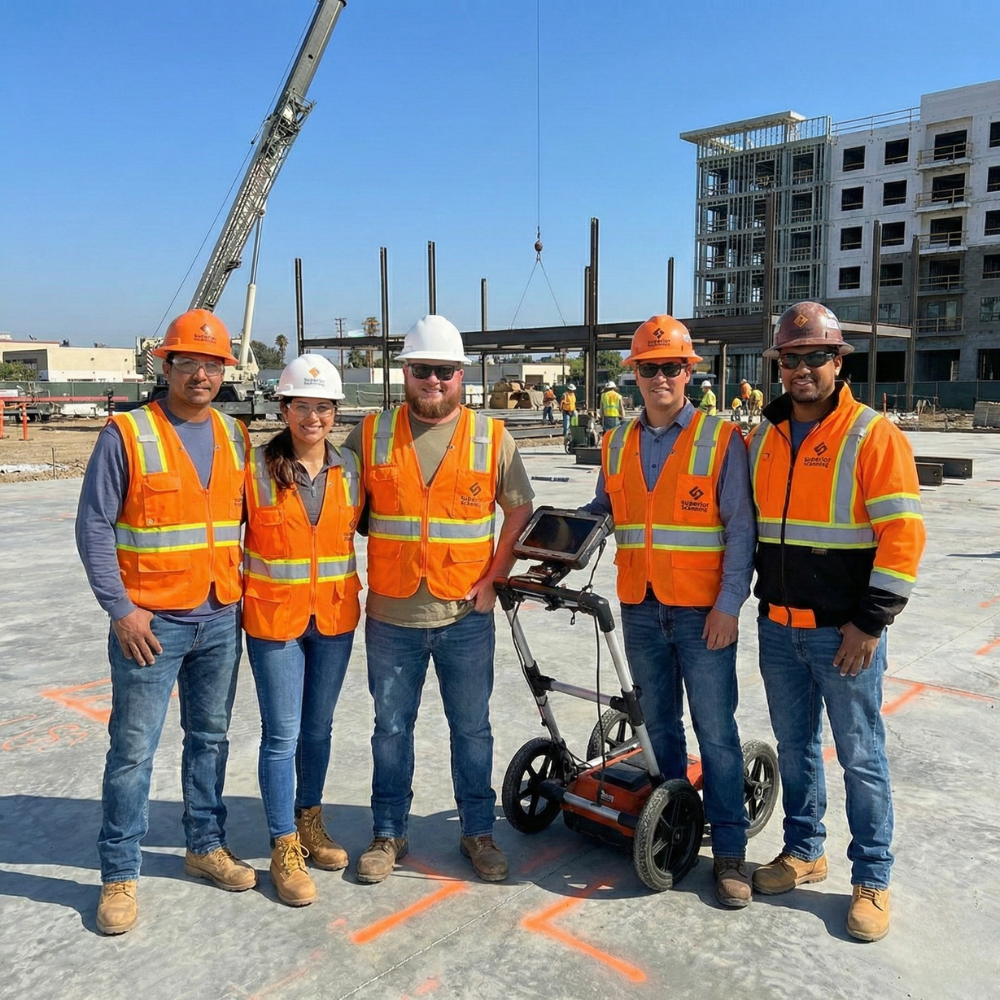
General contractors, core drilling contractors, saw cutting contractors, electricians, plumbers, and mechanical contractors rely on concrete scanning to support safer penetrations and coordination.
Building and Facility Stakeholders
Structural engineers, facility managers, property managers, building owners, schools, hospitals, commercial properties, and industrial sites use accurate subsurface imaging to protect safety and operations.
Why Choose Superior Scanning
Superior Scanning is the trusted choice for fast, precise subsurface imaging that prevents damage, protects schedules, and keeps job sites safe.
Responsive Service
We deliver fast scheduling so crews get support exactly when they need it. Clear communication keeps projects aligned, and our team adapts seamlessly to active jobsites to minimize disruption.
Clear Markings and Actionable Results
Our technicians provide surface markings directly on the concrete, giving crews immediate guidance for safe drilling and cutting. When documentation is required, we also supply detailed reports to support long-term project records.
Experience With Real Jobsite Conditions
Superior Scanning expertise comes from extensive fieldwork in complex construction environments, large commercial properties, and occupied buildings. We coordinate with contractors and field teams to maintain safety and efficiency.
Concrete Scanning Service Areas
Superior Scanning serves a wide geographic footprint, traveling directly to jobsites with fully equipped technicians ready to support construction projects across the region.
Concrete Scanning Service Areas
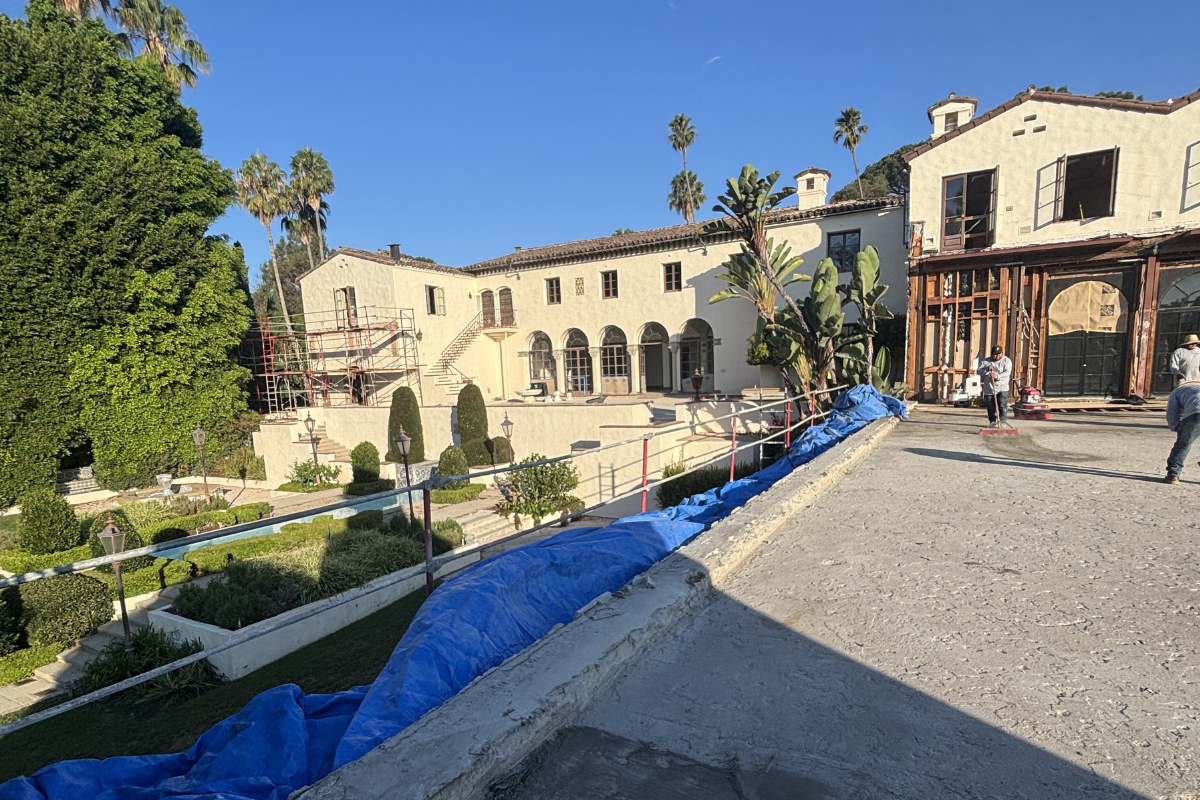
Superior Scanning provides reliable concrete scanning services across Southern California.
Areas We Serve
Our crews regularly support contractors in the following regions:
- Los Angeles
- Orange County
- Riverside
- San Diego
- Surrounding Southern California areas
Looking for Concrete Scanning Near You?
If you are currently searching for concrete scanning services near you, our dispatch team is ready to help. We encourage you to call our office if the project falls anywhere within the service area. We will send a local technician to keep the job moving safely.
Need a focused service page? Learn more about rebar scanning, post-tension cable scanning, and conduit scanning in concrete.
Frequently Asked Questions About Concrete Scanning
What is concrete scanning?
Concrete scanning is a non-destructive testing method used to locate hidden objects, such as rebar and pipes, within slabs or walls.
How does GPR concrete scanning work?
Ground Penetrating Radar sends safe radio waves into the surface to detect material changes and map out hidden obstructions.
Can concrete scanning locate rebar?
Yes, locating rebar is one of the most common and important uses for GPR concrete scanning services.
Can GPR find post-tension cables and conduit?
Yes. Clients frequently request scanning to safely find and avoid high-risk post-tension cables and active electrical conduit.
Do I need concrete scanning before core drilling?
Yes. You should scan before core drilling to reduce the risk of striking structural steel or dangerous live utilities.
Do you offer concrete scanning near me?
Yes. We offer local GPR concrete scanning throughout Southern California and encourage you to contact us to schedule service.
Request Concrete Scanning Services
Scheduling professional concrete scanning is the most important next step before you cut, core, or drill. Superior Scanning delivers the exact subsurface information you need before modifying a structure.
Call now, request a quote, or submit the contact form to get a specialist on-site quickly. Do not leave the next penetration to chance when a quick scan can help ensure a safe and successful project.