
GPR Scanning Services for Concrete
Before a saw or core bit goes into concrete, you want to know what is inside it. Superior Scanning uses ground-penetrating radar to locate rebar, post-tension cables, conduit, and other embedded objects in slabs and walls. We scan and mark on-site, so your crew can cut, core, or drill with fewer surprises. We work with contractors, engineers, and facility teams across Southern California.
What Is GPR Scanning?
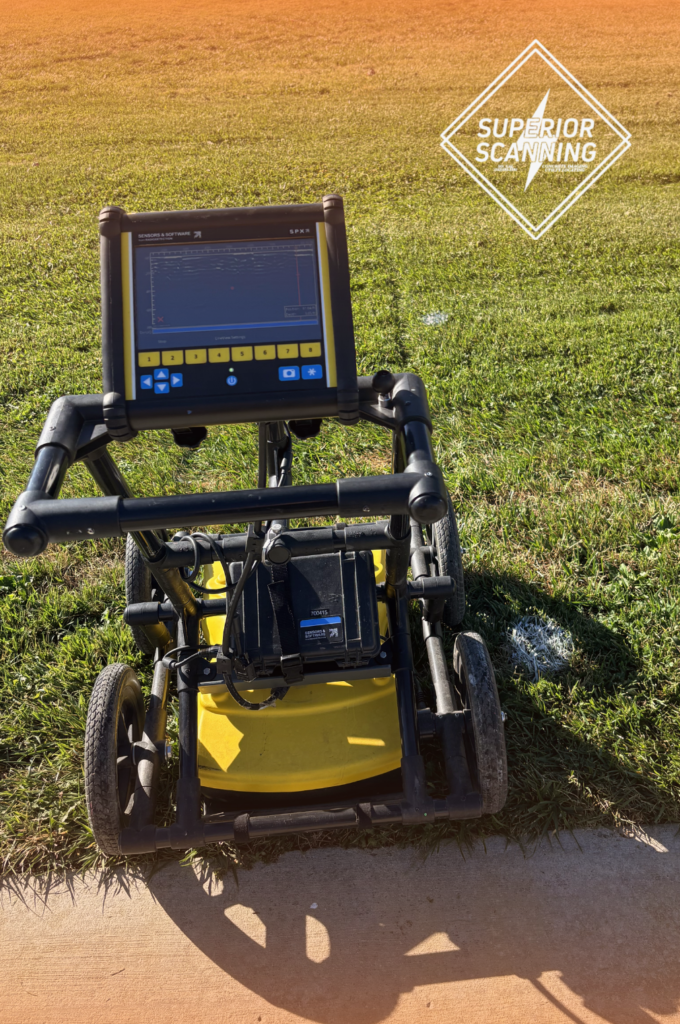
Ground-penetrating radar is a non-destructive method for seeing inside concrete. A technician moves an antenna across the surface, sending radar pulses into the slab. Embedded objects such as rebar or conduit reflect those pulses back. The technician reads the returning signals on-site and marks what sits below, giving crews a picture of the hazards before any cutting or drilling starts.
A Non-Destructive Look Inside
Because nothing gets opened up, GPR lowers the guesswork before intrusive work and helps you plan safer penetrations.
Common Applications for GPR Scanning Services
Contractors call us before work like this:
- Core drilling and saw cutting
- Anchor and dowel installation
- Slab and wall penetrations
- Renovations and tenant improvements
- MEP installs, demolition, and structural work


What Can Ground Penetrating Radar Detect in Concrete?
GPR responds to changes in subsurface material. On a concrete job, that usually covers reinforcing steel, tensioned cables, conduit, and other embedded features.
Rebar
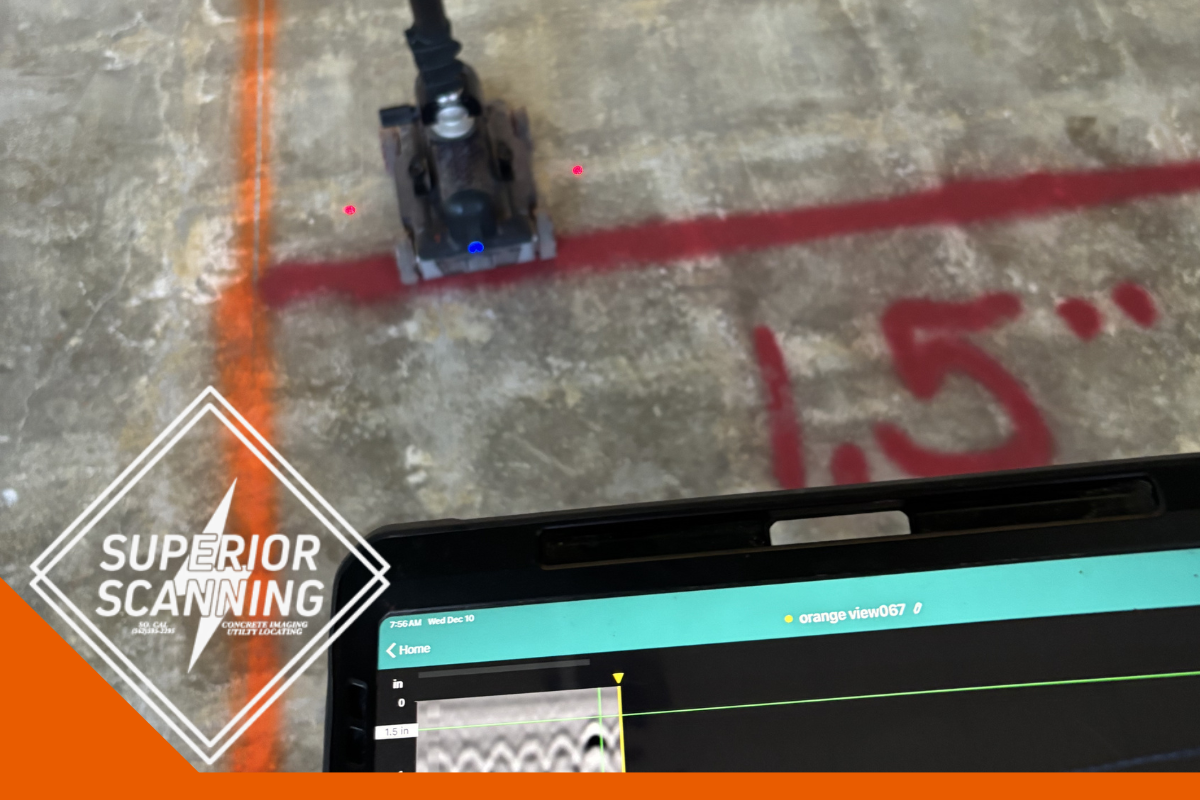
GPR locates reinforcing steel and maps its layout and spacing. Knowing where the bars run helps crews pick core and drill points that miss the reinforcement.
Post-Tension Cables
Post-tension cables sit under high tension. Cutting or coring into one is dangerous and expensive to repair. GPR helps locate likely cable paths so crews can plan drill points around them. See our post-tension cable scanning page for more.
More of What GPR Detects
GPR reads material contrasts, not just metal — here is what else it surfaces on a live slab.

Electrical Conduits
Conduit often runs through slabs and walls. GPR helps locate these lines before a bit reaches them, protecting the wiring and the person holding the tool. Learn about conduit scanning in concrete.

Metallic and Non-Metallic Objects
GPR reads material contrasts, not just metal. It can pick up some non-metallic items, such as plastic conduit or fiber lines, that a metal detector would miss.
Voids and Changes Within Concrete
GPR can detect anomalies within a slab, such as voids or changes in the concrete. These readings point to areas worth a closer look, not a firm diagnosis. The technician will explain what the signal suggests and what it does not.
How GPR Concrete Scanning Works
A scan follows a simple sequence:
- The technician inspects the area and confirms access.
- The GPR antenna passes across the concrete surface in a grid pattern.
- Radar energy travels into the slab.
- Embedded objects send back reflected signals.
- The technician reads those signals in real time.
- Findings get marked on the surface and documented if you need a record.
Why Scan Before Cutting, Coring, or Drilling?
A blind cut into concrete carries real risk. A single strike on a post-tension cable can injure a worker and shut a site down for days. Hitting live conduit can damage wiring and create a safety hazard. Even a nicked rebar mat can weaken a slab or ruin an expensive bit. Scanning first lets you plan core and drill points around the hazards, protect the crew, and keep the schedule from slipping into rework.
What to Expect During a GPR Scan
Clear the area and give the technician access to the surface you want scanned. The technician evaluates the area, runs the scan, and marks findings directly on the concrete. Before leaving, they walk you through what the markings mean and where it is safer to cut or drill. If your job needs a written record, ask about documentation when you book.

GPR Scanning for Concrete Slabs, Walls, and Structural Elements
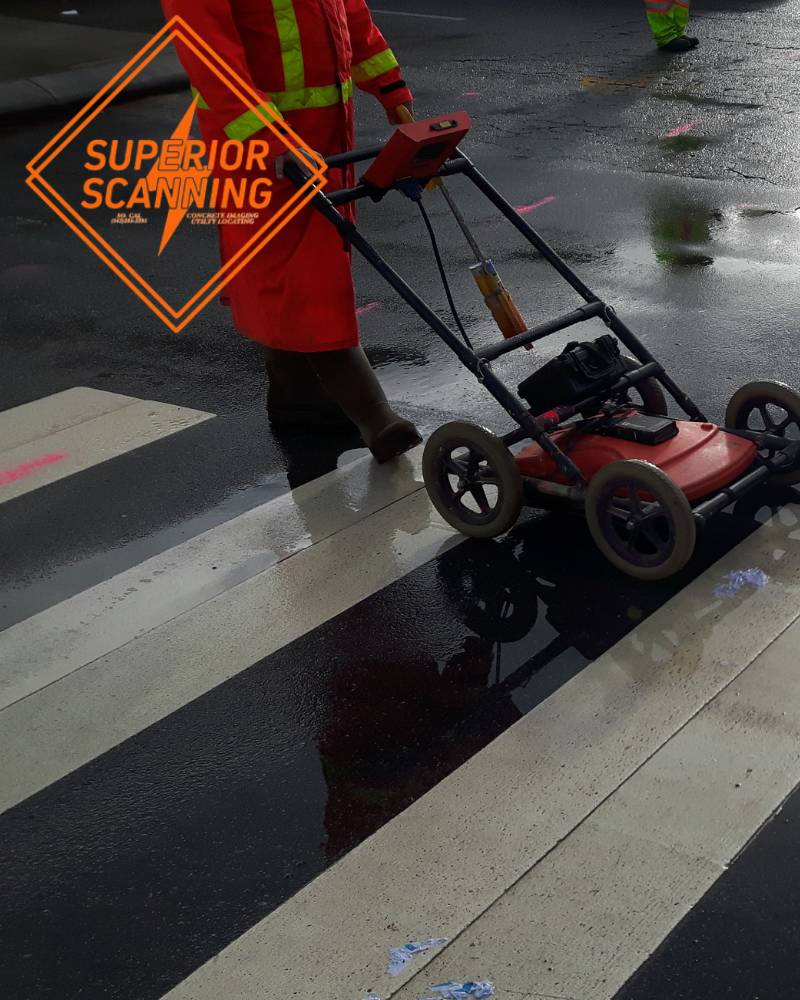
We scan slab-on-grade floors, elevated slabs, concrete walls, and structural columns, inside and out. Every structure reads differently. Concrete thickness, dense reinforcement, moisture, surface condition, and access all affect the clarity of the results. The technician accounts for these factors and will tell you where a reading is solid and where it is limited.
GPR Scanning vs. Other Concrete Scanning Methods
GPR detects subsurface contrasts, making it useful for mapping rebar, conduit, and other embedded features in a live slab. Electromagnetic locators respond mainly to conductive or metallic material, so they suit certain utility and rebar tasks but miss non-metallic targets. For some jobs, concrete X-ray provides a different kind of image and may be a better fit. We pick the method based on the structure, the project requirements, and the objects you need to find.
When Should You Schedule GPR Concrete Scanning?
Schedule a scan before any work that breaks into concrete — before core drilling or saw cutting, before setting anchors or drilling into walls, before structural changes or demolition, and whenever drawings are missing, old, or unreliable. As a rule, scan before any intrusive work where an unknown object below the surface could create a safety, damage, or schedule risk.
Why Choose Superior Scanning for GPR Scanning Services?
Superior Scanning is a Southern California subsurface imaging company focused on damage prevention. Our technicians scan before crews cut, core, drill, and dig, and we lay out our markings and field notes so the crew can act on them right away. We run current equipment, including the Proceq GP8000, Vivax RTK-Pro, and ImpulseRadar PinPoint, and our team has scanned demanding sites such as LAX, John Wayne, and San Diego airports, Cedars-Sinai, the Hammer Museum, schools, and high-rise hotels. When your schedule is tight, we work to get a technician out quickly and deliver results you can use the same day.
GPR Scanning Service Areas
Superior Scanning works across Southern California. See our service areas or call to confirm we cover your jobsite.
Areas We Serve
Our primary coverage includes:
- Los Angeles County
- Orange County
- Riverside County
- San Bernardino County
- San Diego County
Looking for GPR Scanning Near You?
If you need GPR scanning near you, our team responds quickly across the region. Call or request a quote and we will confirm coverage for your jobsite.

Frequently Asked Questions About GPR Scanning
What is GPR scanning?
GPR scanning uses ground-penetrating radar to locate objects inside concrete, such as rebar, conduit, and post-tension cables, without cutting into the slab.
What can GPR detect in concrete?
Rebar, post-tension cables, conduit, and other embedded objects, plus some subsurface changes like possible voids. What shows up depends on the concrete, the depth, and the target.
Can GPR detect non-metallic objects?
Often, yes. GPR reads changes in electromagnetic properties, so it is not limited to metal. It can pick up some plastic conduit and other non-metallic items, though results vary by conditions.
How deep can GPR scan into concrete?
There is no single number. Depth depends on the antenna frequency, the concrete, reinforcement density, moisture, thickness, and the target itself. The technician can give you a realistic range for your slab.
Is GPR scanning destructive?
No. The technician scans from the surface. Nothing gets cut, drilled, or damaged during the scan.
Should concrete be scanned before core drilling?
Yes, whenever an unknown object could be in the way. Scanning first reduces the risk of striking rebar, a cable, or a live conduit and helps you choose a safer core location.
Need GPR Scanning Before Cutting or Drilling?
Know what is inside the concrete before the first cut. Superior Scanning provides GPR scanning across Southern California, so contractors and project teams can core, cut, and drill with better information and less risk.
