

Don’t Cut, Core, or Drill Blind
Superior Scanning is trusted on complex job sites
Quick Summary: How to Protect Your Crew and Job Site
- Never guess what hides under the slab. Scanning first prevents catastrophic utility strikes.
- Swap out dull equipment immediately. Using the proper concrete coring bits keeps the machinery running smoothly.
- Secure your concrete core drill before the motor turns on to ensure a stable, clean cut.
- Partner with a trusted concrete coring company to keep your timeline intact and take the liability off your shoulders.
Tip #1: Never Deploy a Concrete Coring Machine Without Scanning First
Firing up a concrete coring machine without knowing what is inside the slab is asking for trouble. Commercial floors may look clear from the surface, but they can contain hidden systems below the concrete.
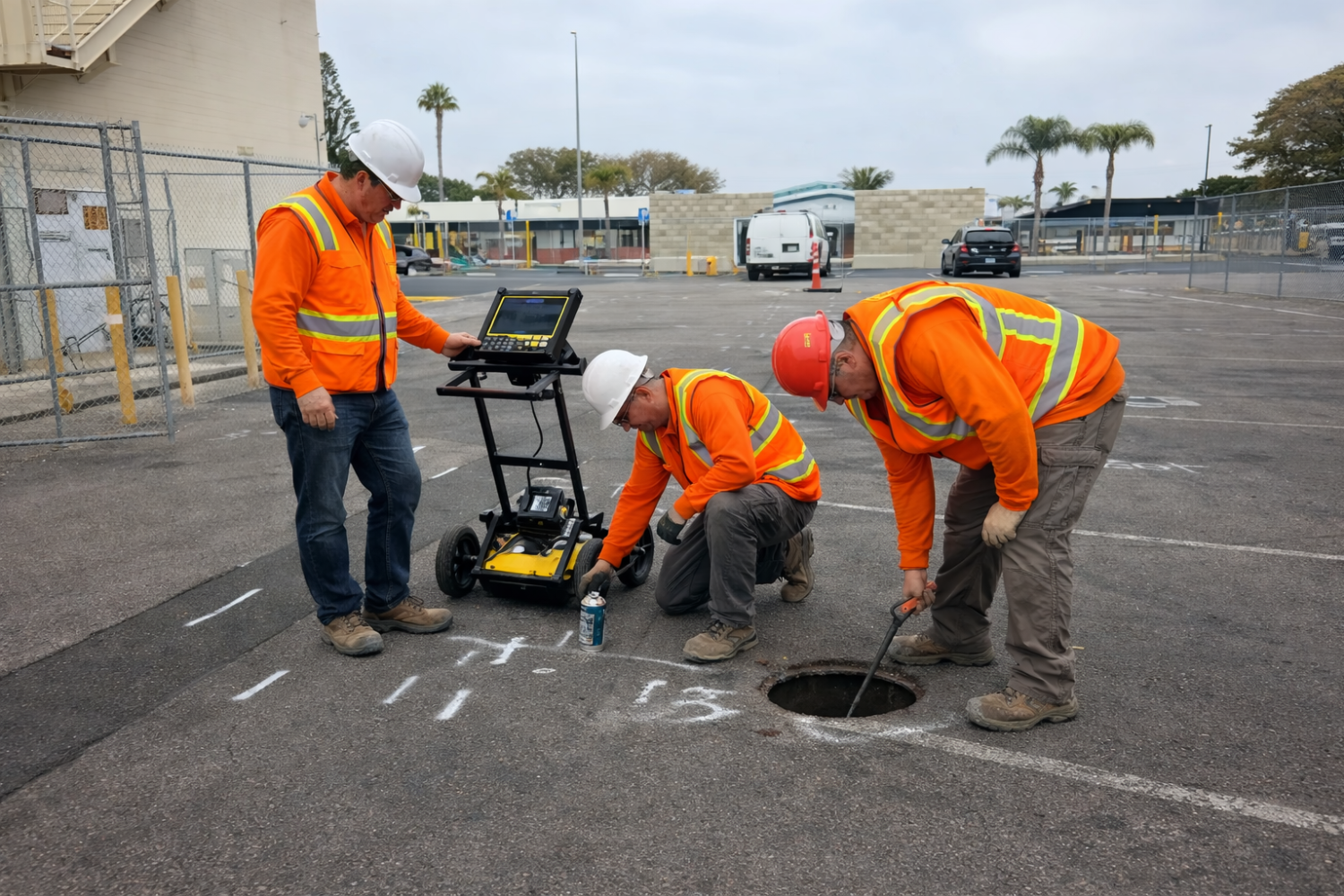
If a drill bit catches an embedded obstacle, the equipment can jerk, bind, or damage the work area. That creates risk for the operator, nearby trades, and the project schedule. A pre-scan helps the team check the target area before the drill is set up.
Watch for Electrical and Data Lines
Electrical and data lines are common concerns during commercial coring work. If the project involves tenant improvements, floor boxes, equipment changes, or utility rerouting, conduit scanning in concrete can help identify likely conduit paths before a core hole is drilled.
This is especially important in occupied buildings where a conduit strike can interrupt power, network service, security systems, or building operations.
Be Extra Careful With Post-Tensioned Slabs
Post-tensioned slabs require a higher level of caution before any penetration. These cables are under heavy tension, and a strike can create serious safety and structural risks.
If the building has a PT slab, schedule post-tension cable scanning before coring. Scanning helps identify likely cable paths so the team can adjust the core layout before drilling begins.
How Does GPR Mapping Reduce Core Drilling Risks?
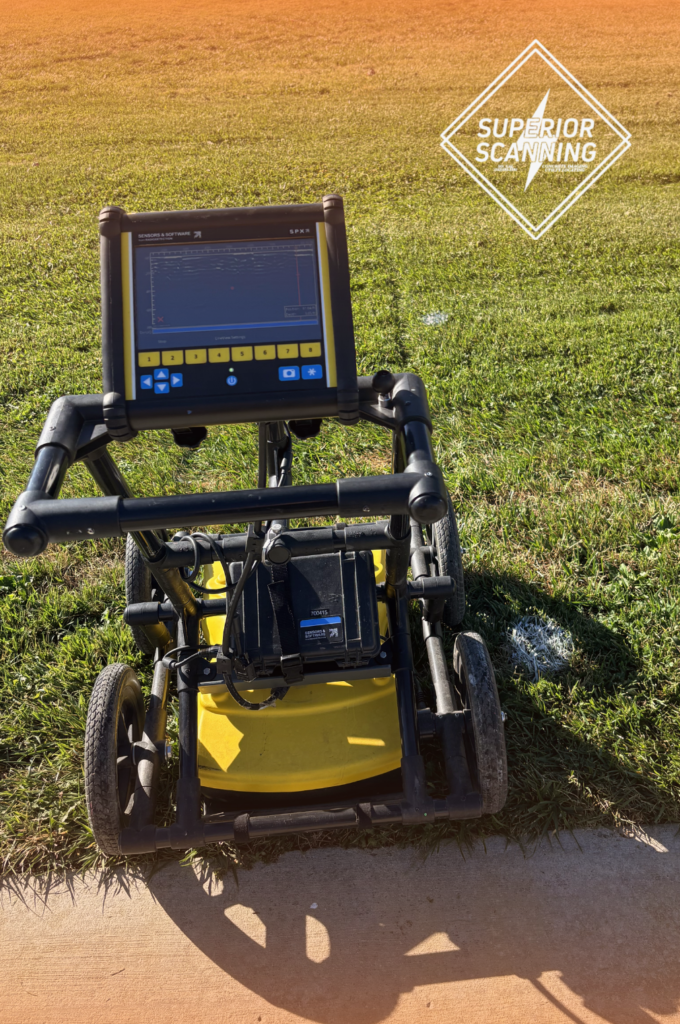
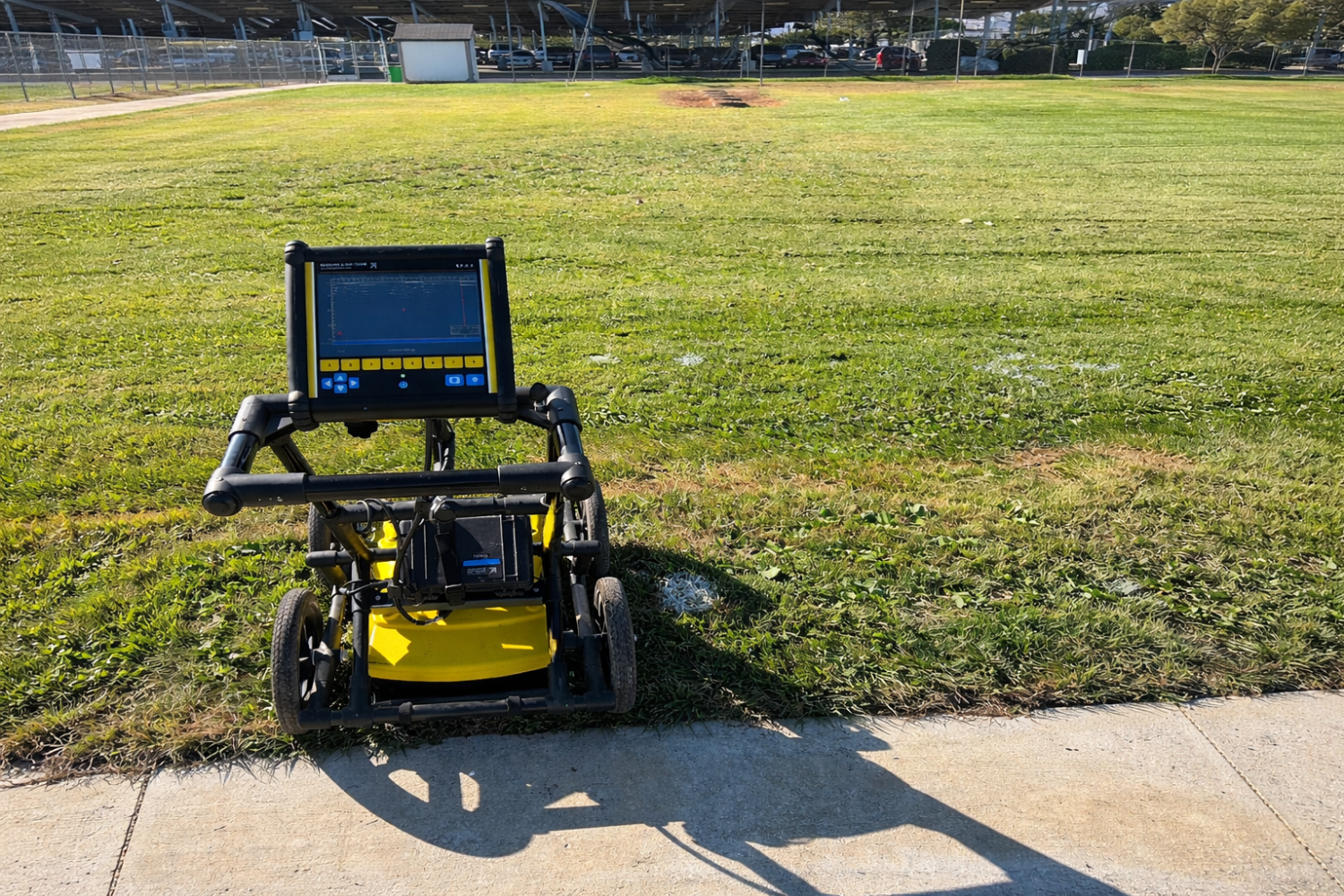
Mapping the floor with ground-penetrating Radar (GPR) helps crews identify hidden hazards before coring begins. This technology helps operators mark lower-risk drilling areas for core drilling concrete. Taking this step can help reduce the risk of striking buried utilities or damaging embedded structural components.
Tip #2: Match Your Concrete Coring Bits to the Exact Slab Material
Concrete, masonry, and reinforced slabs place different demands on drilling equipment. Matching your concrete coring bits to the material being cut helps manage friction, heat, and wear. When an operator uses a dull or mismatched bit on a tough slab, the machine may run hotter, cut less efficiently, and wear down faster.
Contractors commonly use a high-quality diamond core drill for commercial floors because it is designed for controlled cutting in hard, reinforced materials. Selecting the right cutting tool drastically improves hole quality while protecting the operator. But even the sharpest tools cannot do the job well if the heavy machinery shifts around.
Why Must You Anchor a Concrete Core Drill?
A powerful drilling motor requires a completely stable foundation to operate safely and effectively:
- Operators should lock the drill stand firmly to the floor or wall using the right mounting method for the specific surface.
- Securing the heavy machinery limits dangerous movement and shifting during a deep cut.
A stable rig significantly reduces equipment binding, improves the final hole quality, and ensures a much safer operation for the crew.
Tip #3: Vet Your Concrete Coring Company for Strict Safety Protocols
The lowest bid does not always reflect the strongest safety planning or the best equipment. You vet a concrete coring company by demanding real proof of safety standards rather than just looking at the final price tag. Contractors who skip planning or safety steps can raise risk for everyone on site.
Smart project managers verify that the cutting team actually requires a pre-scan. You should also check if they use wet-drilling techniques to help control airborne silica dust. Are the operators thoroughly trained on the specific gear brought to the site? Asking these questions can help distinguish experienced commercial crews from less prepared operators. Working with experienced concrete coring companies can help reduce avoidable safety issues, damage claims, and project disruptions.
How a Reputable Concrete Coring Company Protects Your Job Site Liability?
A reputable firm protects your liability by treating every cut as a carefully planned operation with the following strict site controls:
- Treating safety as a proactive requirement rather than a rushed afterthought.
- Keeping the surrounding work area highly controlled, clean, and safe for other nearby trades.
- Reducing avoidable accidents to support a much smoother overall project schedule.
Don’t Cut, Core, or Drill Blind
Superior Scanning is trusted on complex job sites
Frequently Asked Questions
What happens if a diamond core drill hits a post-tension cable?
Striking a post-tension cable can create a serious safety hazard, damage the slab, and lead to costly repairs. That is one reason crews often scan for post-tension cables before drilling.
Why do concrete coring machines use water?
Water helps cool the diamond bit during cutting and also helps control airborne crystalline silica dust on the job site.
How do I know which concrete coring company to hire?
Look for a contractor with a strong commercial track record, clear safety procedures, and a process for scanning concrete before drilling when embedded hazards may be present.
Can a standard concrete core drill cut through thick steel rebar?
A properly equipped concrete core drill with the right diamond bit can cut through many reinforced applications that involve rebar, though performance depends on the bit, equipment, and slab conditions.
Is core drilling concrete the same thing as concrete coring?
Construction professionals often use these terms interchangeably. Both refer to cutting a circular opening by removing a core from concrete or another solid material.
How to Execute a Safe and Flawless Concrete Cut
A safe, controlled cut depends on the right equipment and well-planned safety procedures. It also depends on giving the crew better information before drilling begins. A blind cut can delay the project and raise safety risks for the crew.
Whether the job involves a hotel, hospital, airport, or other commercial property, it helps to understand what may be embedded inside the slab before drilling. Contact Superior Scanning to schedule concrete scanning for your project so the team can plan cuts with better information before drilling begins.
Call now or request a quote to schedule scanning before your next concrete coring project.
